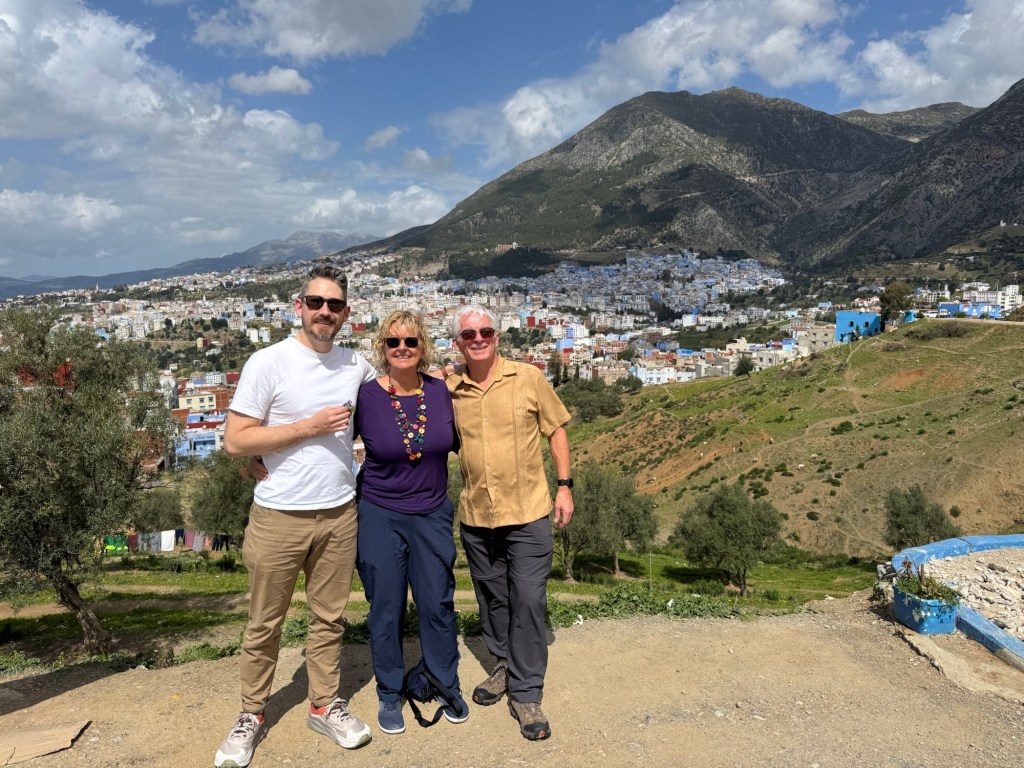
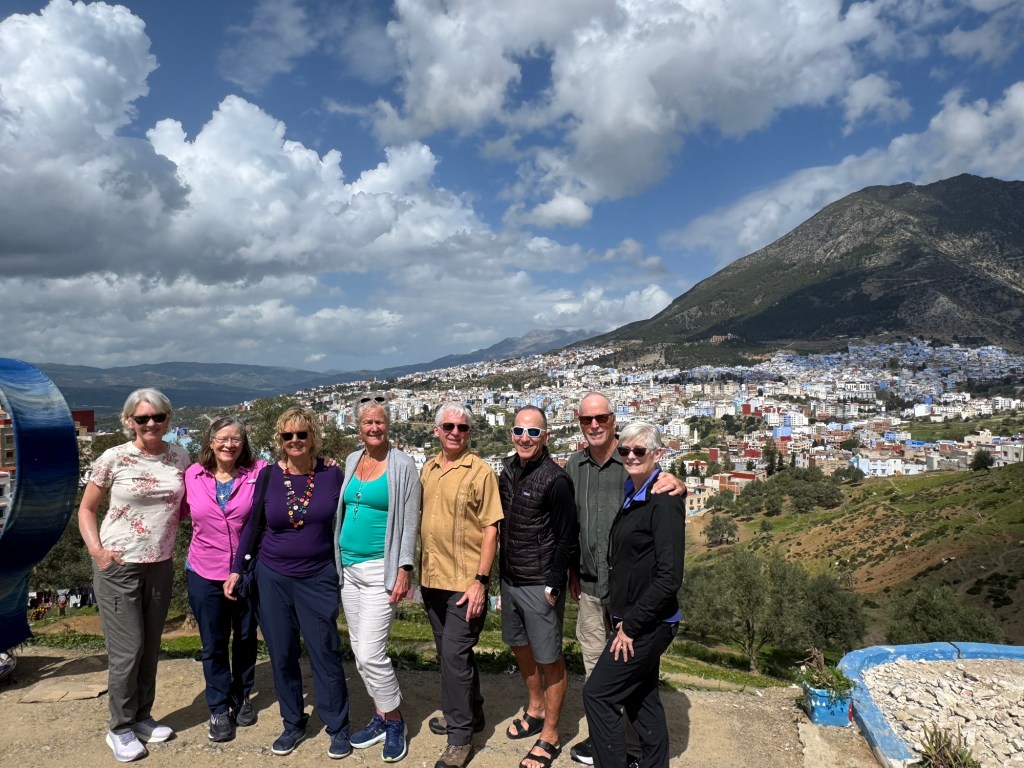
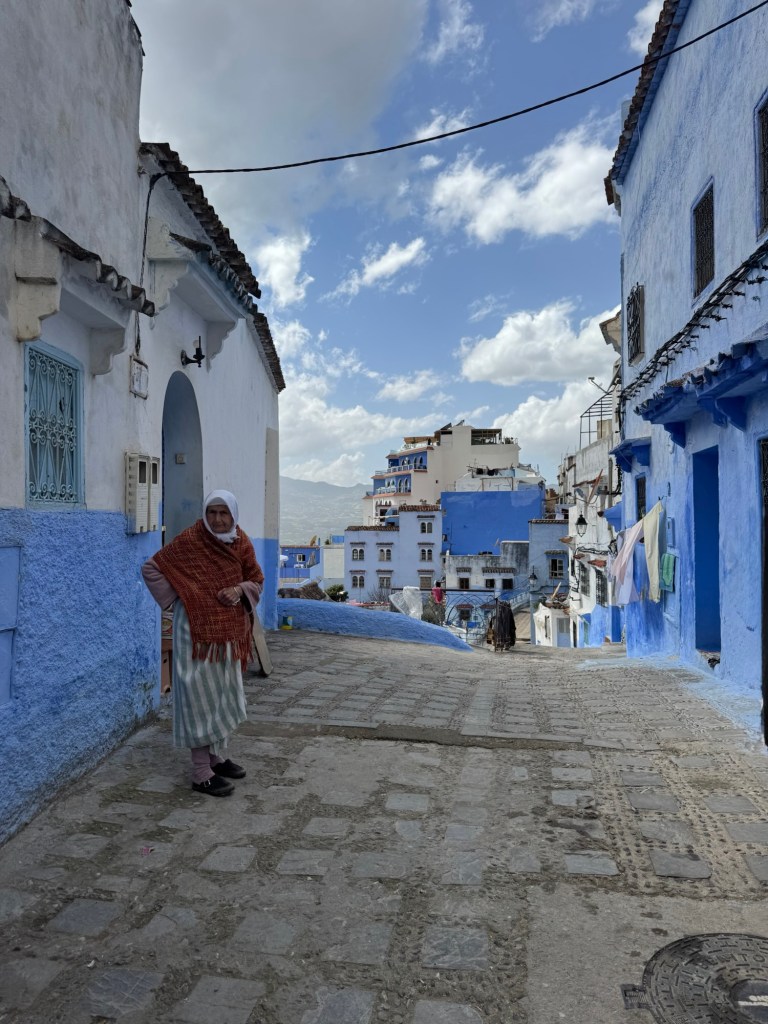
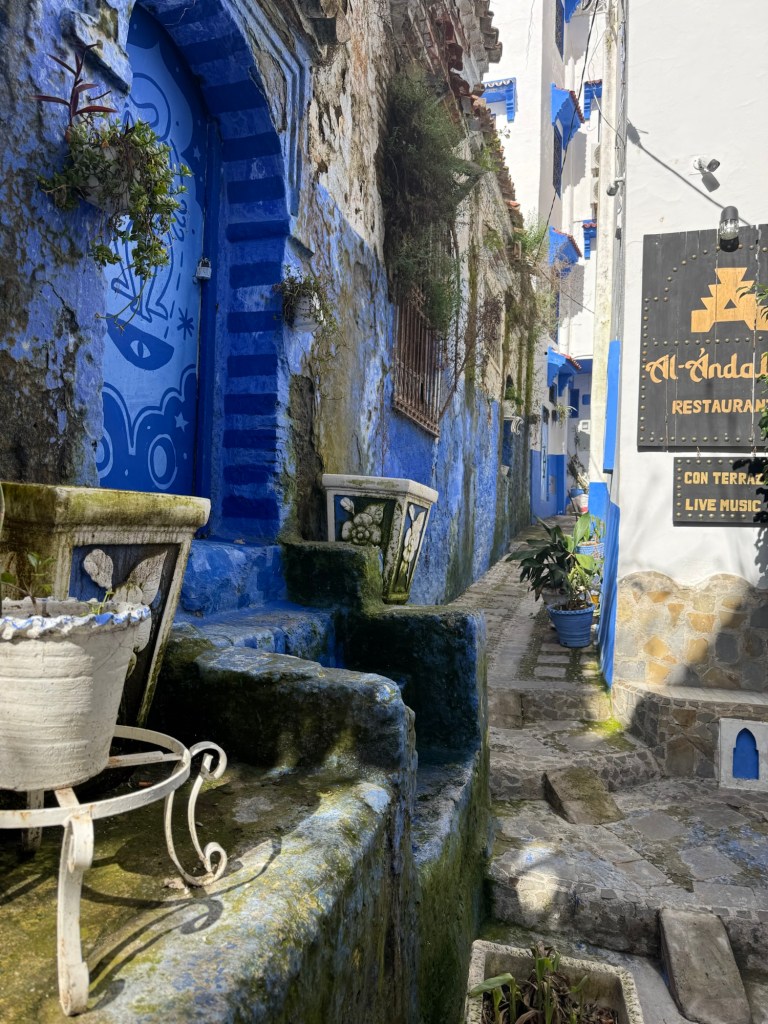
The reason I planned this trip to Morocco was because I saw someone’s photos of Chefchaouen—the Blue City—and couldn’t get it out of my mind. The drive through the mountains to get there was stunning, with lush green countryside, shepherds, camels, and farmers plowing fields with burros.
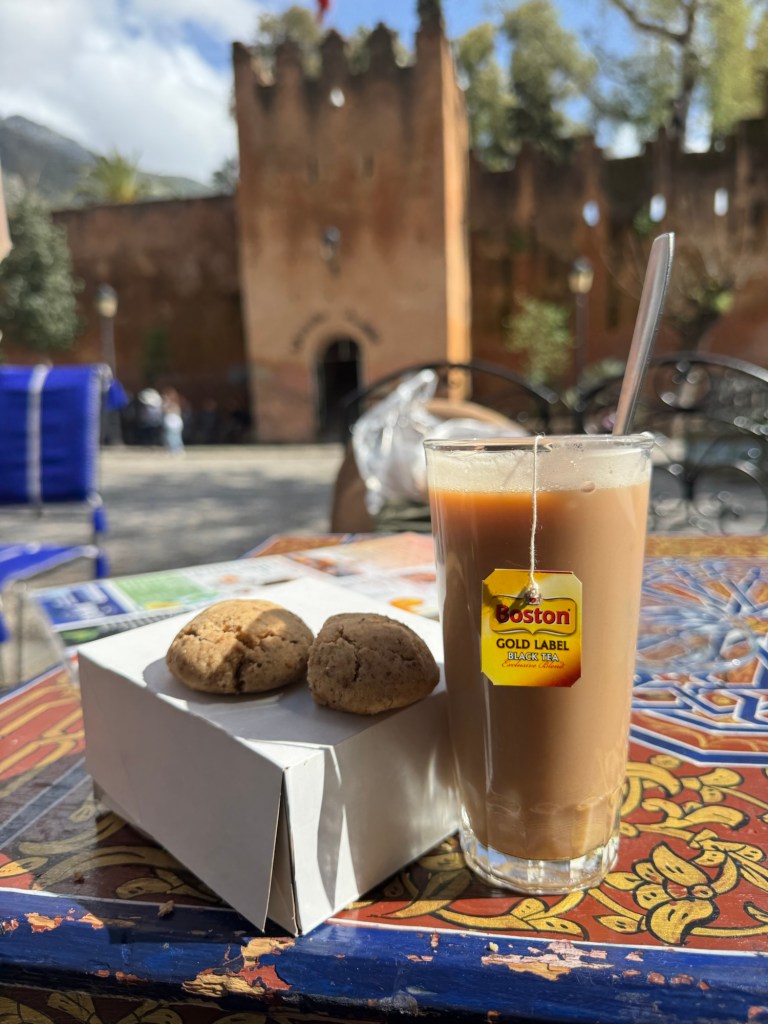
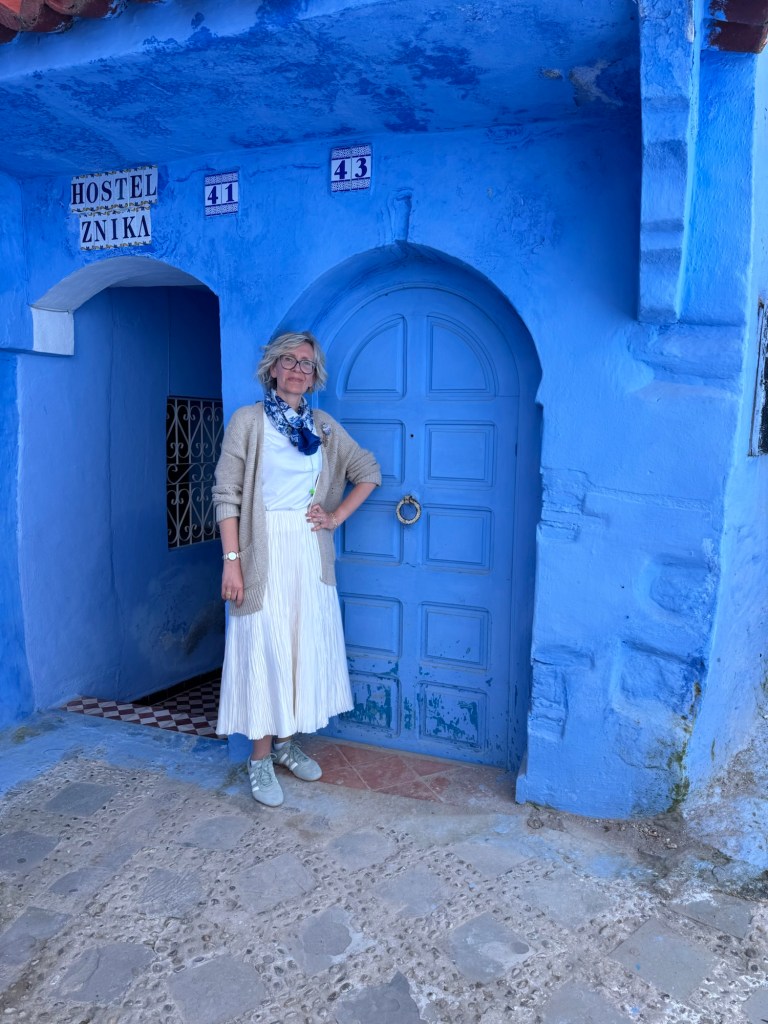
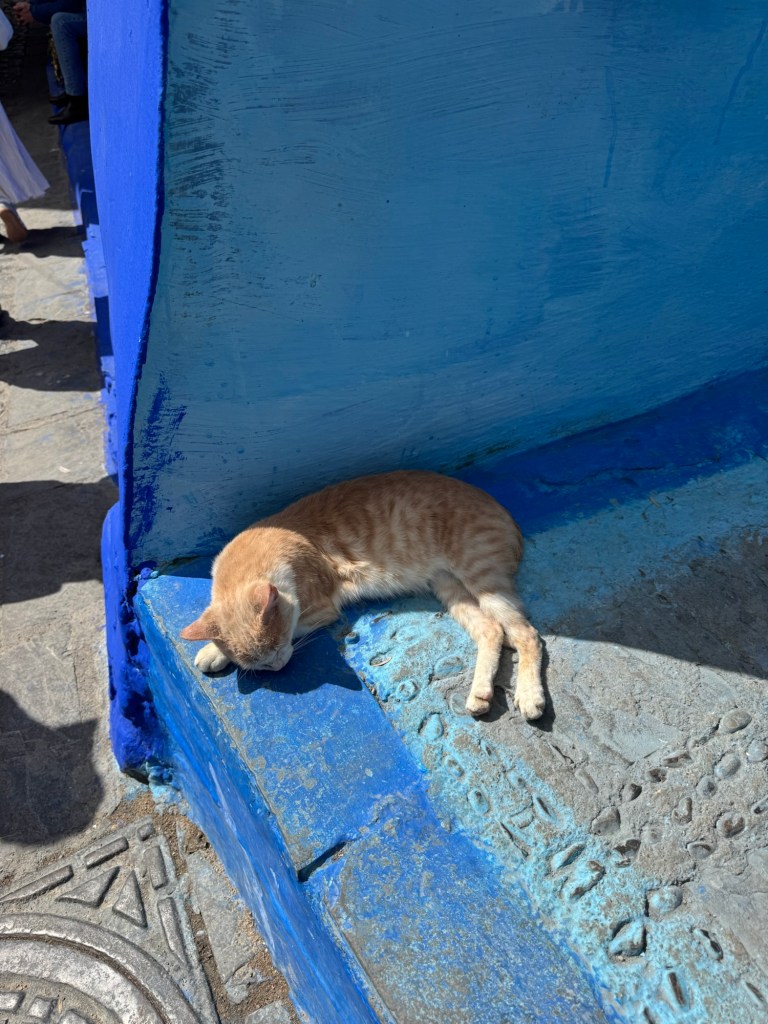
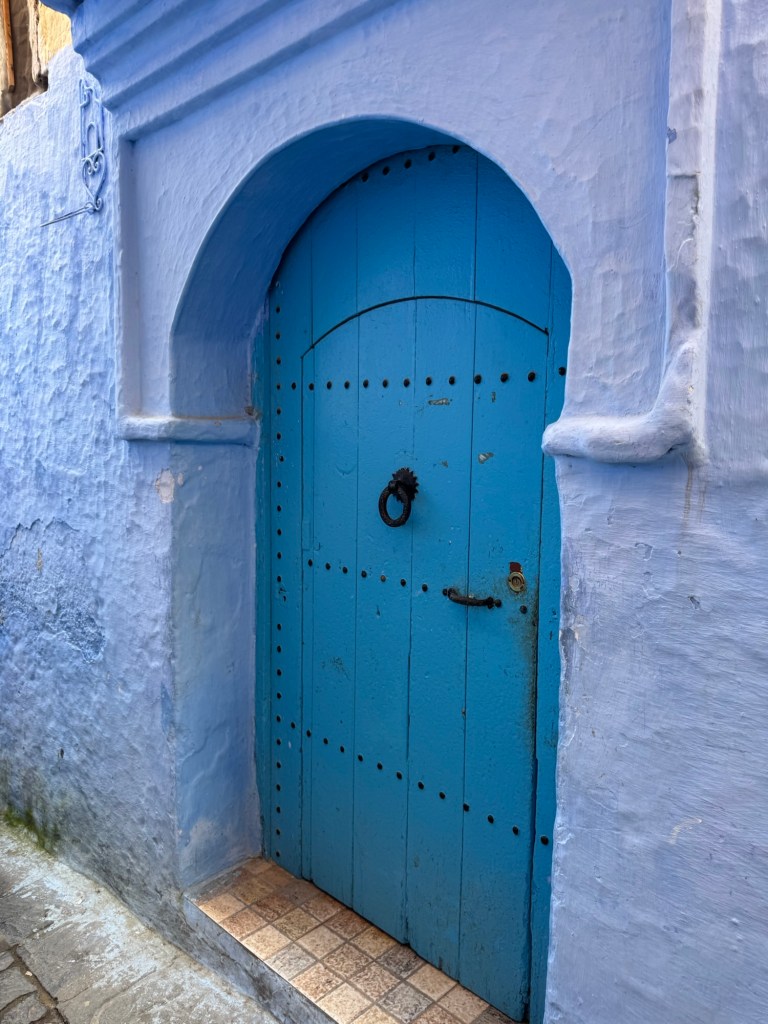
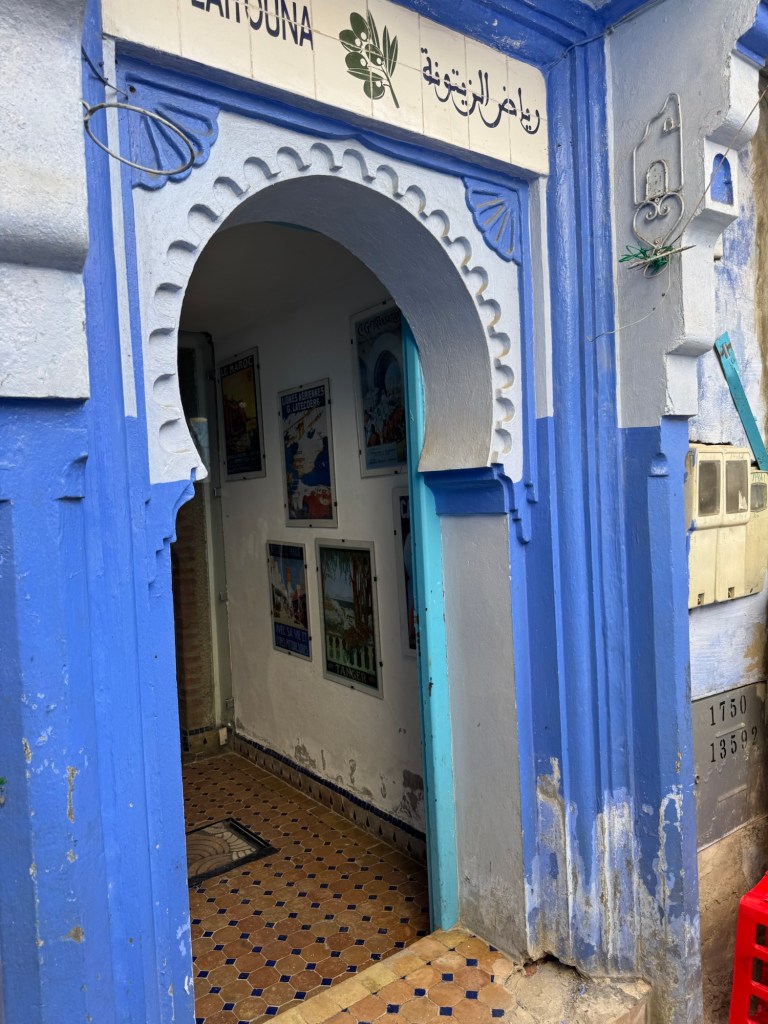
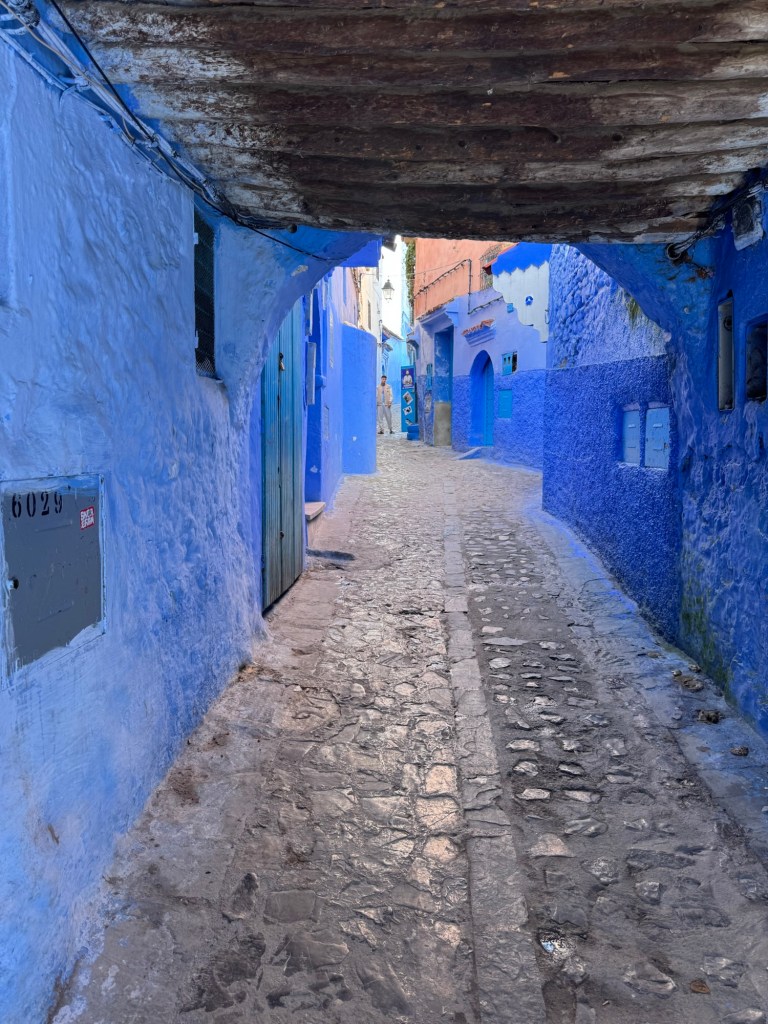
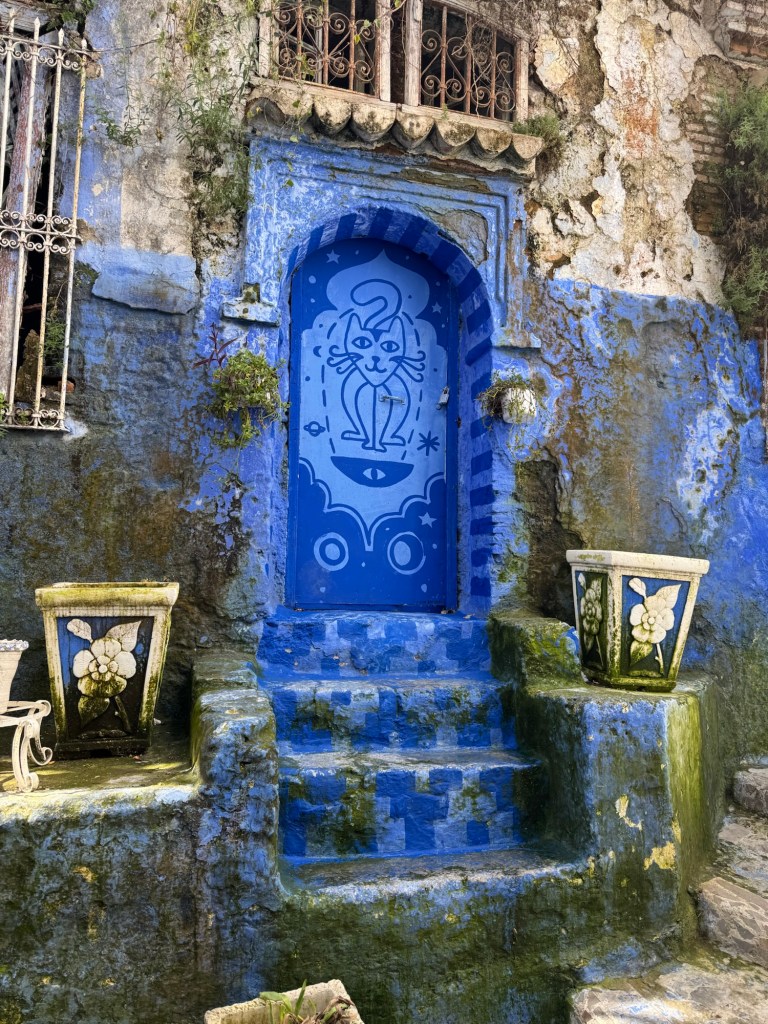
This village is the very definition of picturesque. Every time I turned a corner, there was another charming doorway or irresistible alley. I loved every minute. Anna and I went to a bakery, then ordered tea and coffee in the main square, while we watched people pass.
Anna
As for why the city is painted blue, no one knows for certain. Some say it dates back to Jewish refugees who arrived in 1492. Others claim the color helps repel mosquitoes. Still others say it attracts tourists.
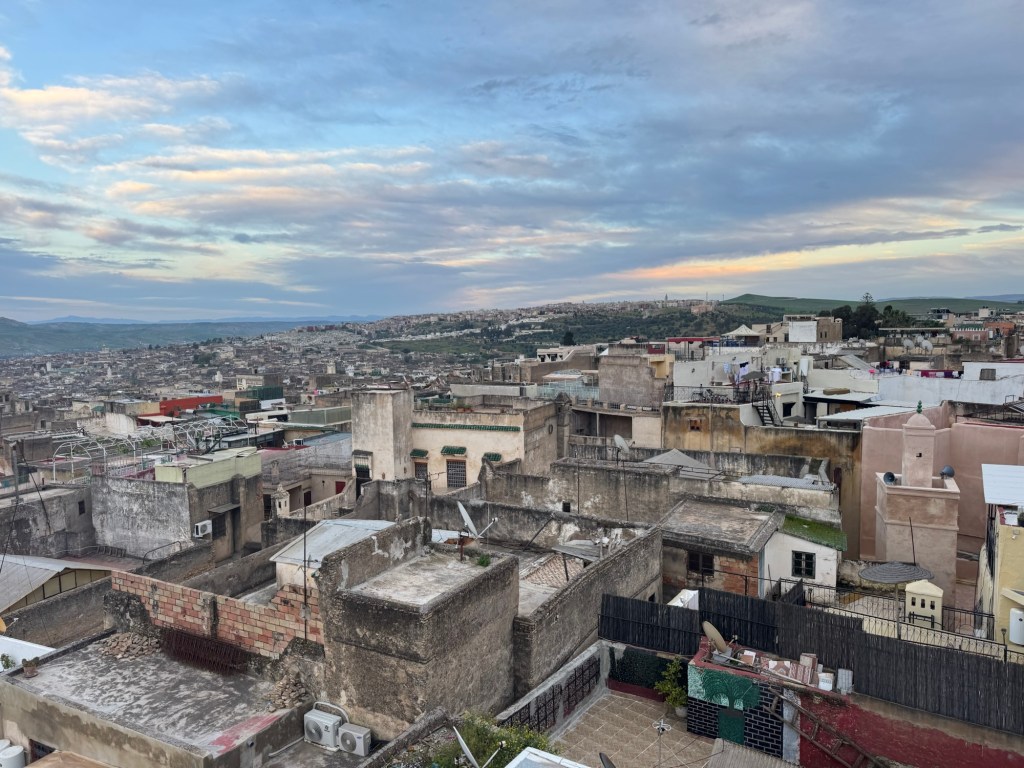
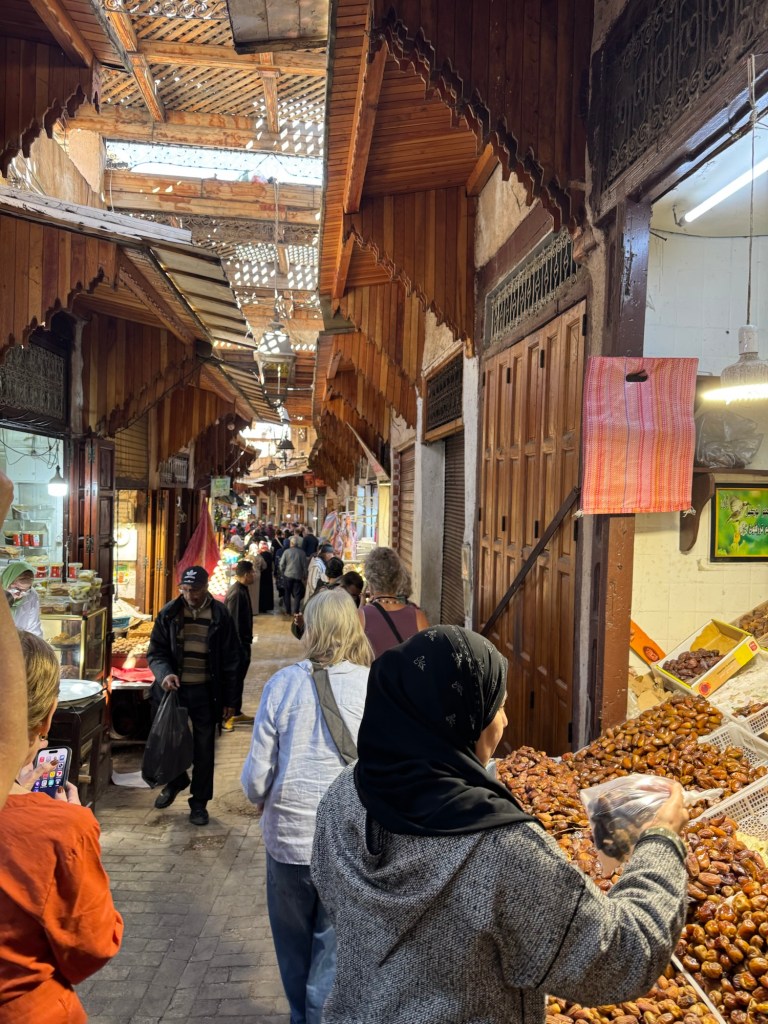
The Fes el-Bali Medina (the walled city of Fez) is the largest urban pedestrian zone in the world. It contains nearly 10,000 narrow alleyways and stretches for miles. I always love doing new and different things, so this was right up my alley (haha). Since I can get lost in my own town, I wasn’t quite sure how this would go. GPS doesn’t work here, and people frequently lose their way and end up paying someone to guide them out. In fact, a GPS company once tried to map the medina so tourists could navigate it, but after two years, they gave up.
Thankfully, we had locals with us to keep us on track, and our tour leader kept up a steady patter: “Stay together, watch your step, don’t block the road, don’t walk in the middle—stay to the side…1111”
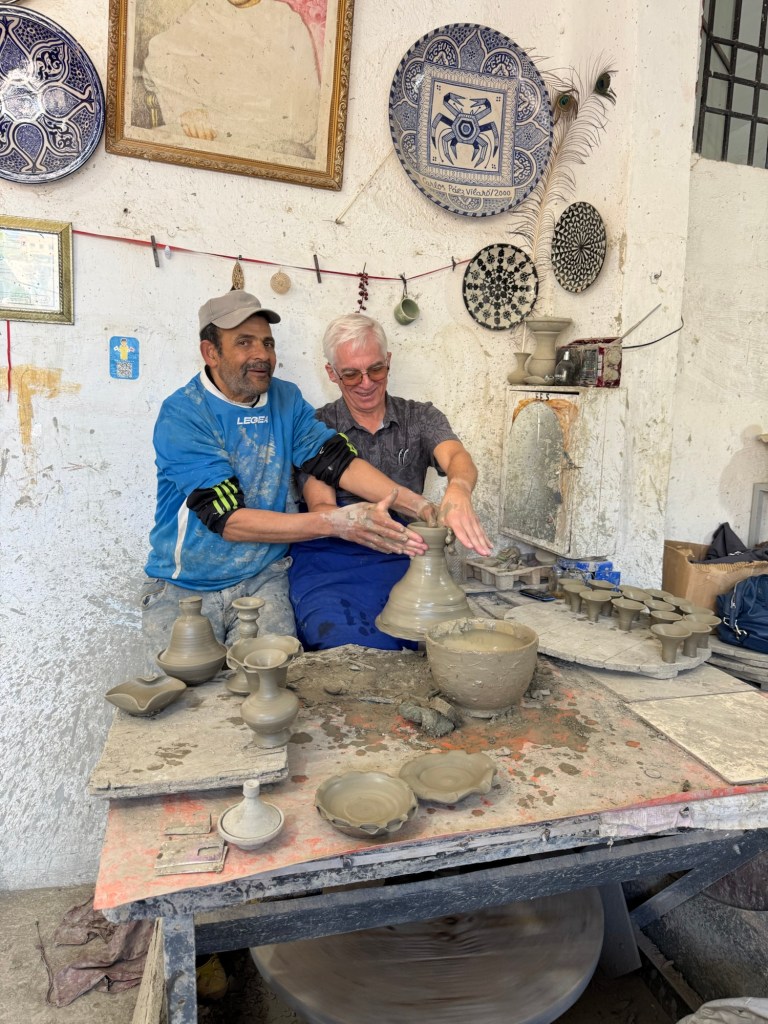
Our first stop was a ceramics factory just outside the medina, where several of us tried our hands at the wheel.
Jim making a bowl
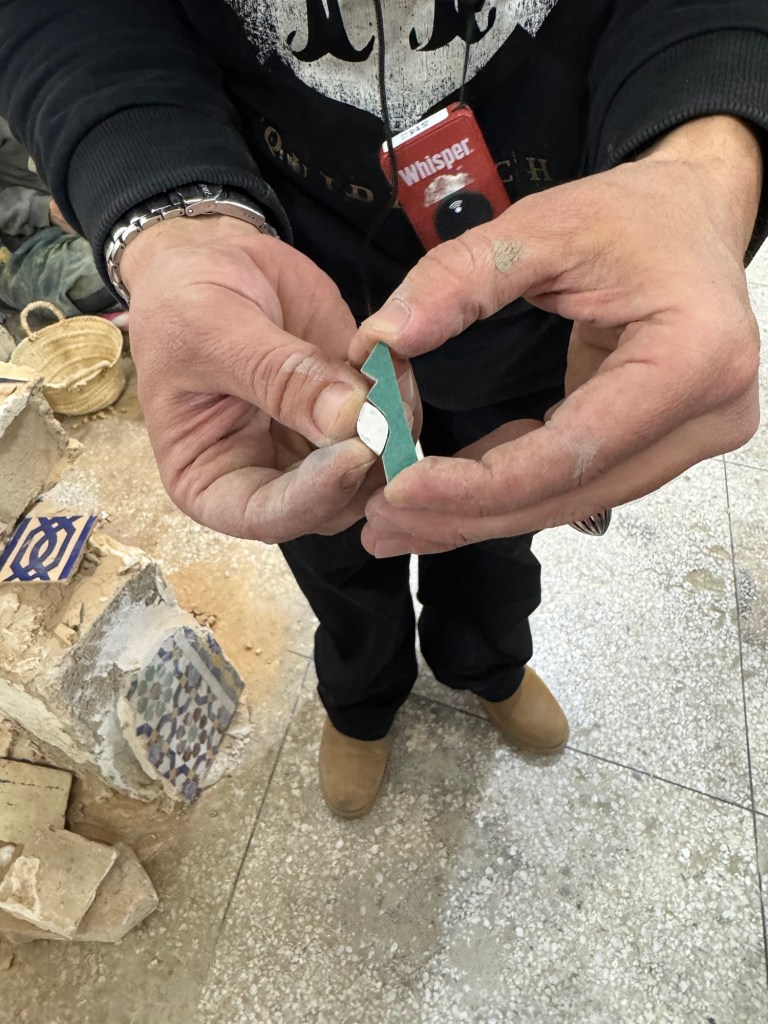
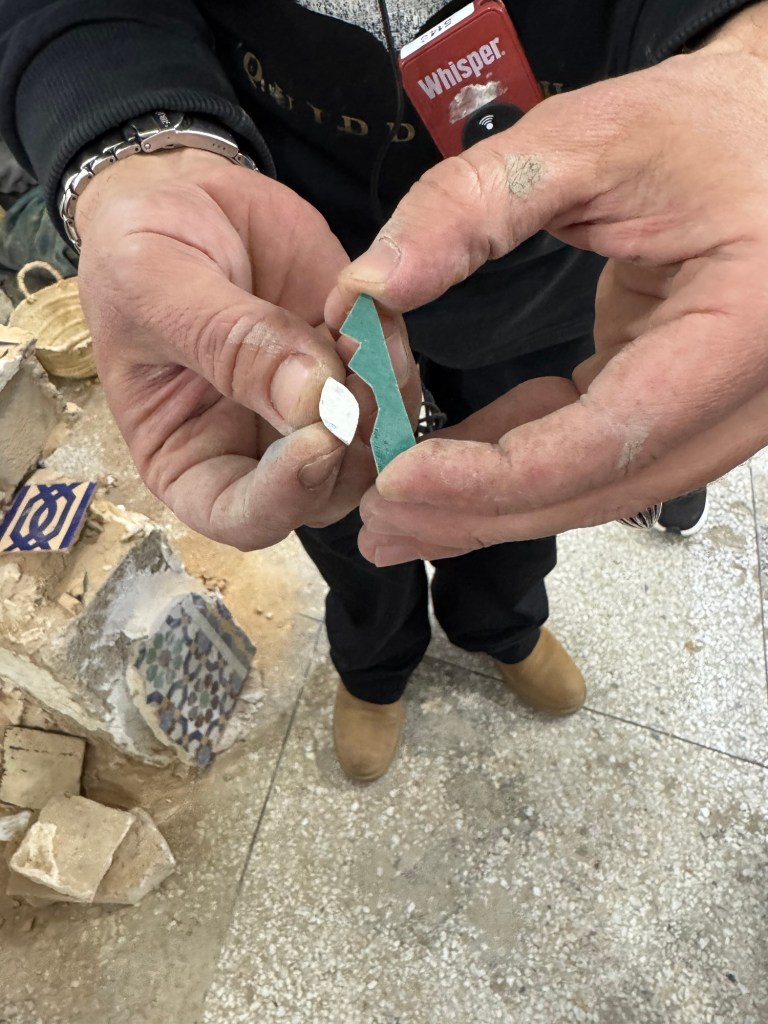
In another area, flat glazed tiles are chiseled into tiny pieces that miraculously fit perfectly together.
These two pieces are cut by different people but fit together perfectly
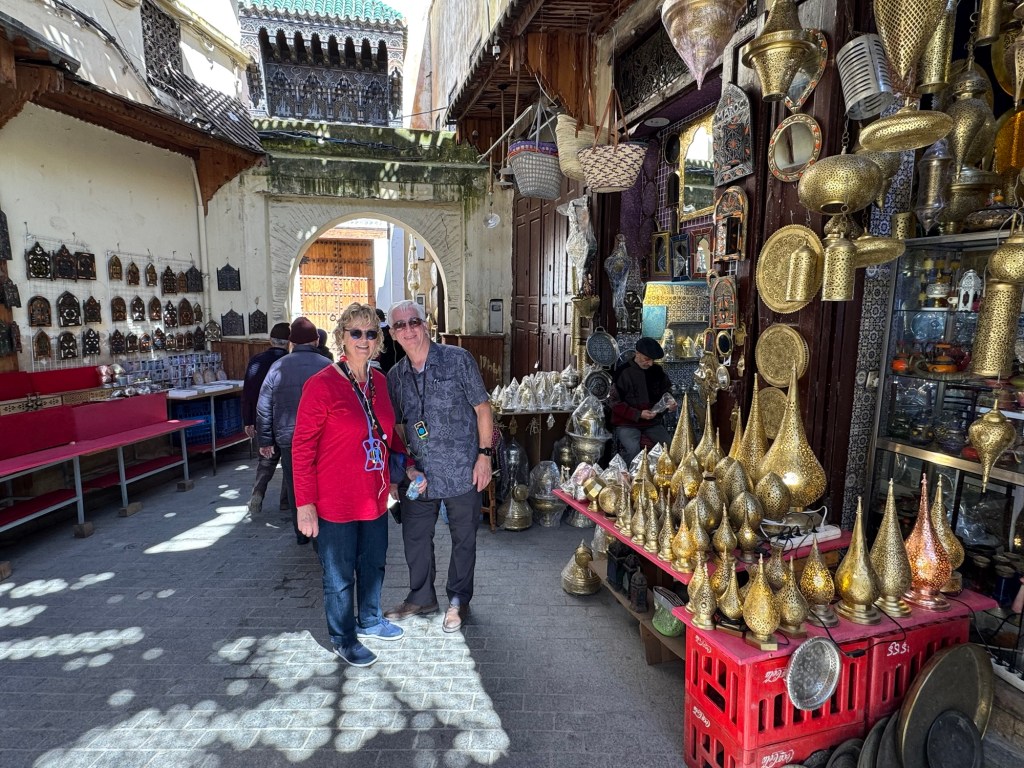
The streets are incredibly narrow, but hidden behind the humble, sometimes crumbling walls are vast and beautiful homes, schools, workshops, mosques, restaurants—everything you’d expect in a vibrant city of 100,000 people.
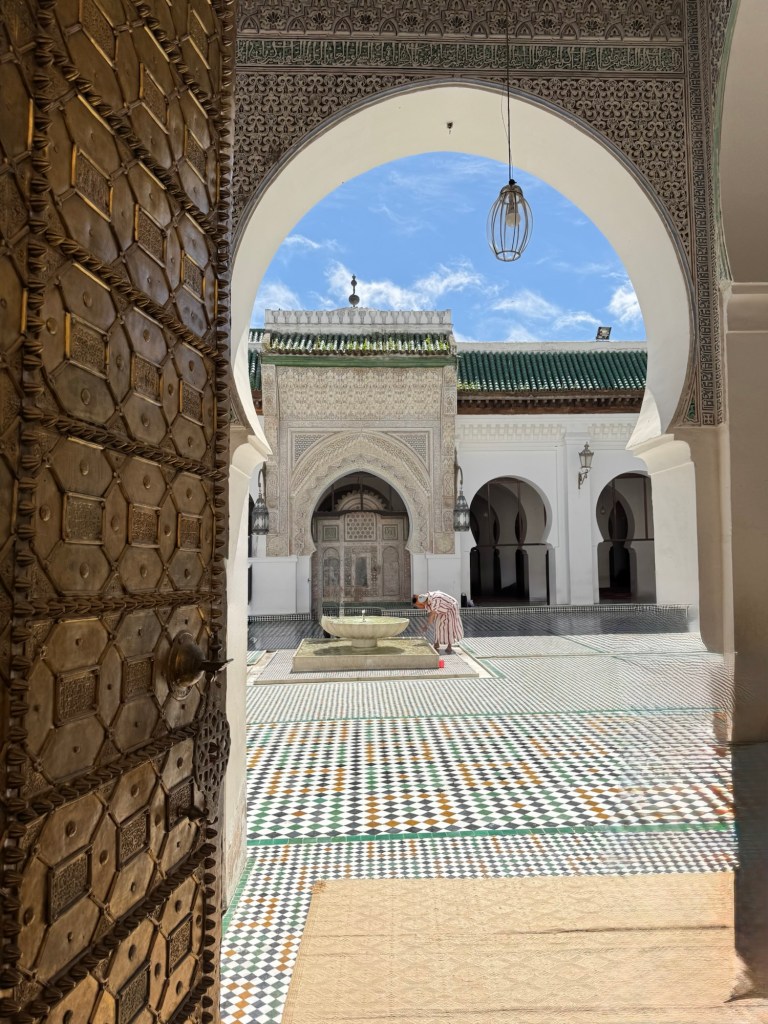
The market part of the Medina MattOldest continuously operating university in the world
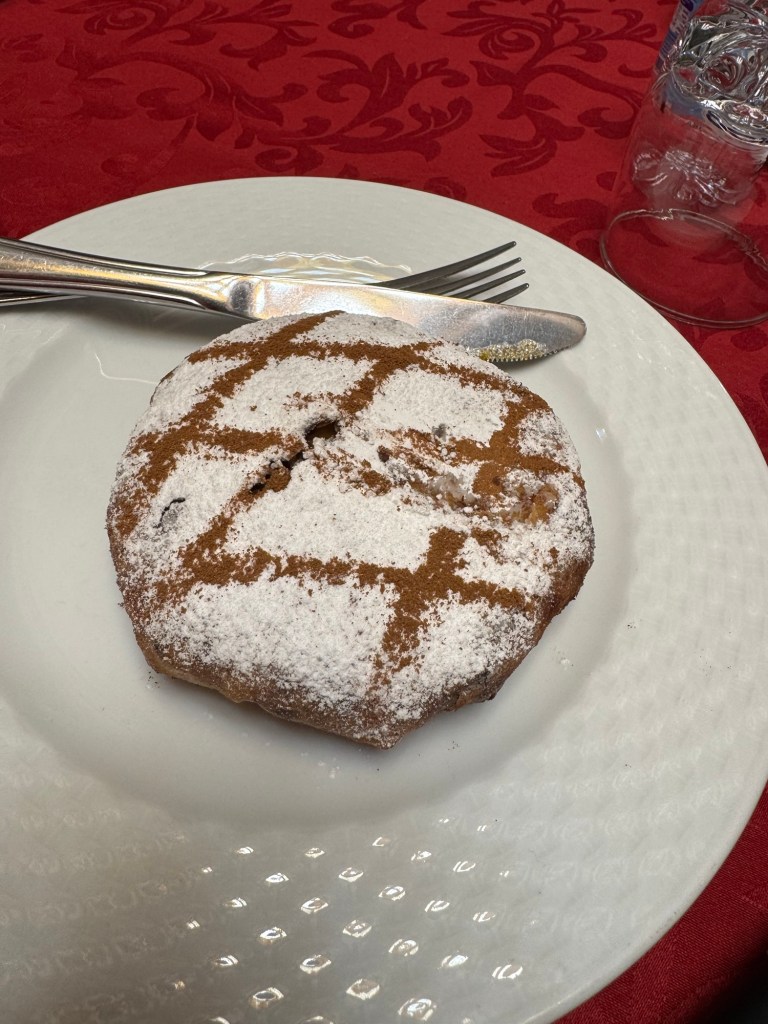
Lunch in the medina was the best meal I’ve had here—and the food has been wonderful. It was the Moroccan version of chicken pot pie, filled with meat, ground nuts, and cinnamon, and topped with powdered sugar. 😋
Moroccan Pastilla
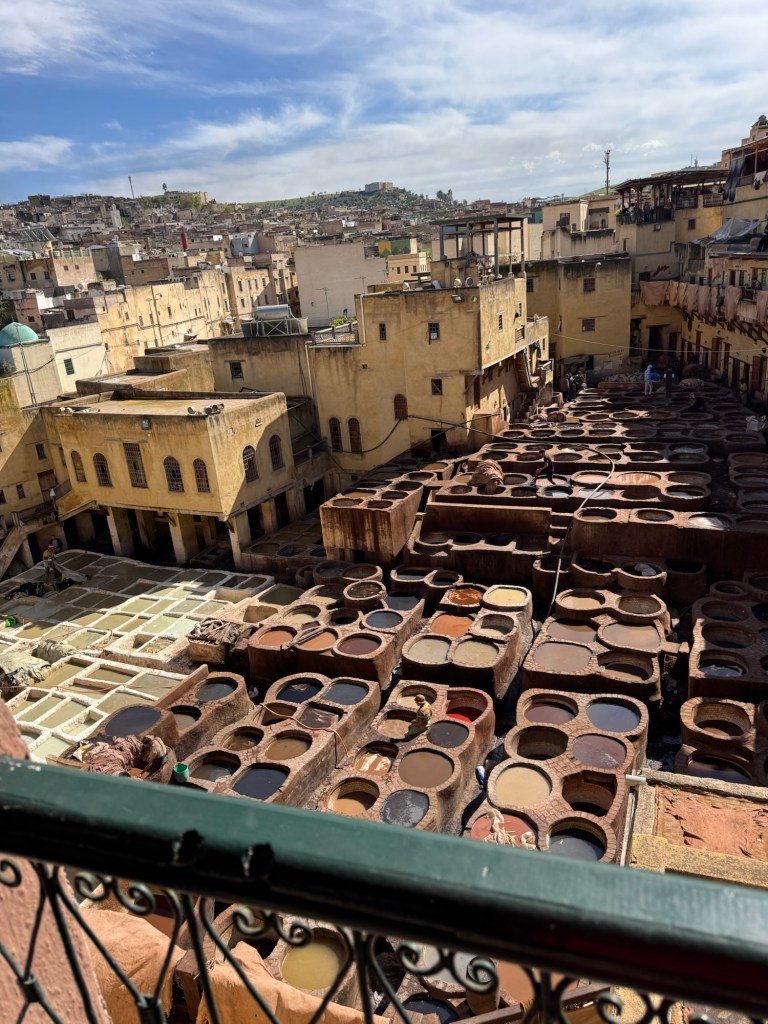
Next stop: the tannery
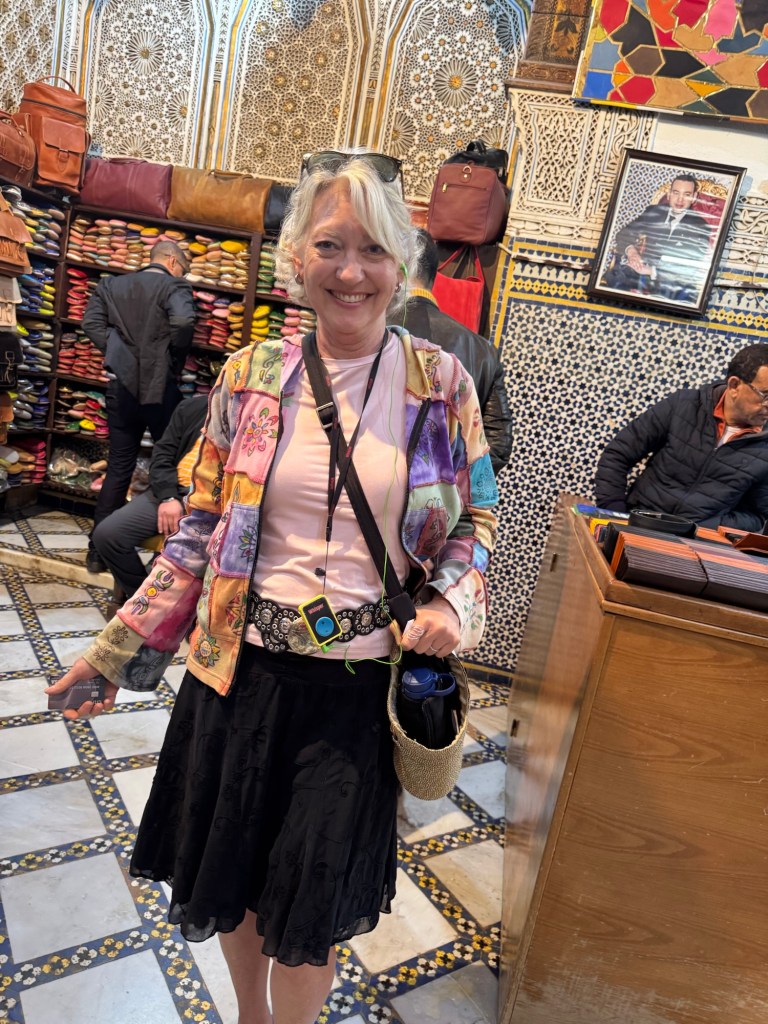
Oldest continuously working tannery. Skins progress from the white vats (filled with pigeon poop) to the next and the next.Shonda with her new leather beltMarilyn’s camel belly leather jacket
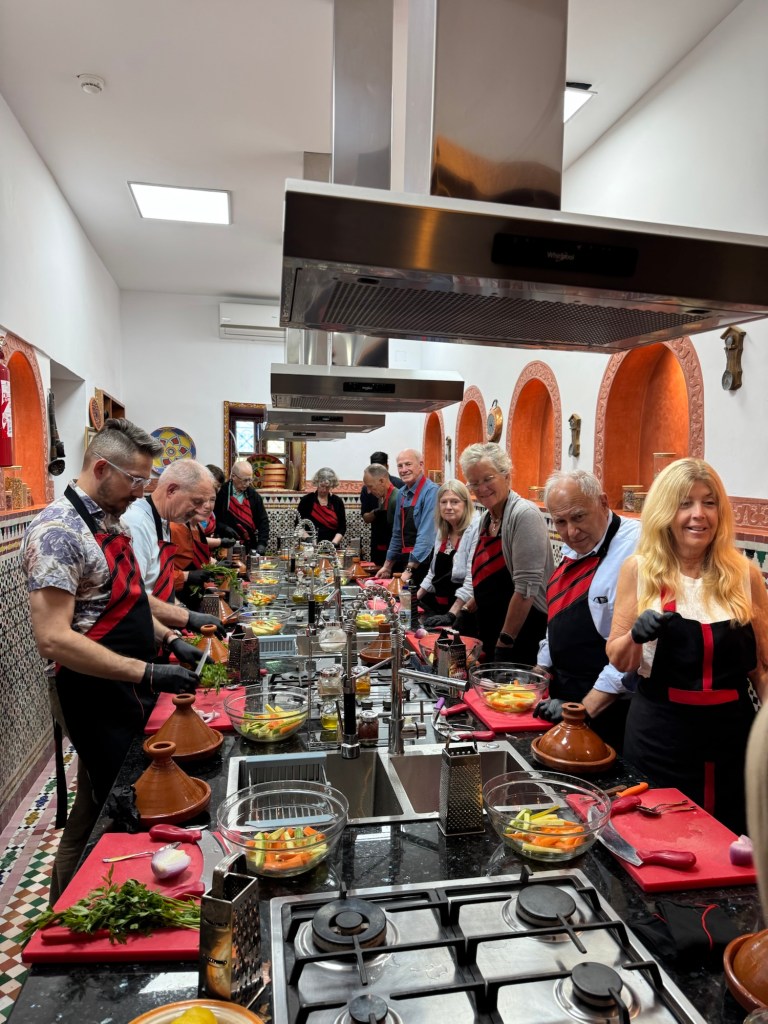
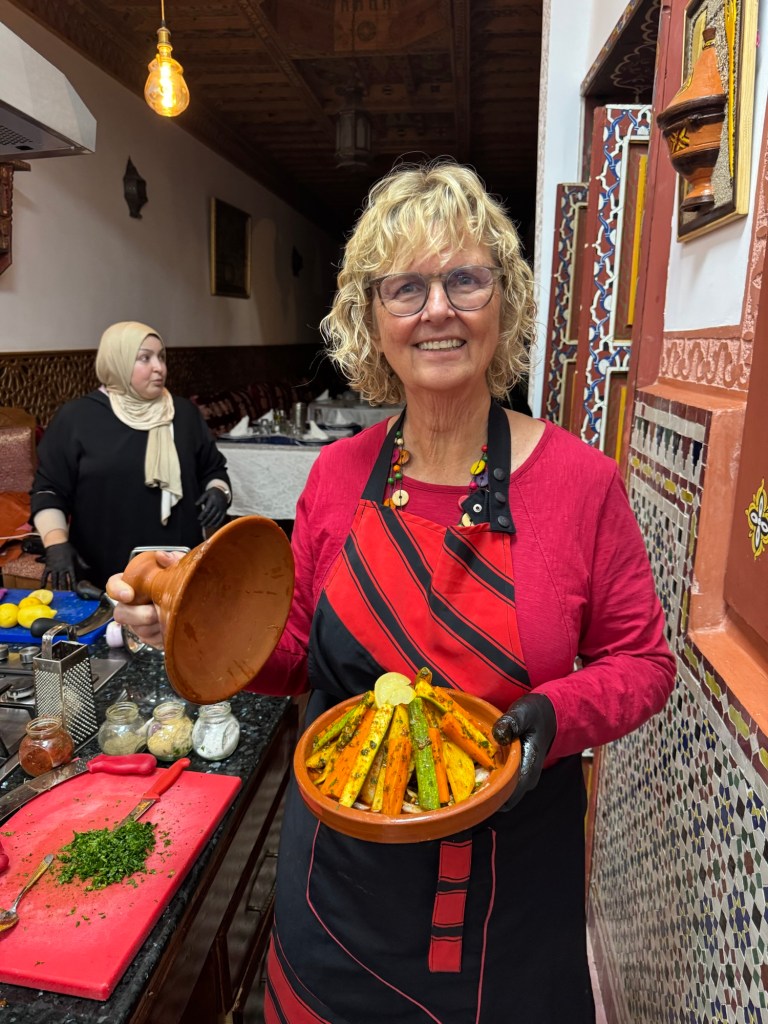
For dinner, we cooked our own chicken tagine with preserved lemons. It was fun to explore the rich flavors of Moroccan spices.
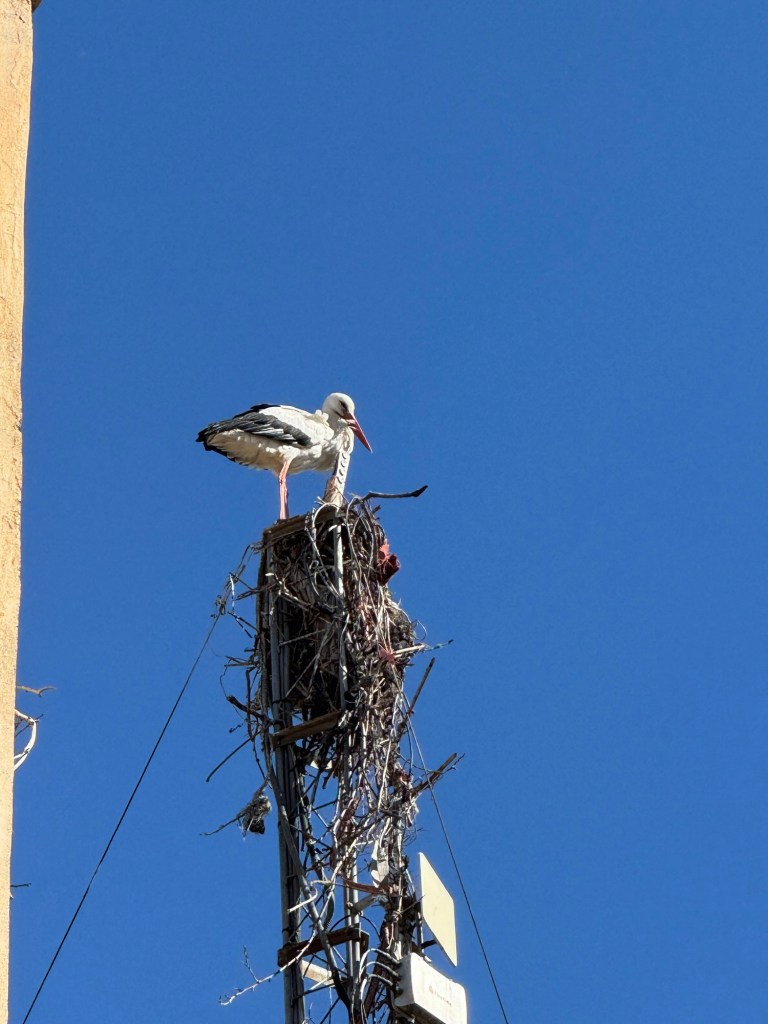
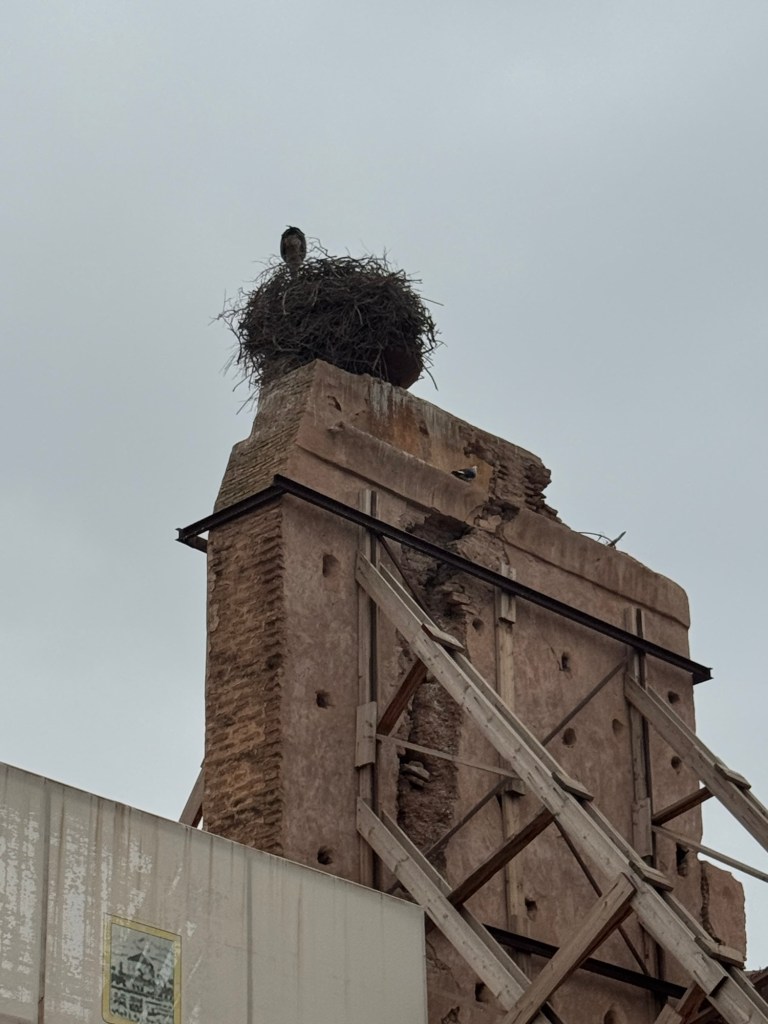
Storks are protected here and they are everywhere. I love it.
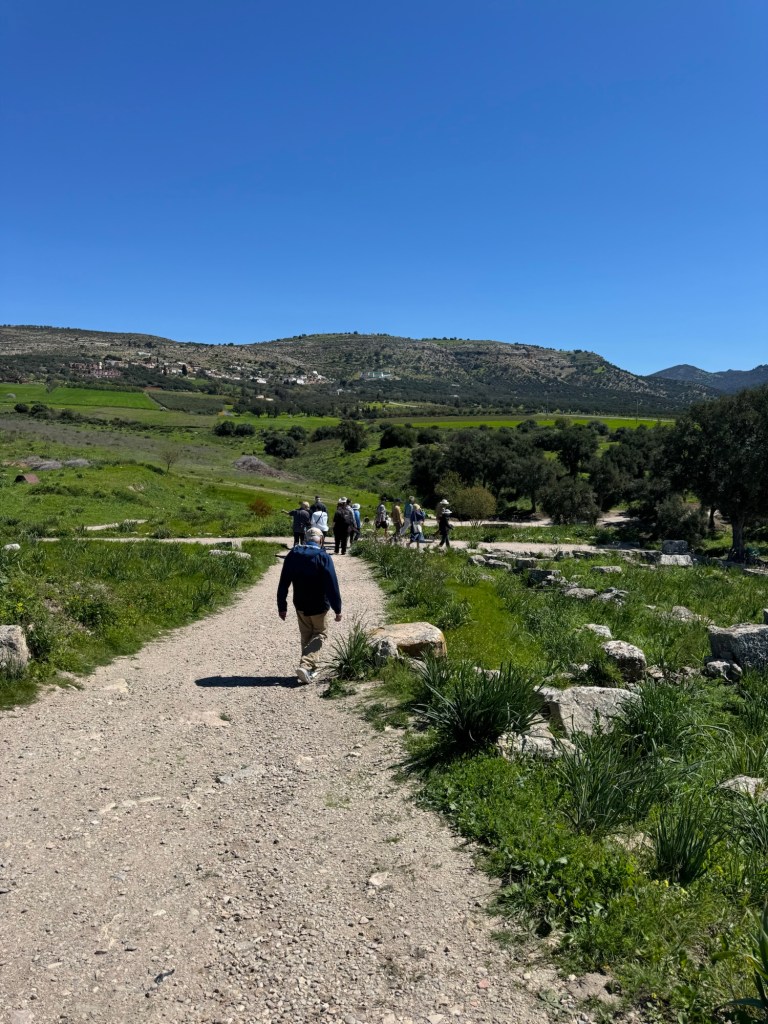
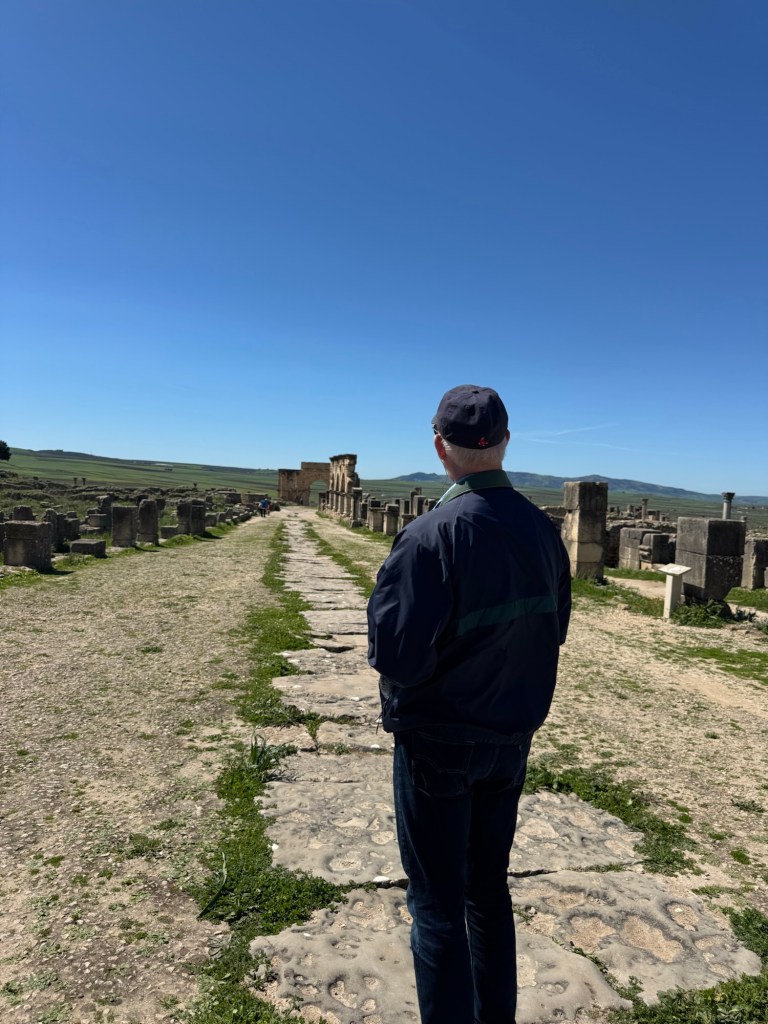
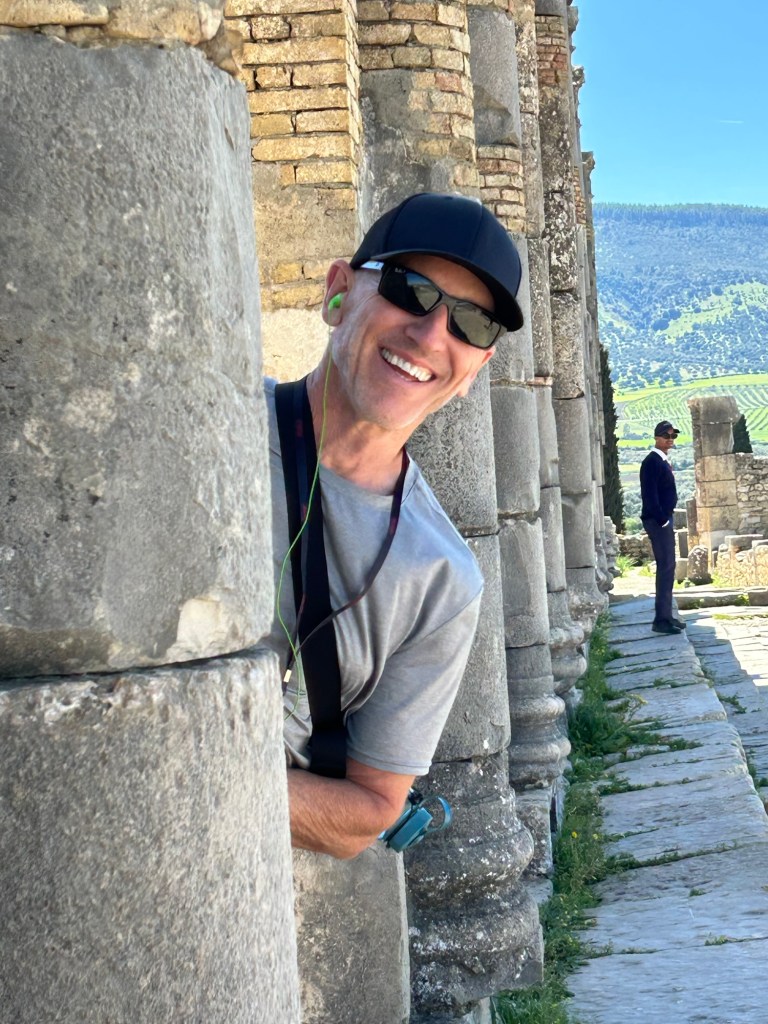
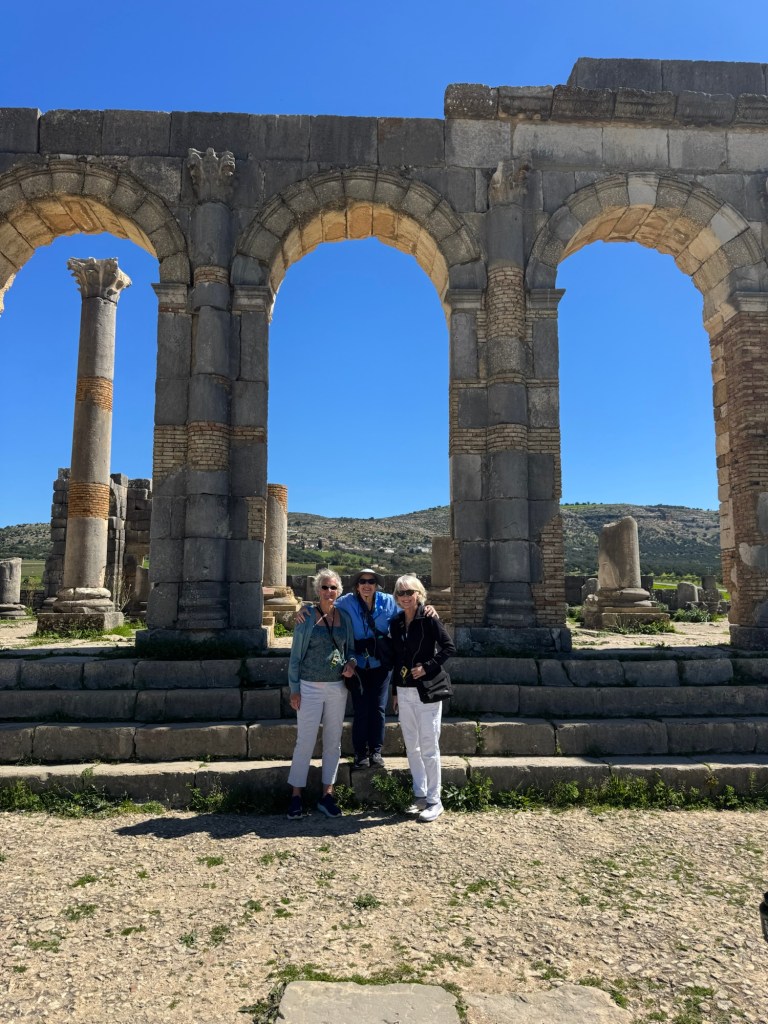
What I like about an EF trip is getting to do a bunch of really different things. Today we visited the UNESCO World Heritage site of Volubilis, first settled in the third century BC.
Other ruins I’ve seen were surrounded by brown, barren landscapes, but here the ancient remains were set in the midst of a vast garden.Warren on “Main Street” where stores once lined this ancient road
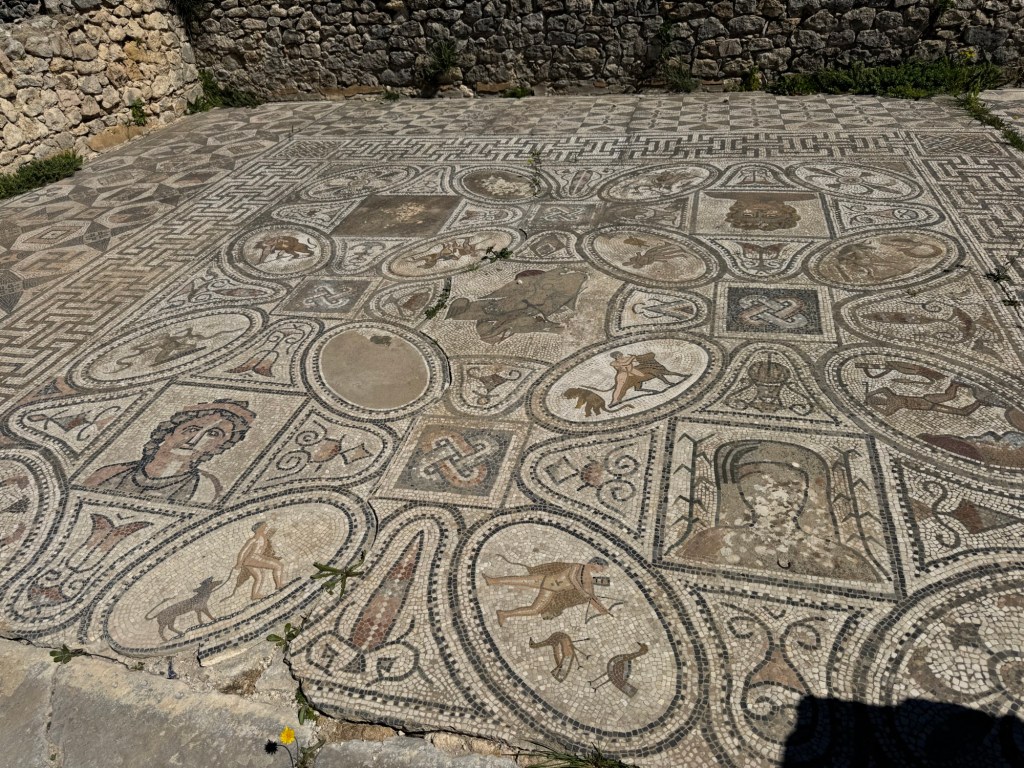
Morocco is still relatively new to tourism, which makes visiting it extraordinary and authentic. I suspect that in ten years, many things will inevitably change. You won’t be able to walk right up to ancient ruins or run your hands over the beautiful mosaic floors. The visitor center—nonexistent now—will likely be a sleek, modern building with interactive displays, but in the process, something valuable will be lost.
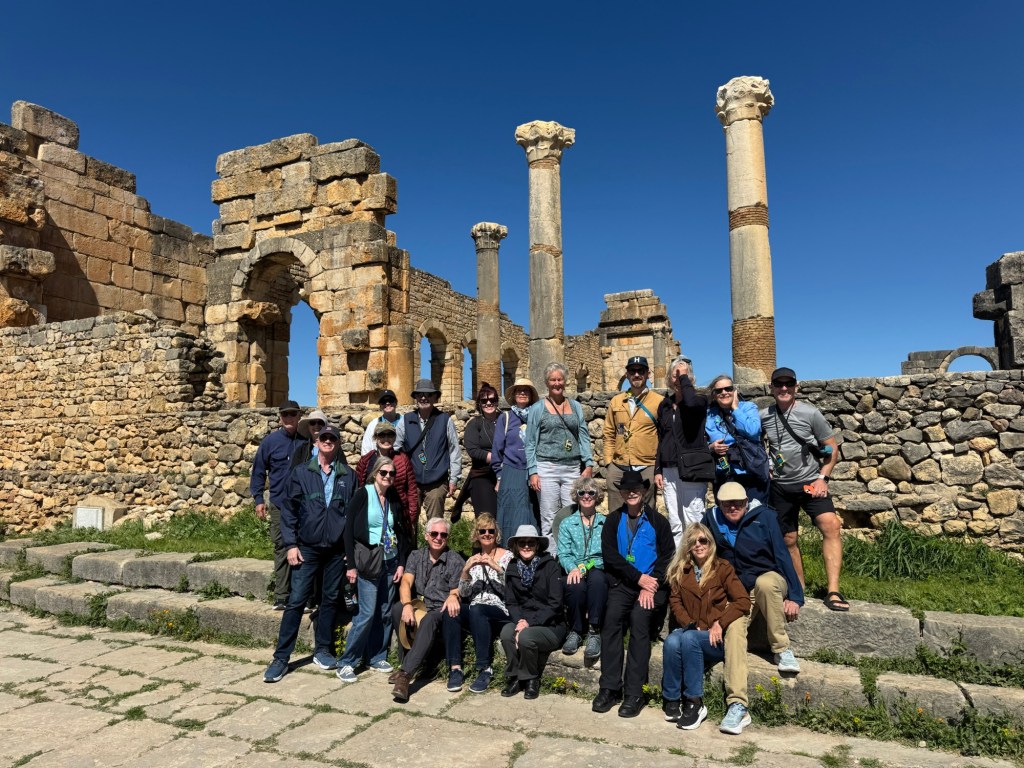
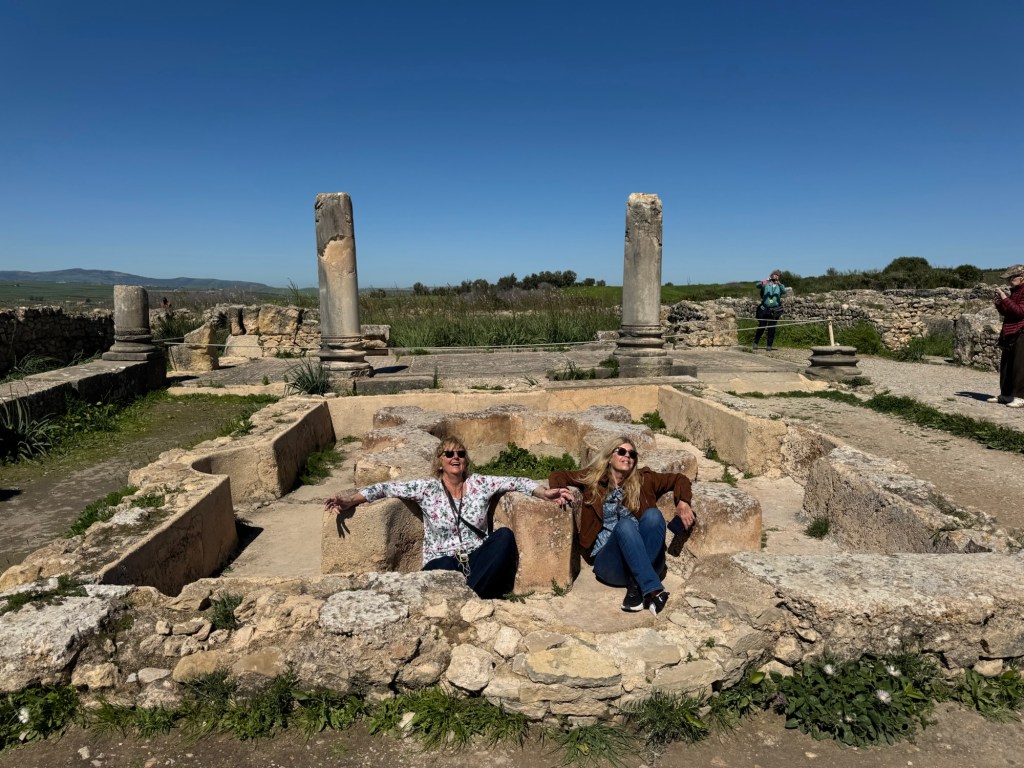
Our groupMike The three choir members in front of the ancient churchThe homes for the wealthy had beautiful mosaic floorsMarilyn and I enjoying an ancient hot tub
When you travel, you sometimes encounter ways of doing things that seem perfectly normal to locals but downright insane to tourists. Today, we hit a breaking point over the bathrooms: you have to pay a small coin to use them—but getting small coins is nearly impossible. If you buy something, you might get one of these valuable coins, but we’re using public restrooms three or four times a day. At one convenience store, the people who bought snacks first literally used the last coins in existence. When we tried to break a bigger bill, the cashier shrugged and said, “Credit card only—we’re out of change!” After a brief threat of mutiny, we finally solved the crisis by appointing our Arabic-speaking guide as Supreme Bathroom Tip Overlord. All is well now.
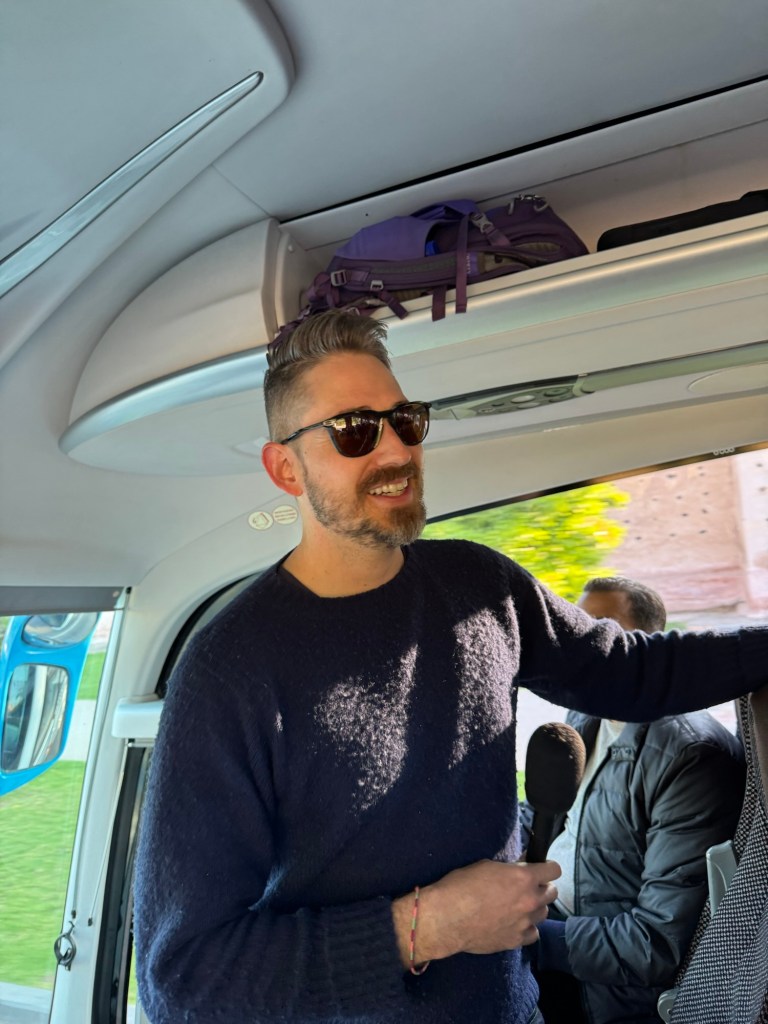
My son-in-law, Matt, was late to the bus this morning, so as “punishment” the tour director made him sing—without realizing that he really can sing. I always love hearing Matt sing, so this “punishment” was actually a treat for me. 🎶
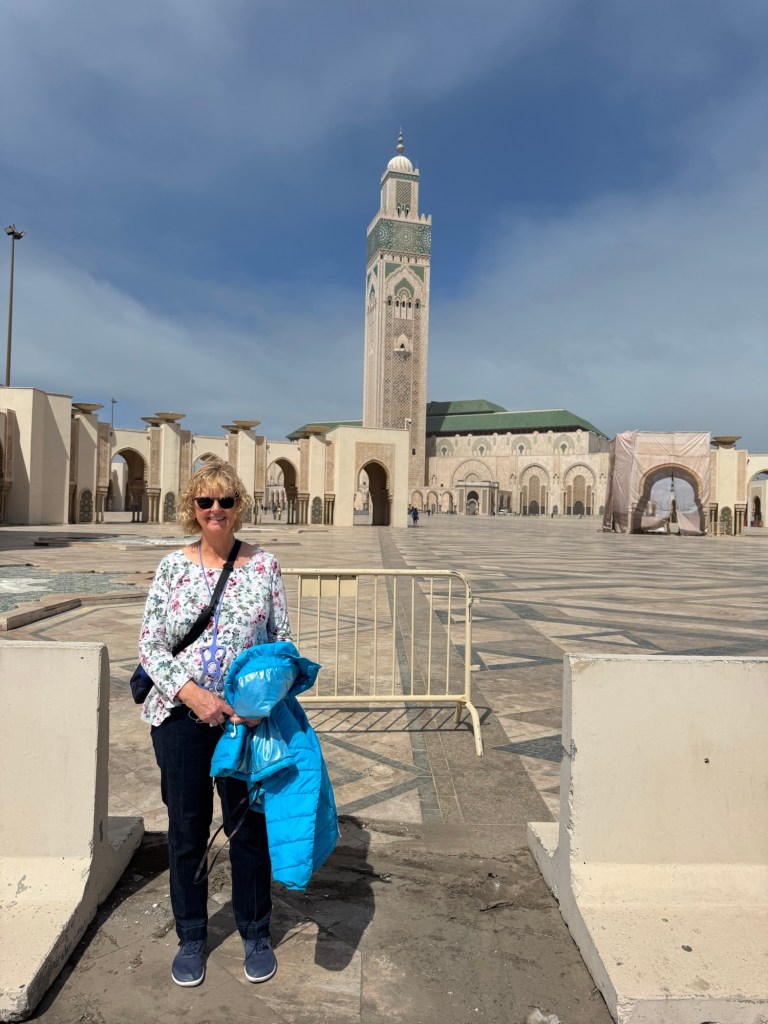
First stop: Casablanca, the financial capital of Morocco. Because of the movie, the name brings up all kinds of romantic images, but the city itself feels a bit like suburban California—nothing especially unique, except for the Hassan II mosque, which is the second-tallest religious structure in the world.
Hassan II Mosque
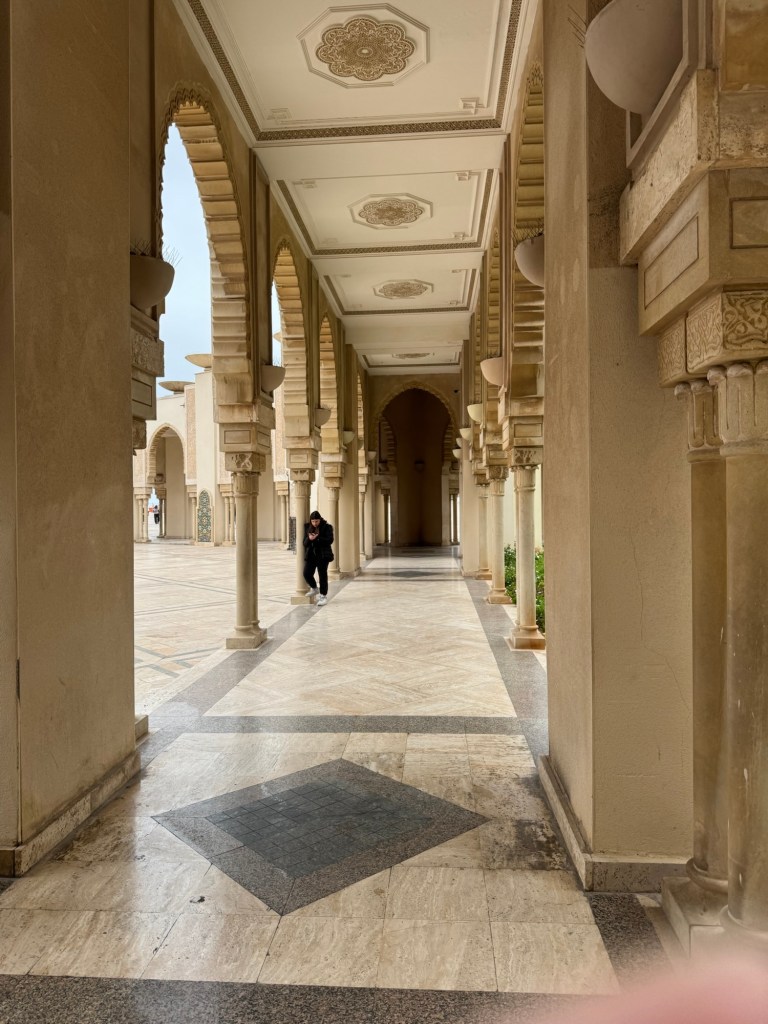
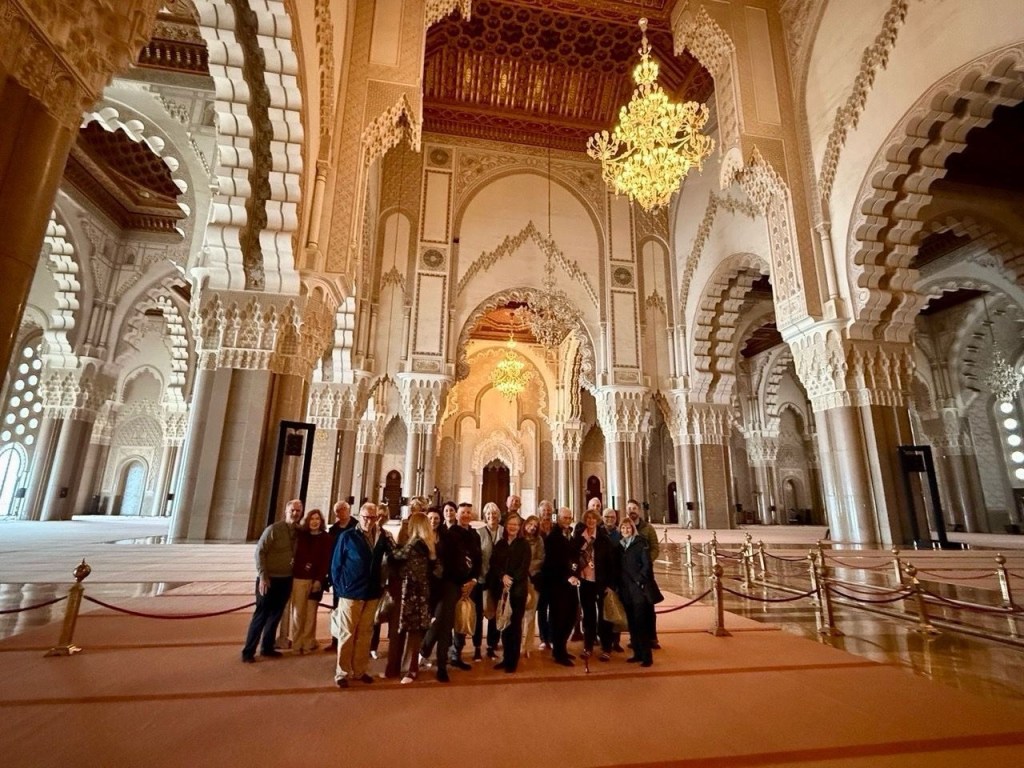
The mosque was finished in 1996 after only six years of construction! It can accommodate up to 105,000 people praying at one time.
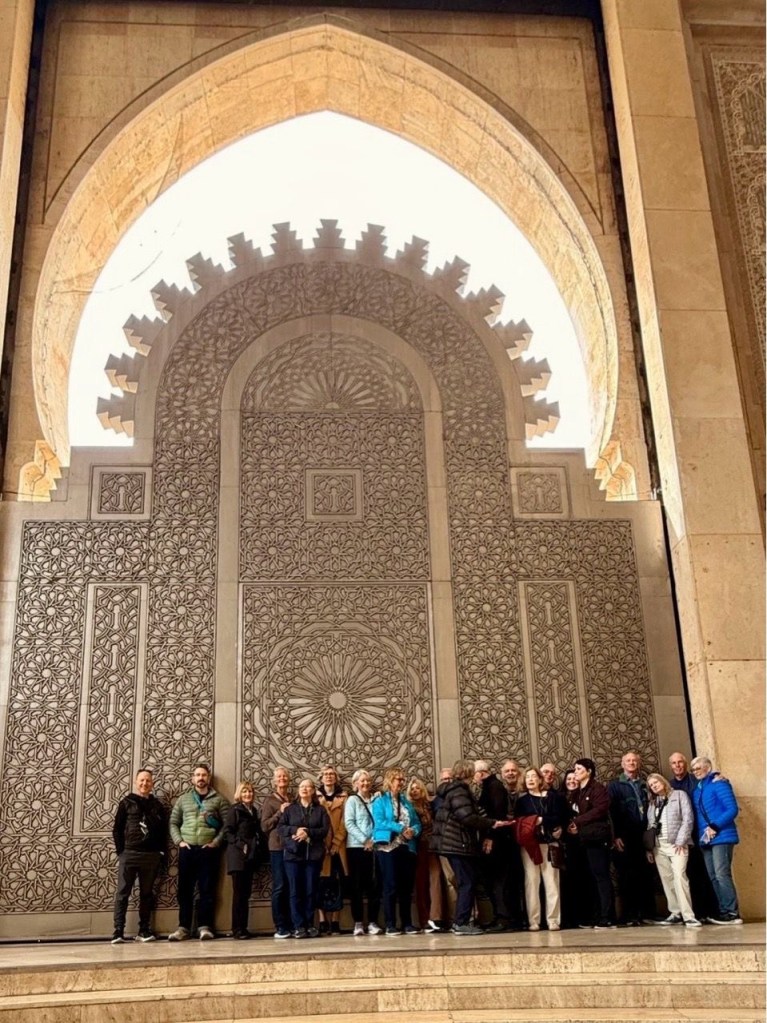
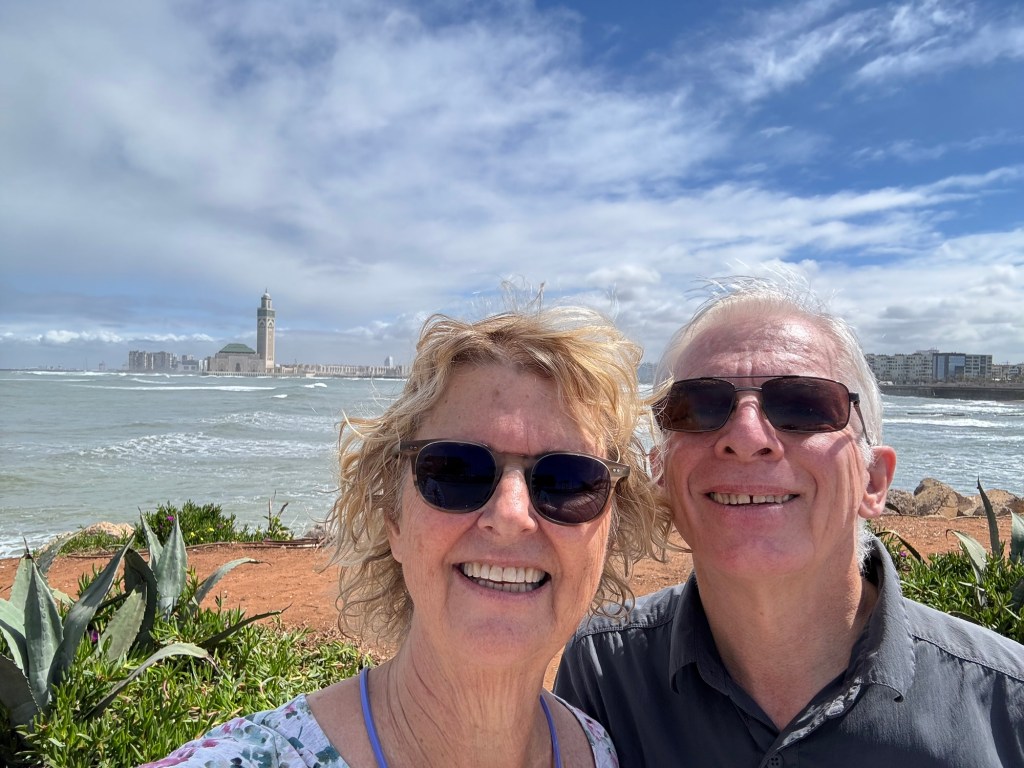
The mosque was ginormous Look at how big the door to the mosque isThe location of the mosque right on the ocean is incredible
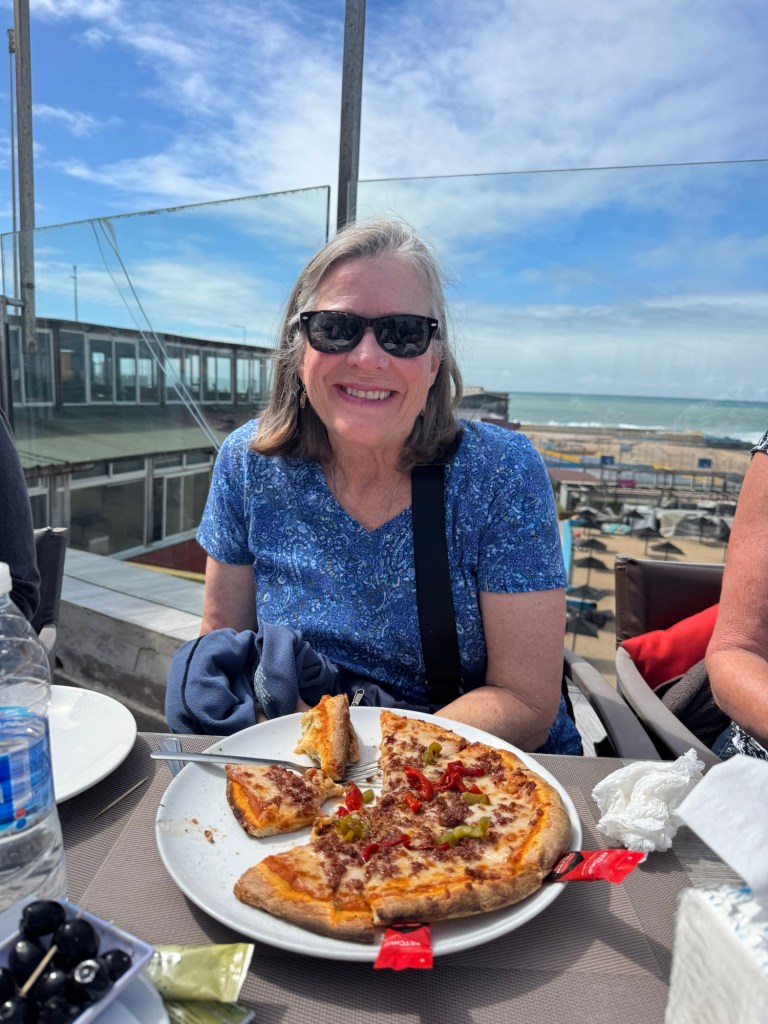
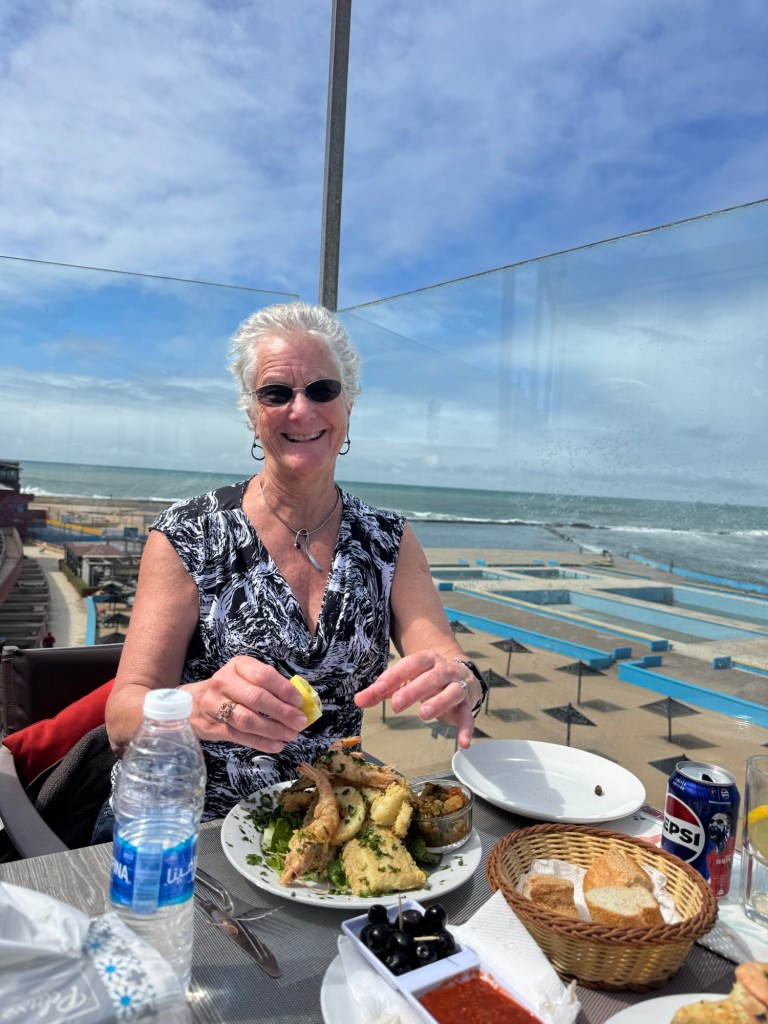
Later, we had lunch in Casablanca right on the water. The view was better than the food, but if I’m with my friends, I’m happy.
Carolyn with her “American” pizza Kay and her fresh fish lunch
The highlight of the day was Rabat. As soon as we drove into the city, I knew it was something special. The whole city feels like a vast park, filled with trees and flowers and lined with wide boulevards. It’s incredibly beautiful. 🌿🌸
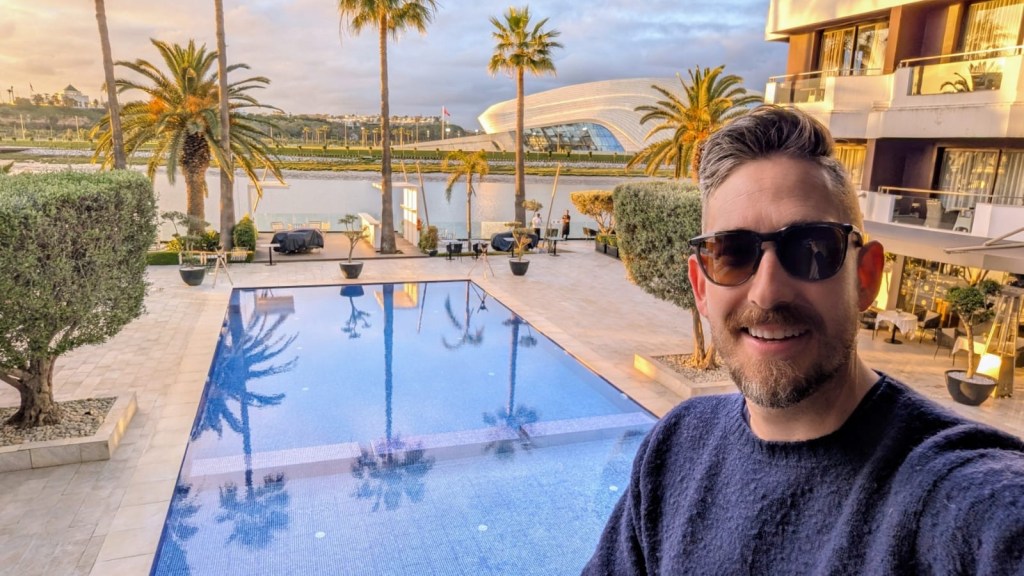
Our beautiful hotel is right on the water across from the Performing Arts Center (seen in this photo Matt took from his balcony.)
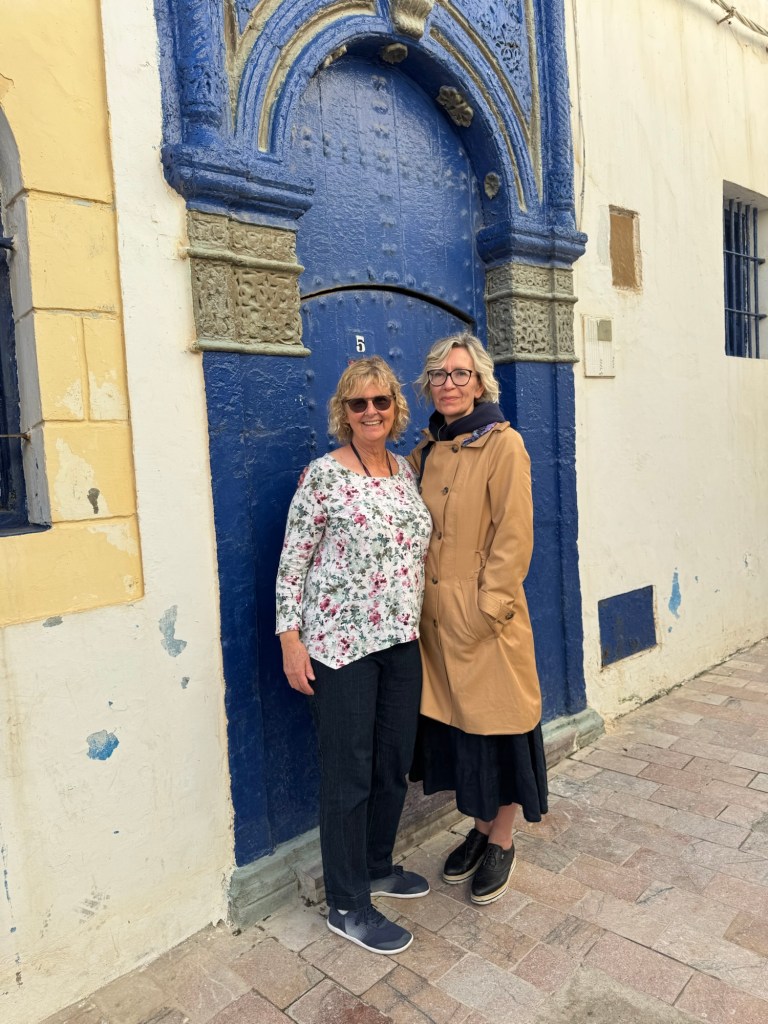
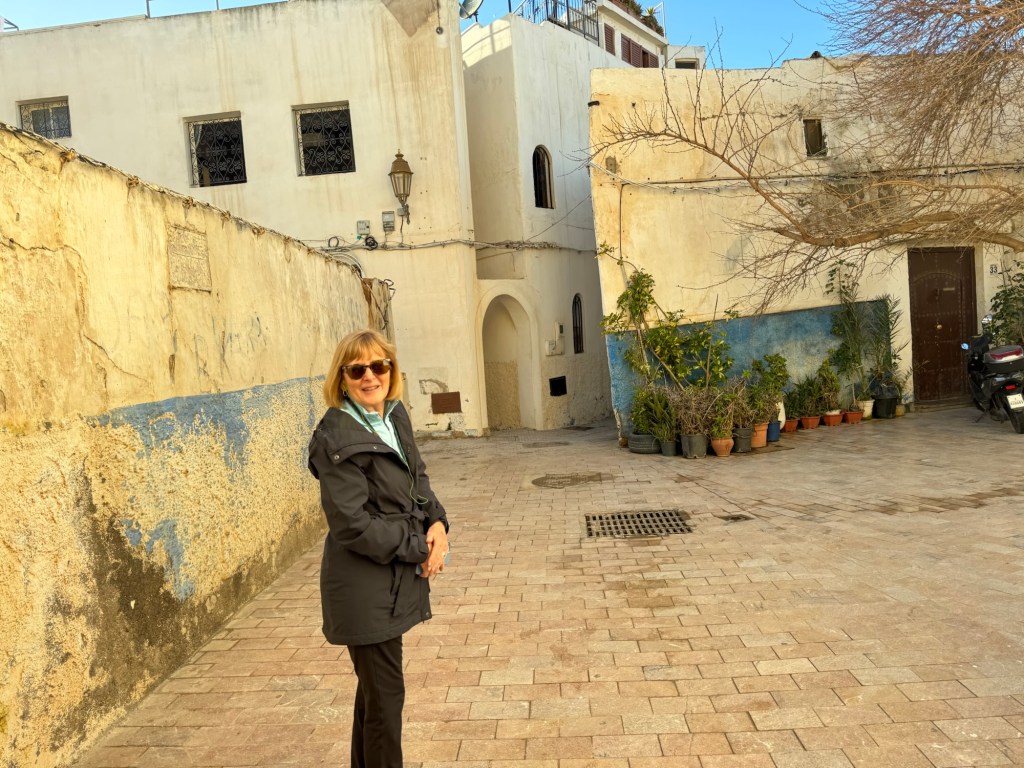
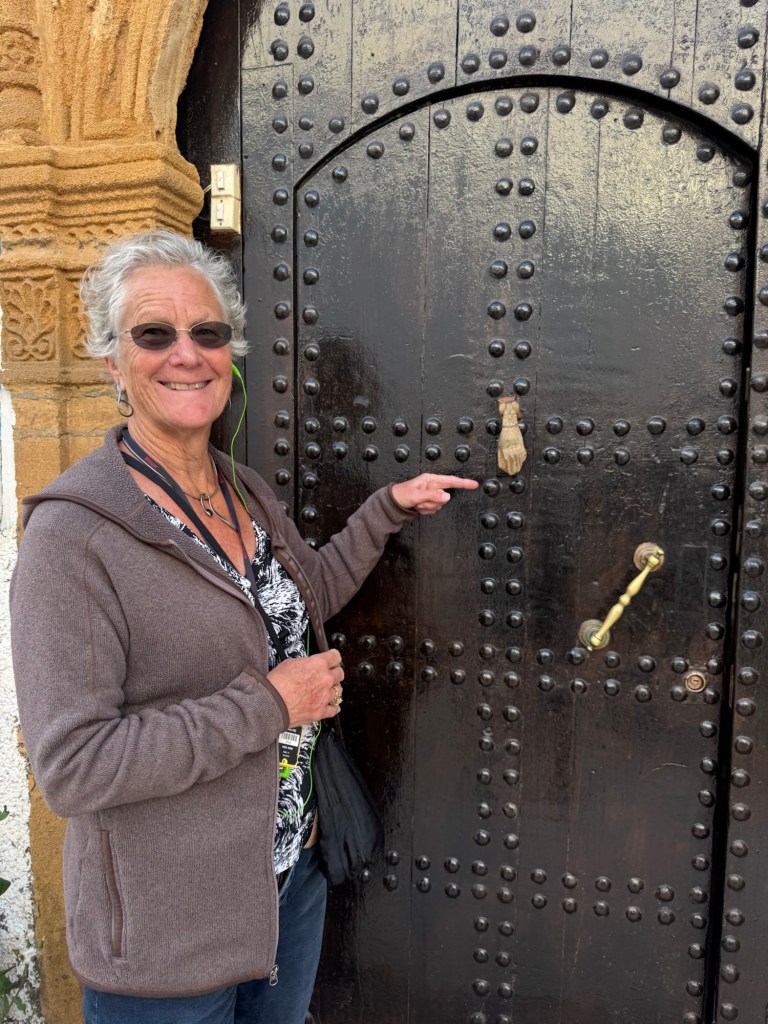
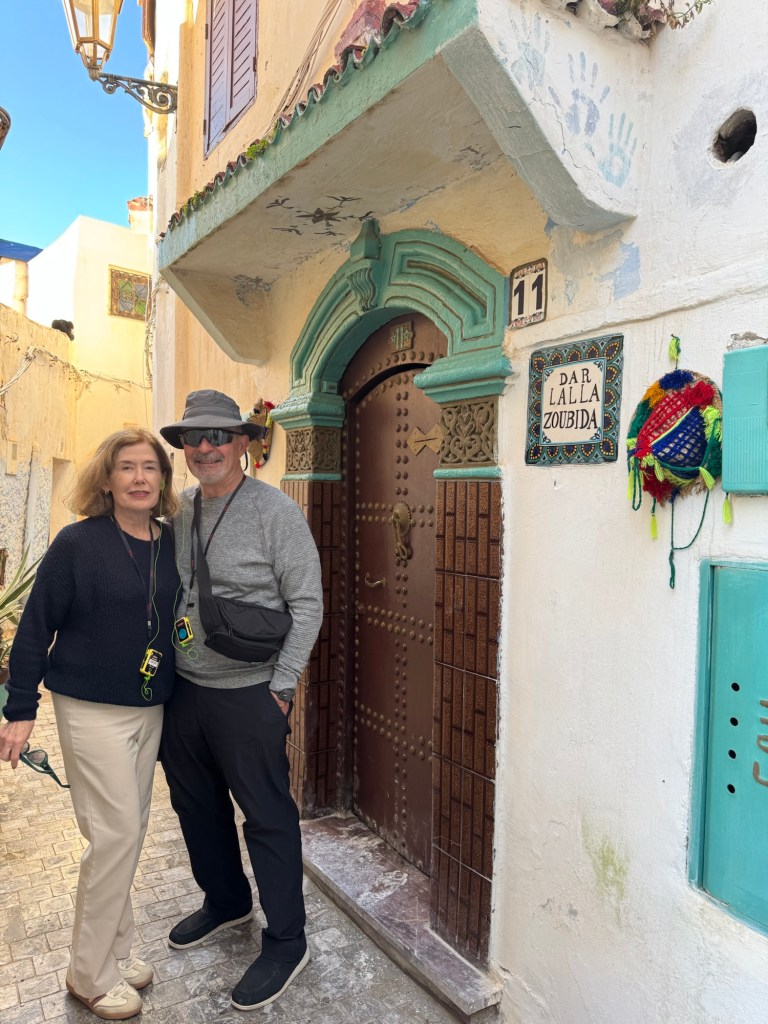
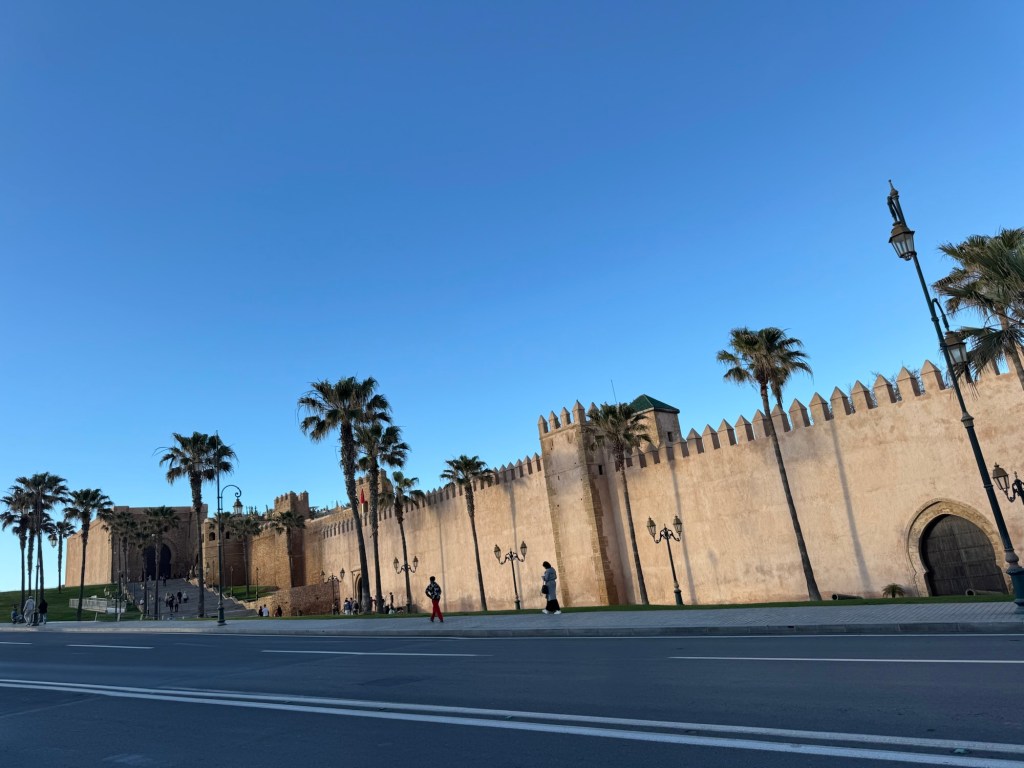
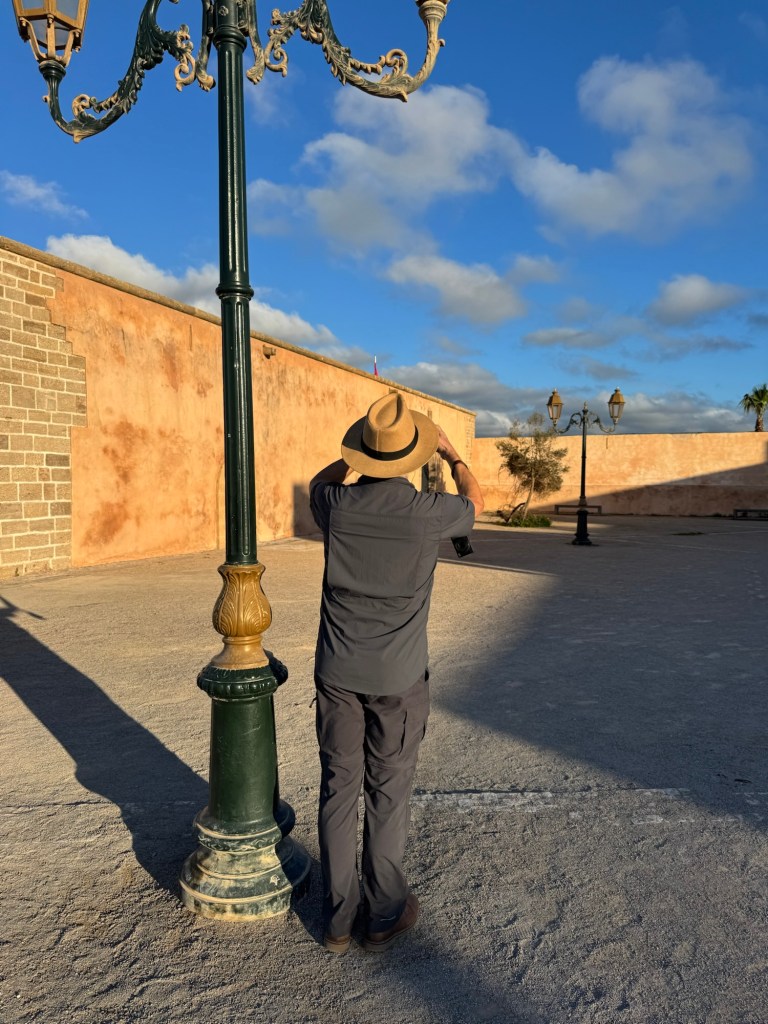
The Rabat Kasbah is like an adorable walled village, with cute doorways around every corner.
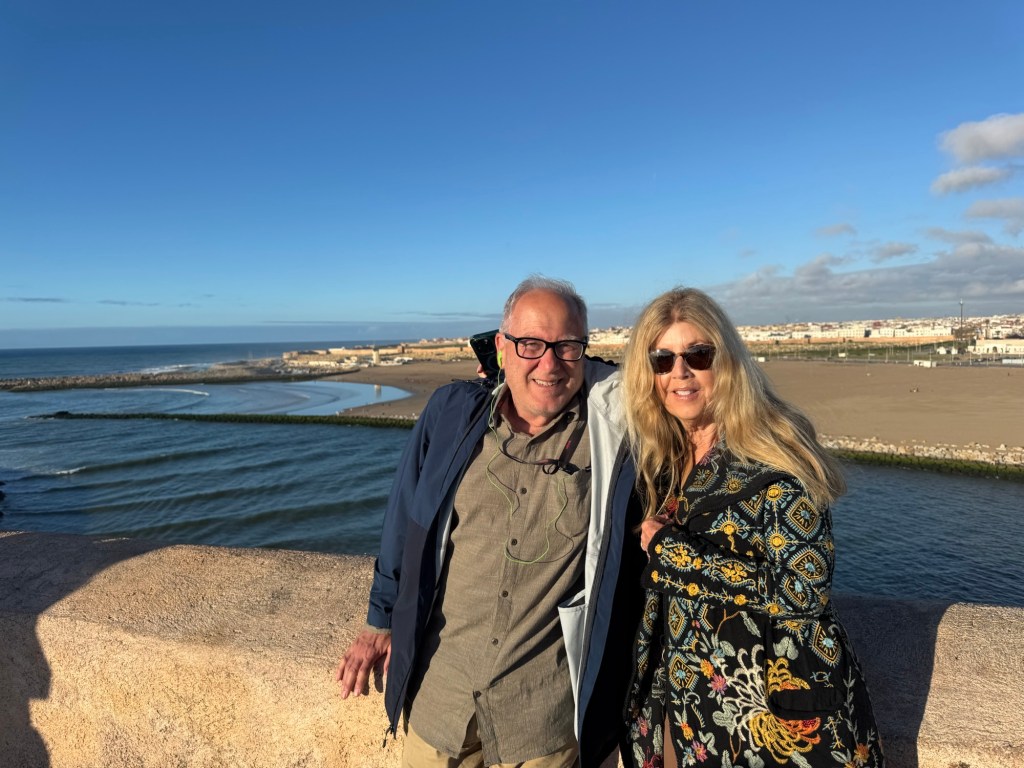
Anna and meJulie Kay Jim and Nancy
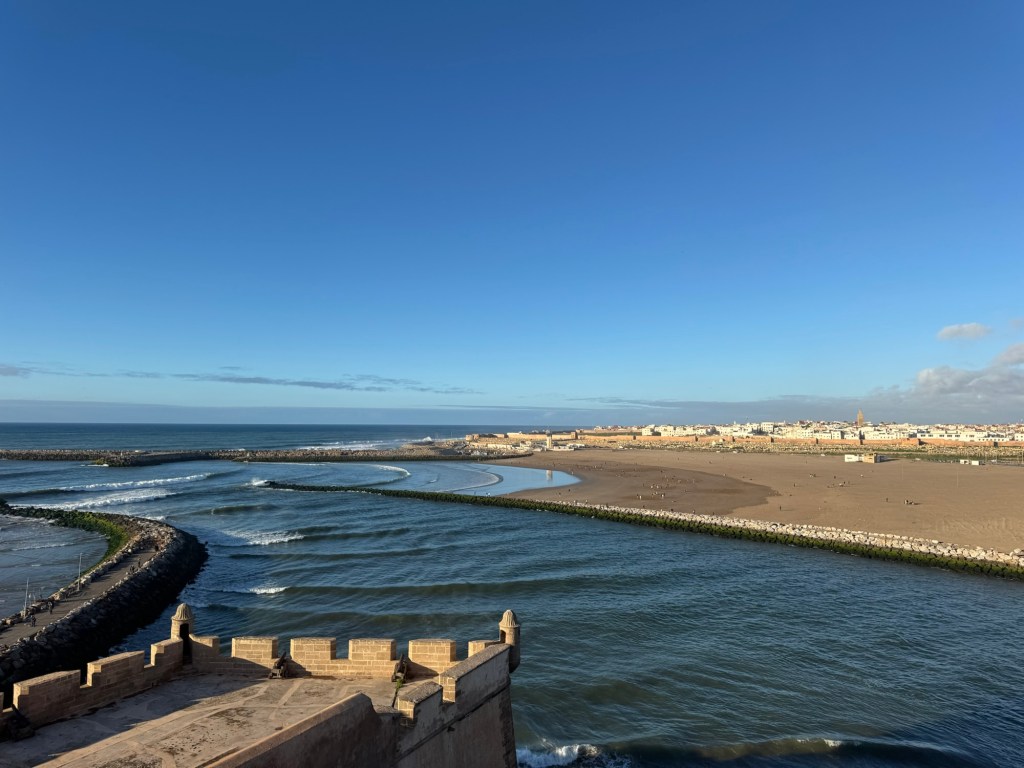
The view of the ocean and river mouth reminded Jim and me of Sicily. I took so many pictures.
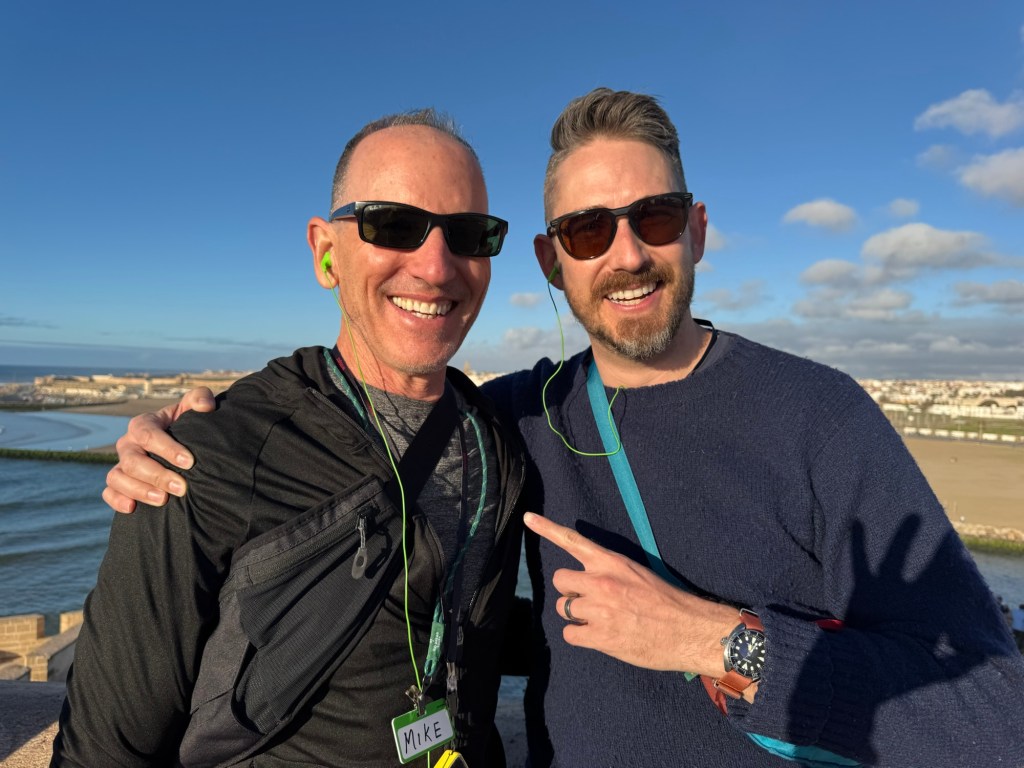
Marilyn and Paul Matt and MikeJimA sweet finale to the end of a wonderful day.
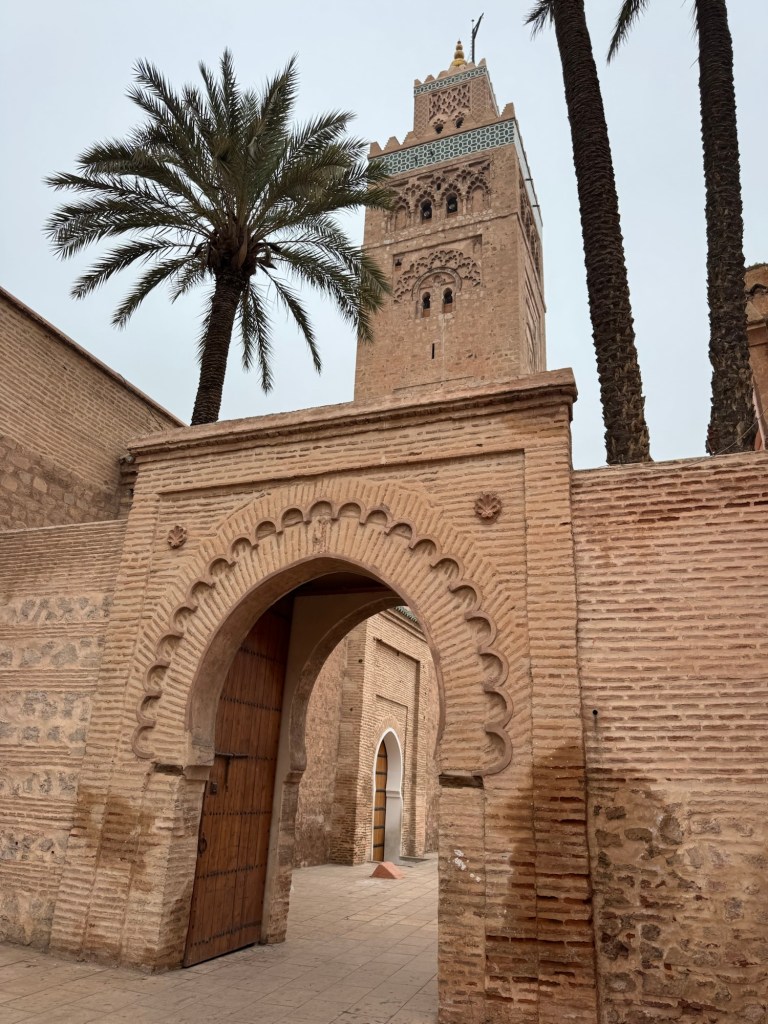
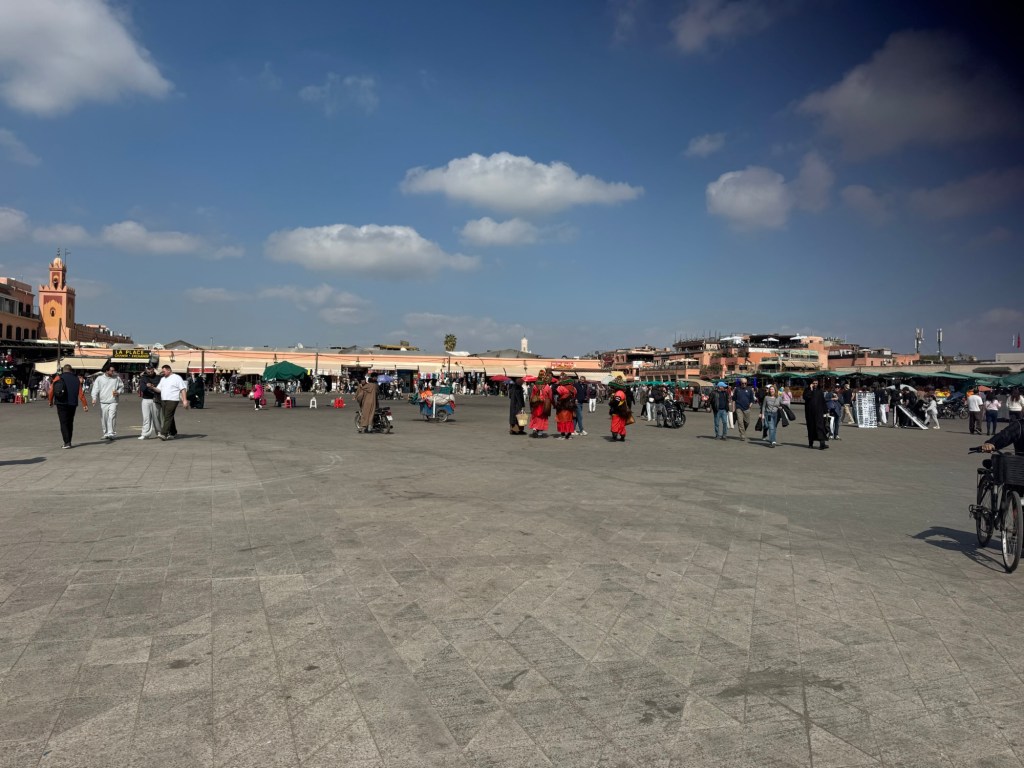
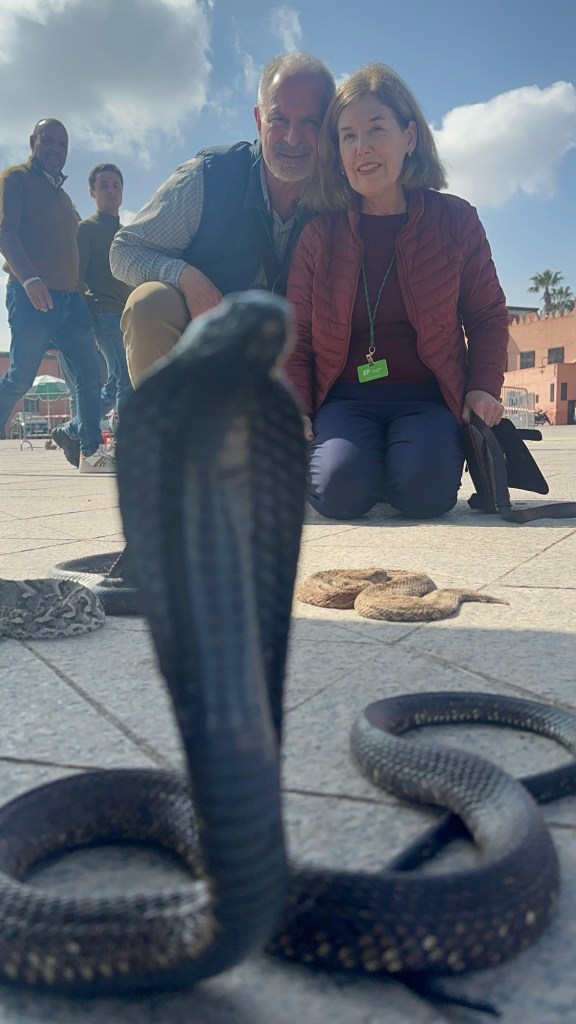
We started the day with a guided tour of Marrakech. You know how much I love having a knowledgeable person walk me around and tell interesting stories, and Marrakech did not disappoint. With its rich history dating back to 1070, its beautiful rust-colored sandstone buildings, and ornamental orange trees lining many of the streets, the city already feels exotic. Overflowing market stalls filled with spices, leather goods, jewelry, and ceramics draw tourists from all over the world. The walled Medina is a UNESCO World Heritage Site. In the huge square, experts in all kinds of psychology work to separate tourists from their money—charming cobras, donning traditional garb, and performing music to attract curious crowds.
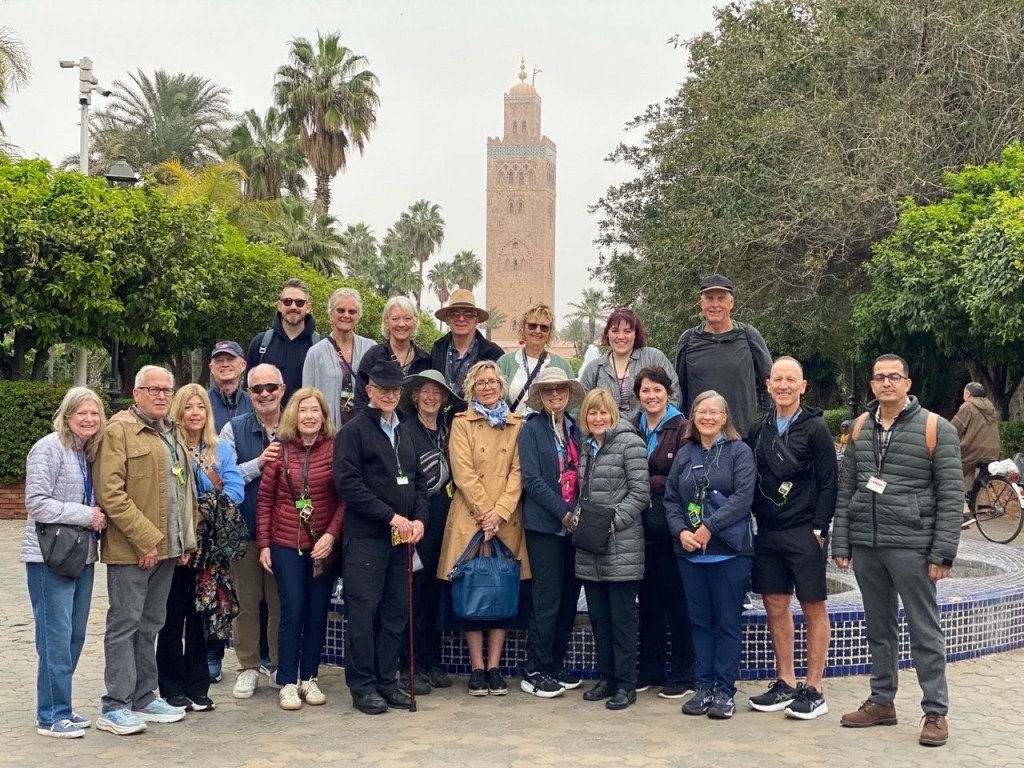
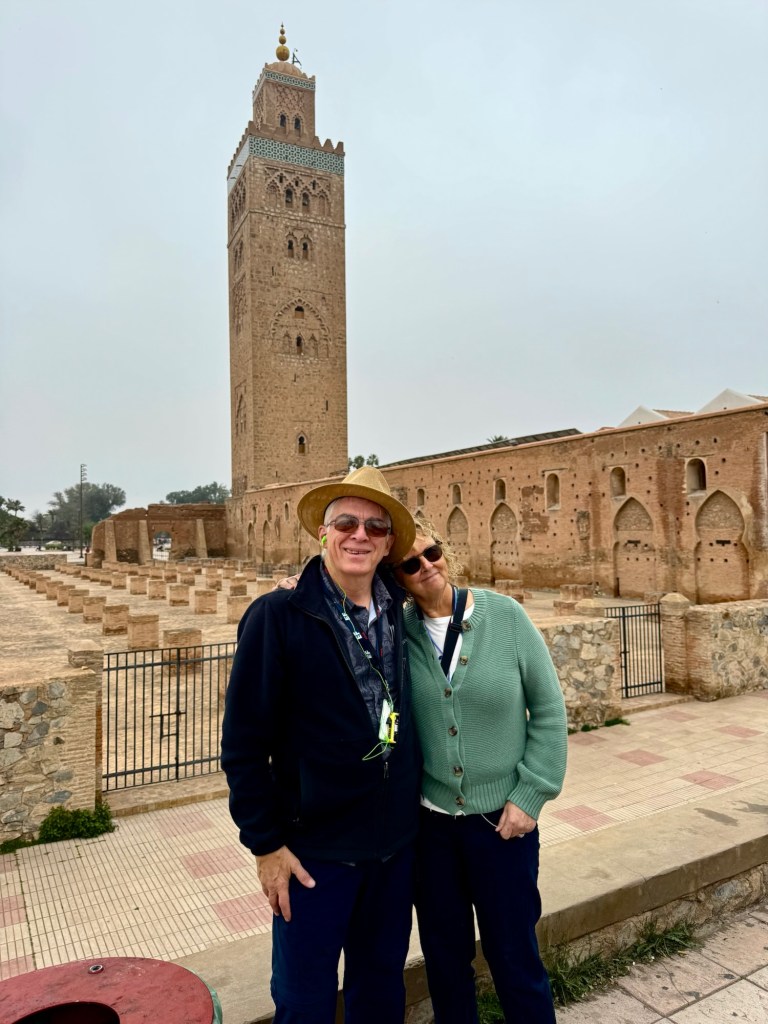
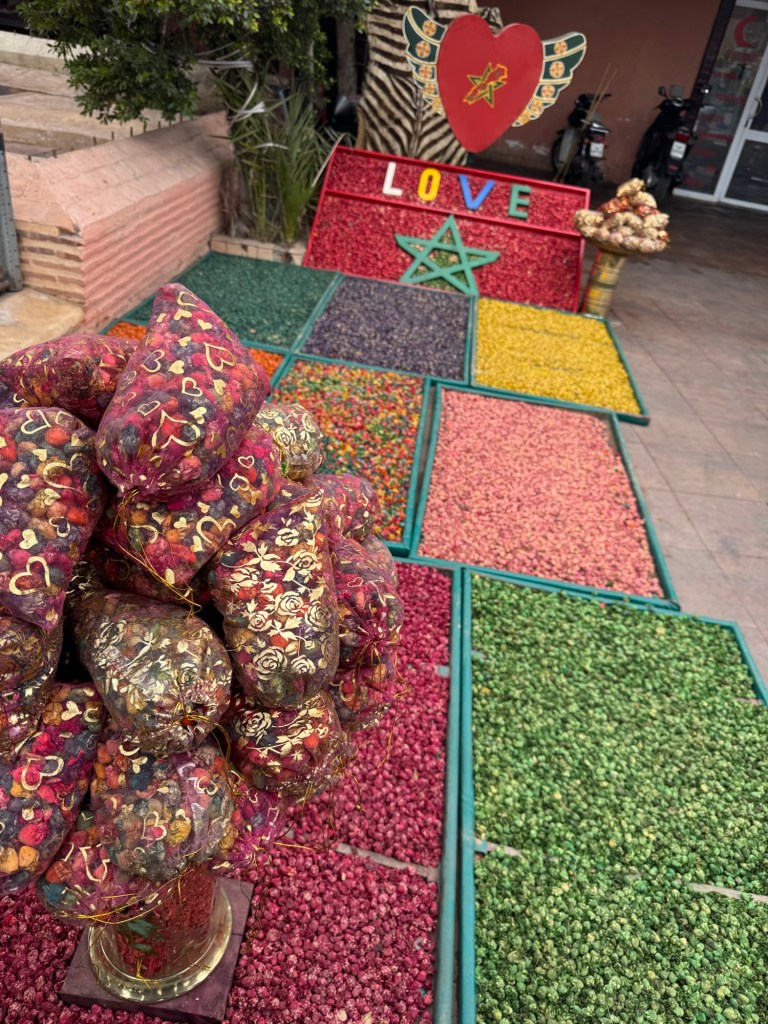
Our group in front of the mosqueThe market stalls were so beautifulA stork!
In the huge square, experts in all kinds of psychology work to separate tourists from their money—charming cobras, donning traditional garb, and performing music to attract curious crowds.
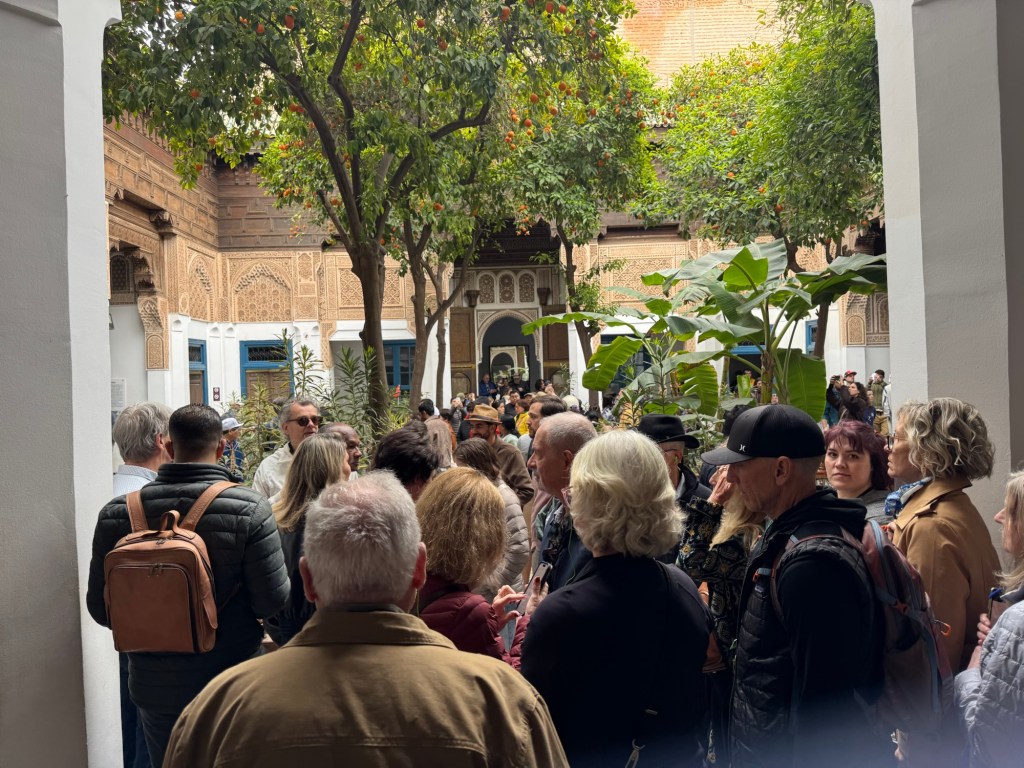
I found the traditional tourist sites here to be very overcrowded. Tourism here has exploded over the past few years.
Although it’s wonderful to hear languages from all over the globe, I found the traditional tourist sites here to be extremely crowded. Morocco has become such a popular destination, and the number of visitors has clearly exploded over the past few years. In many ways that’s a good thing—travel broadens perspectives and helps people appreciate cultures beyond their own.
At the same time, when tourism becomes so overwhelming that it begins to change or dilute the very culture people came to experience, it can feel a little disappointing.
That being said, I absolutely loved the little experiences away from the main tourist sites. The smells drifting through the narrow streets, the market stalls stuffed with fascinating merchandise, the food, the culture, the vendors driving a hard bargain—those small, authentic moments are the ones I treasure most when I travel.
Crowds at the palace.
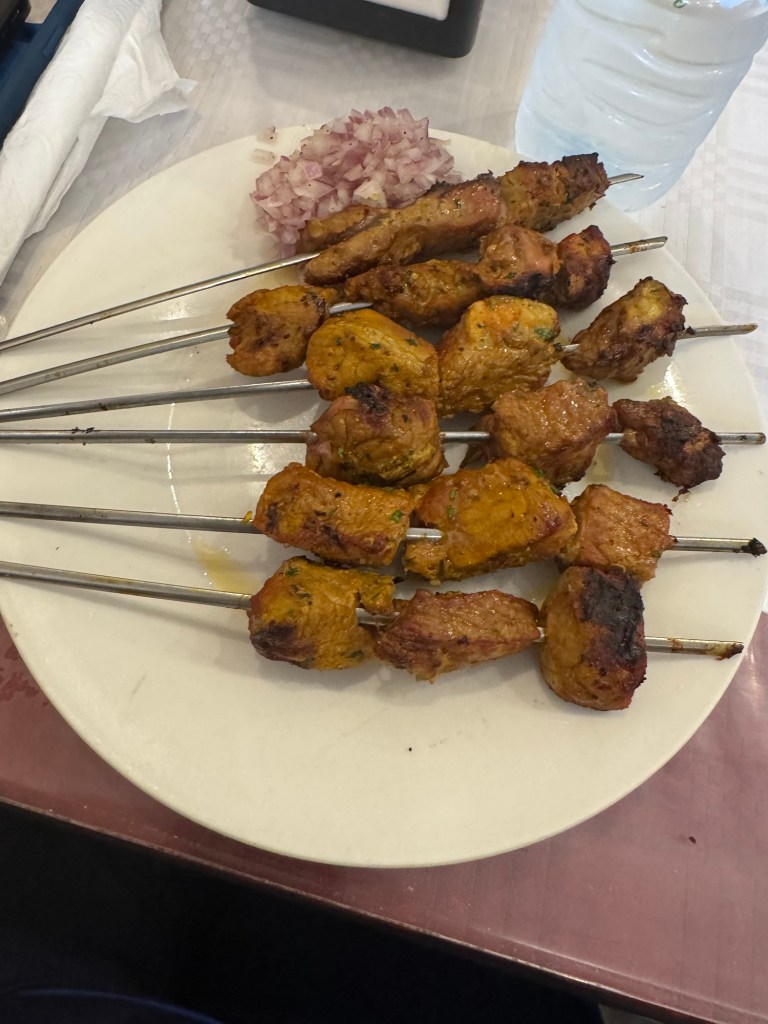
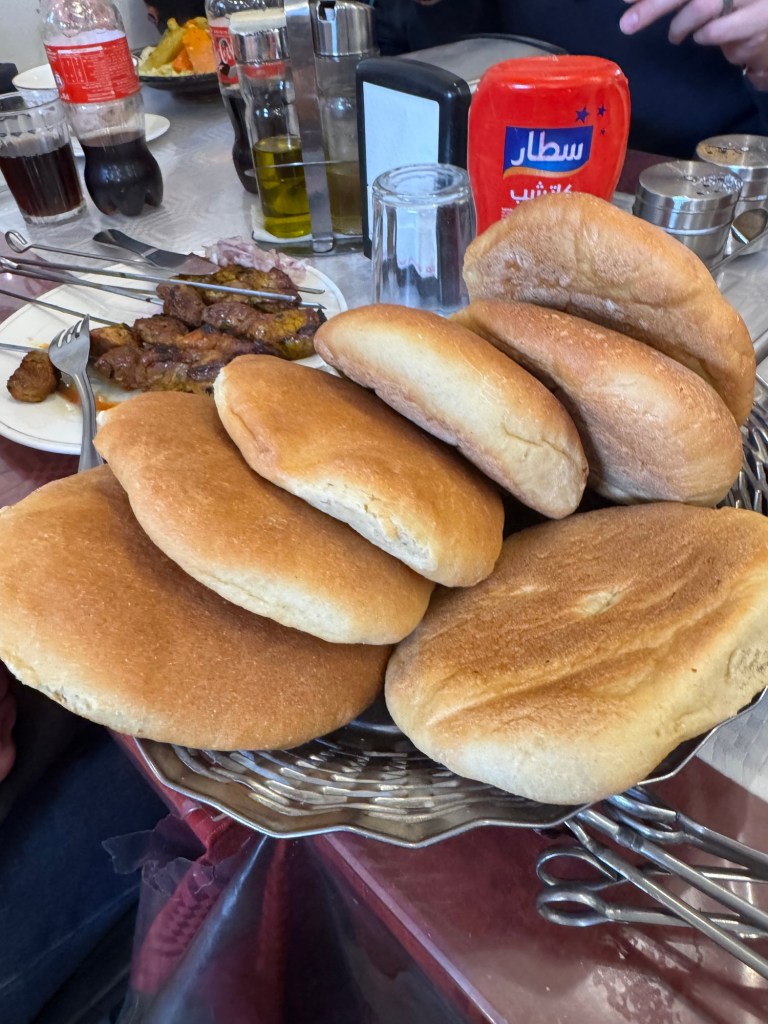
We had free time to shop in La Medina and eat lunch. Our tour director recommended a little restaurant off a side street that was delicious. 
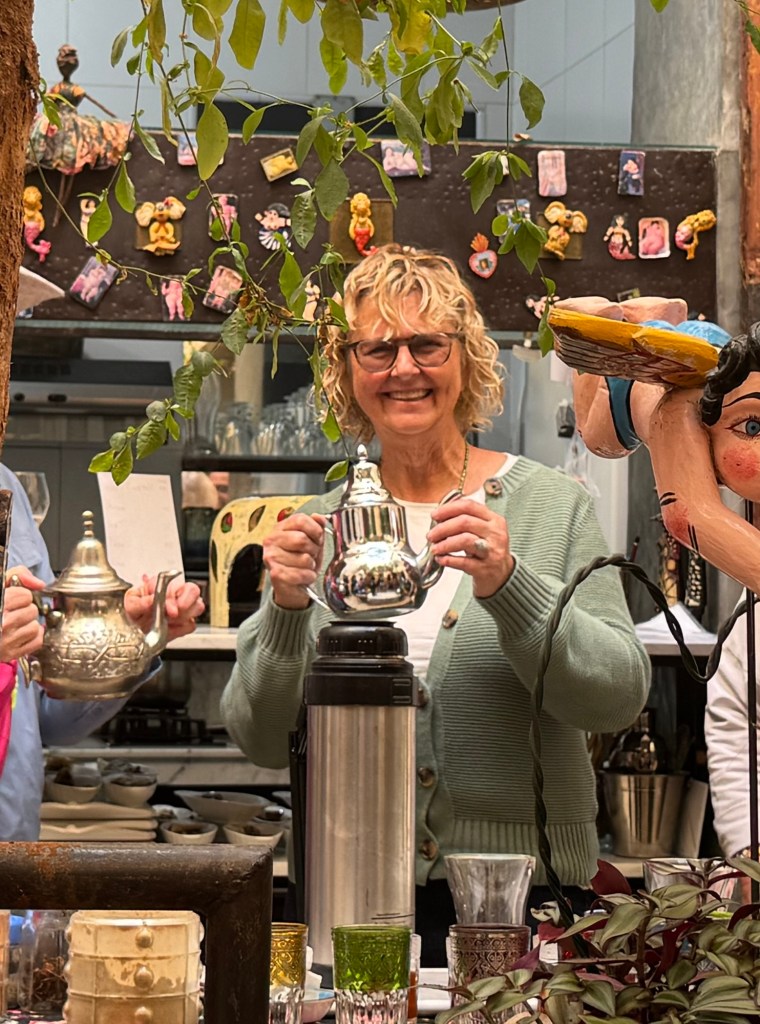
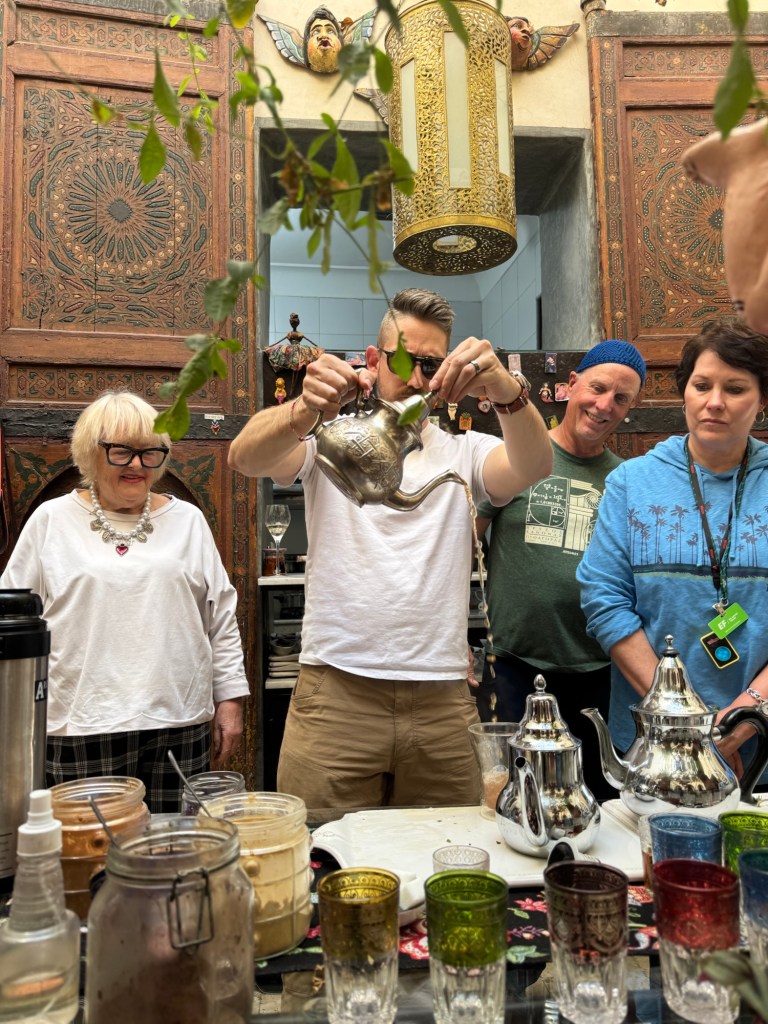
Our tour director has a friend who runs a cooking school, and after lunch we visited, and learned the dozens of steps required to make really good Moroccan mint tea.
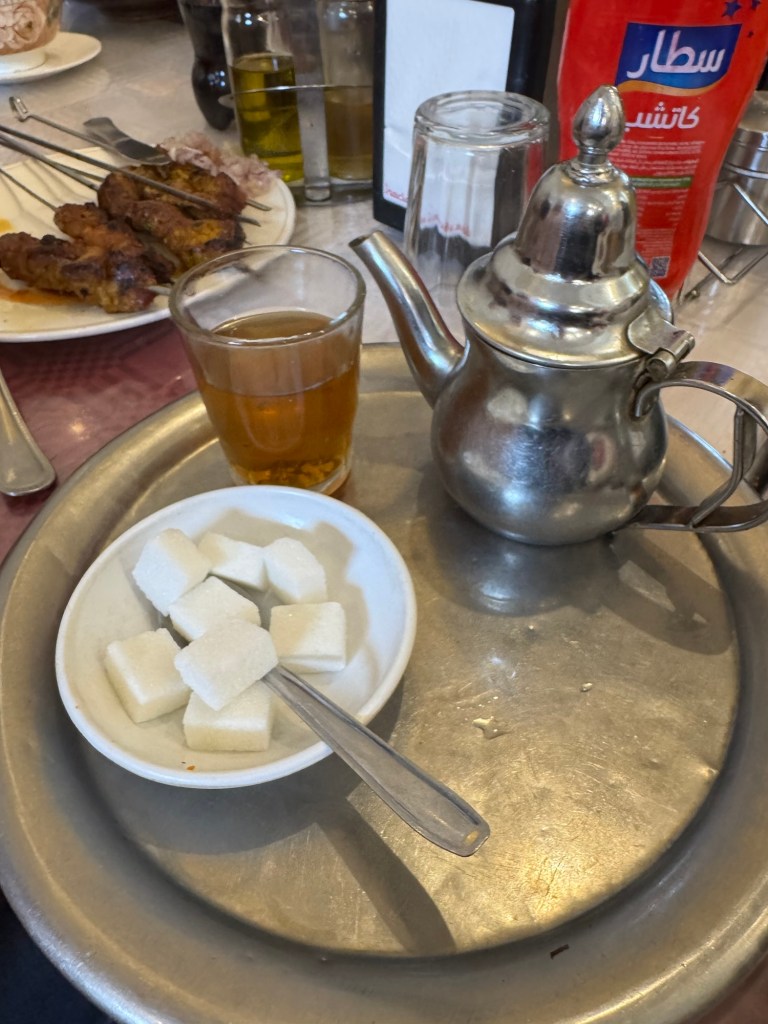
Our son in law, Matt, “washing” the green tea. Lisa’s tea from lunch 🥰
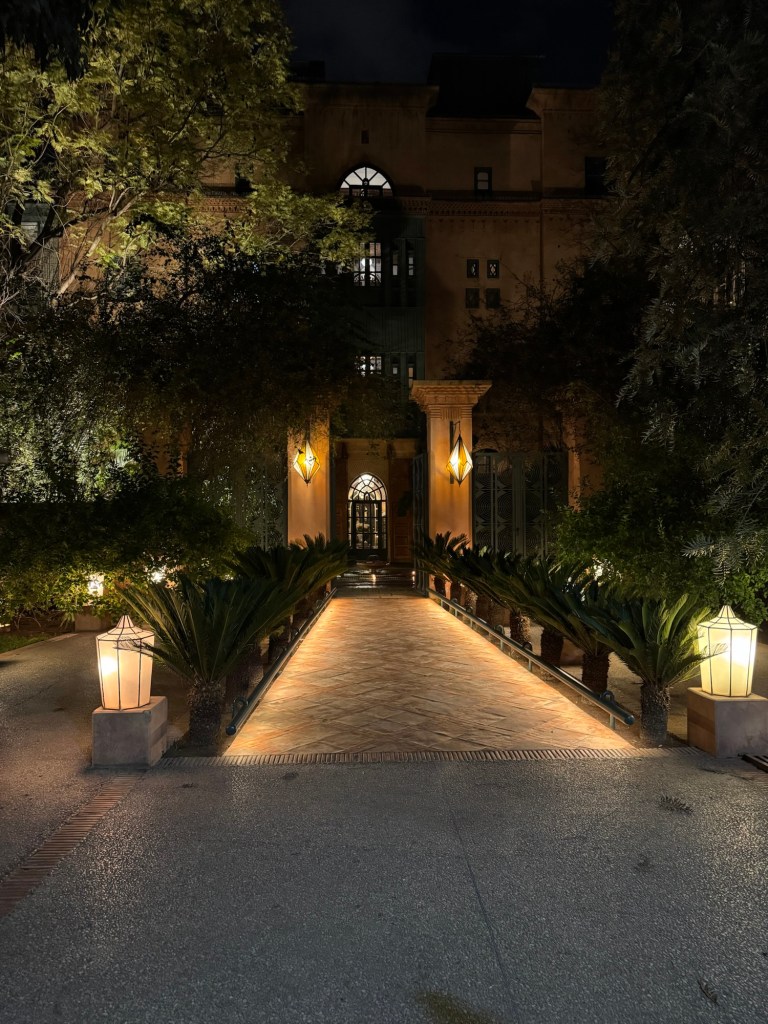
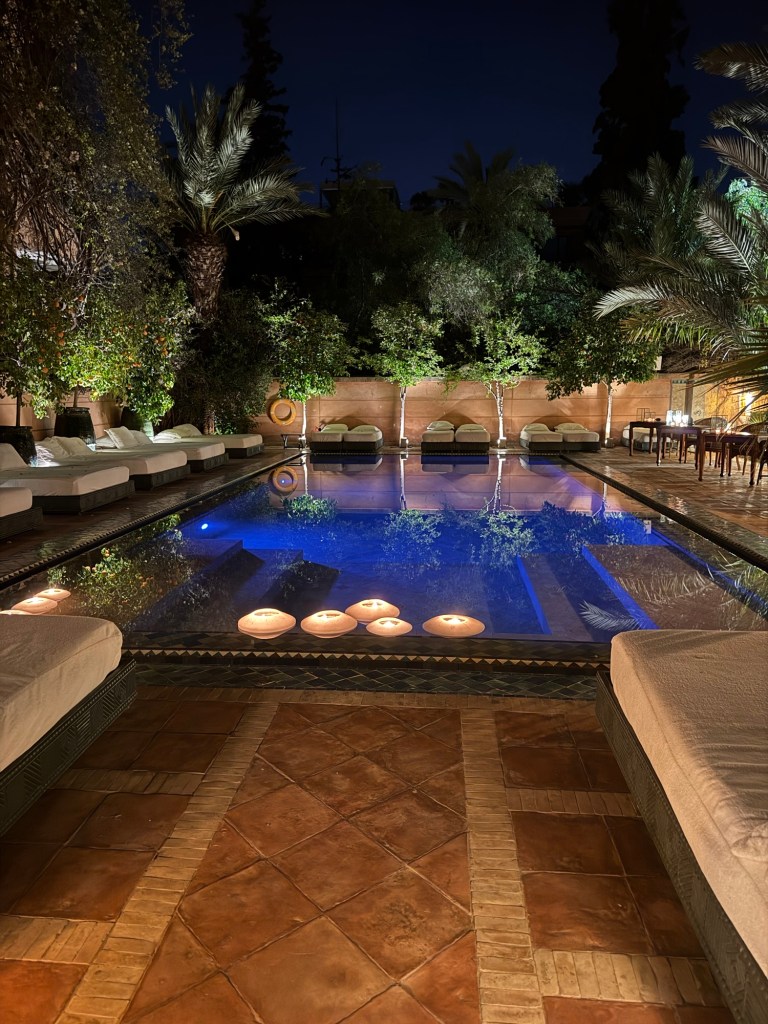
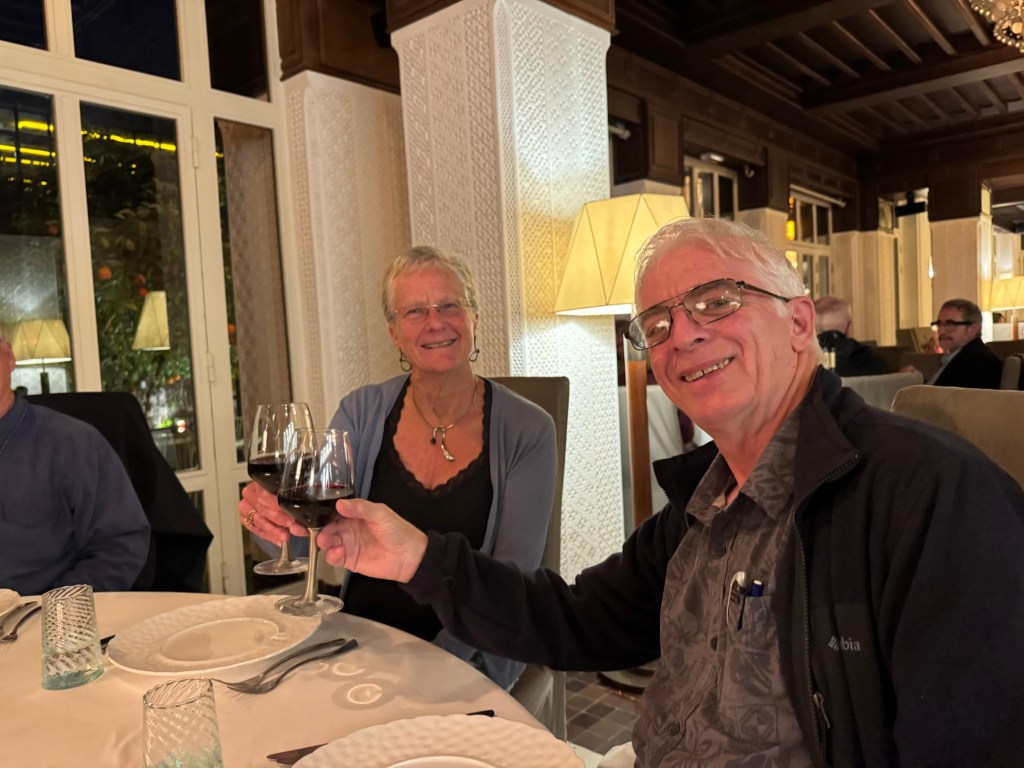
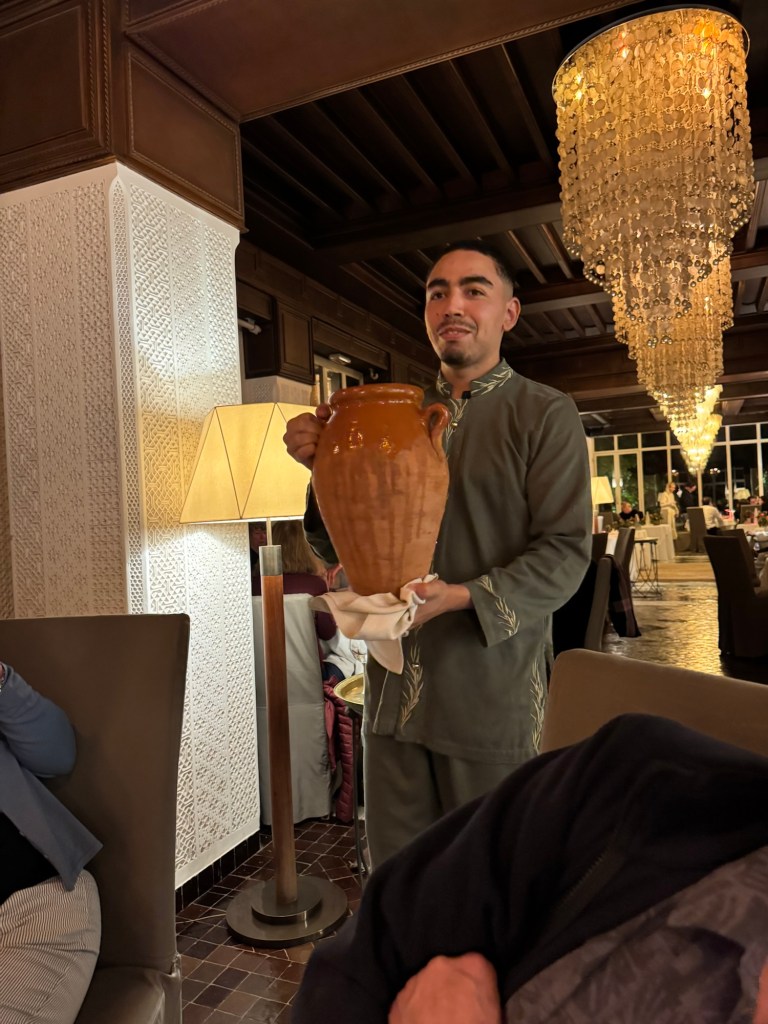
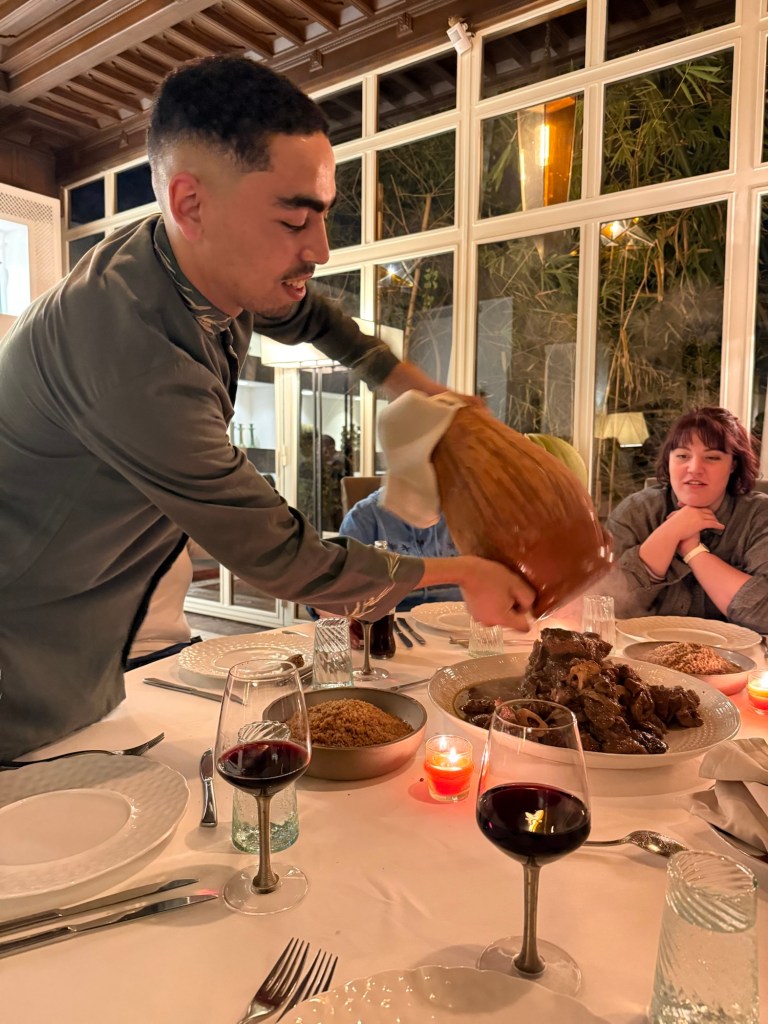
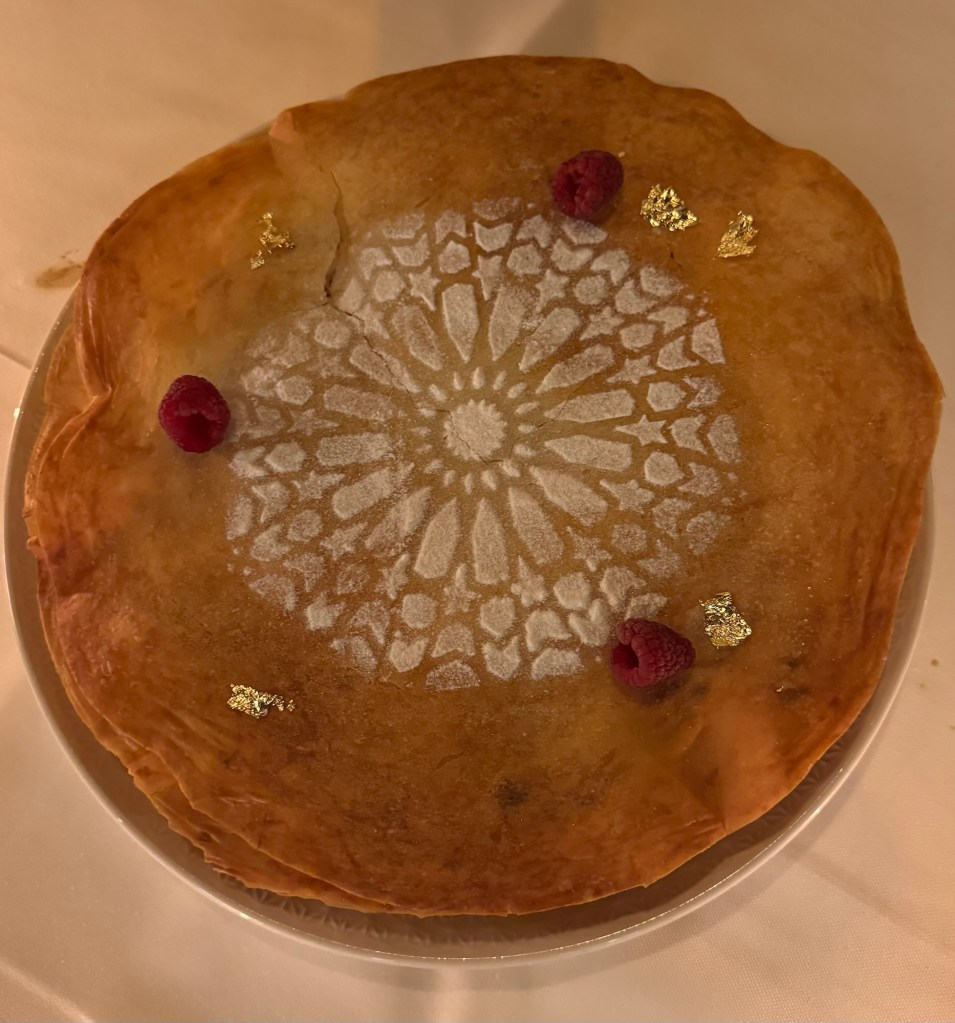
Our fabulous dinner was in the “Beverly Hills” section of Marrakesh. The attention to detail was astonishing.
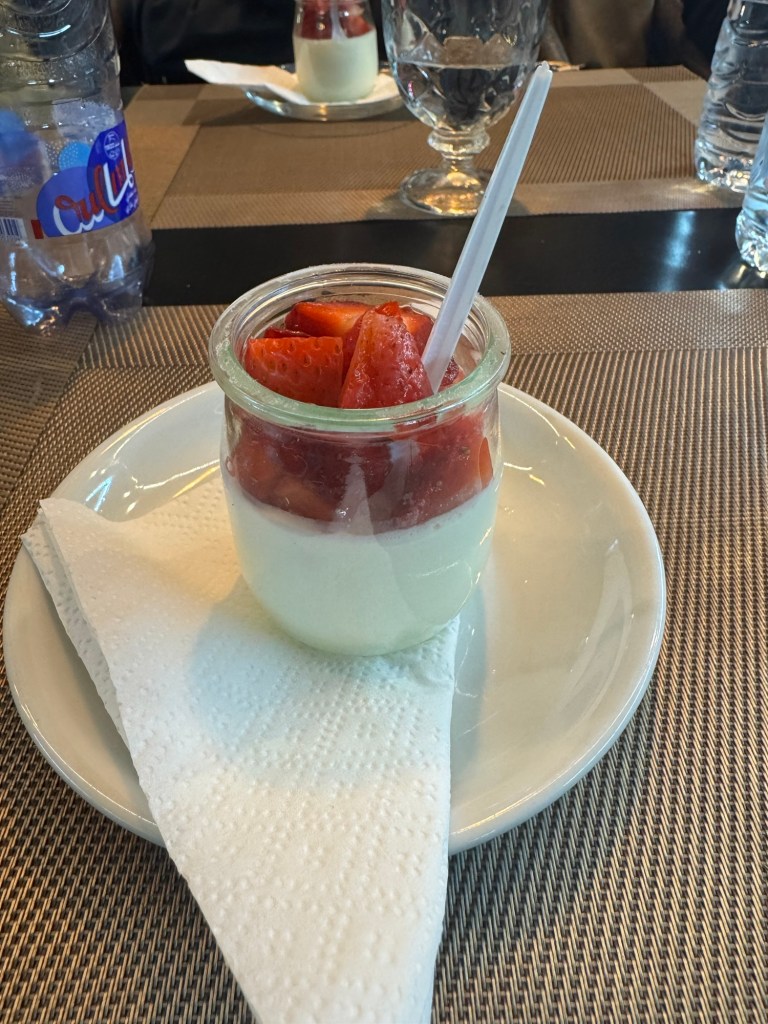
Dar Rhizlane Restaurant Entryway to restaurant Good company Main course was Tangia—meat cooked in a huge terra cotta potLike working the BarBQ in the USA, the men typically cook and serve the tangia. My favorite food is something I’ve never had before. This new dish was exciting and delicious.Dessert was seven layers of crepes with orange-infused whipped cream between the layers, decorated with edible gold leaf, powdered sugar, and raspberries.
This whole trip seems surreal. I can’t believe I’m actually in Morocco with amazing friends having these incredible experiences.
This latest journey began a couple of years ago when my Italian teacher traveled to Morocco and started posting colorful photos—fragrant spice markets, vibrant towns, and camels walking against desert backdrops. Even the names—Marrakesh, Casablanca, Tangier—sounded wonderfully exotic to me.
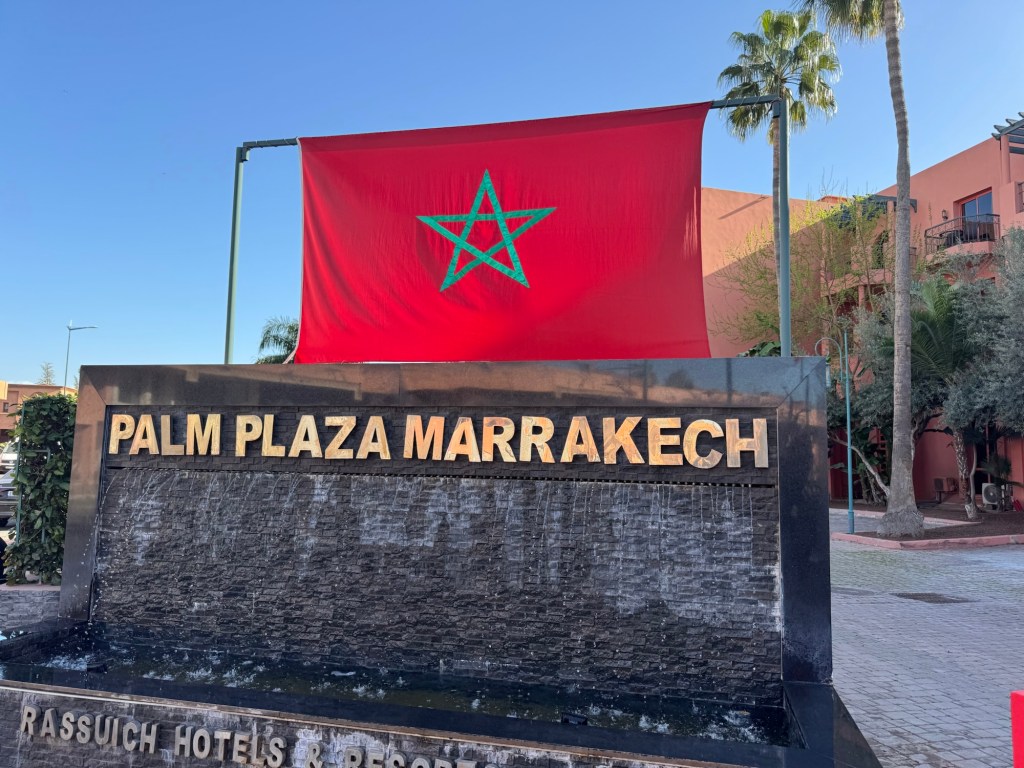
Moroccan flag
After our EF Go Ahead trip to Vietnam and Cambodia, I started planning a trip to Morocco and Portugal. The amazing tour company arranged all the logistics—flights, hotels, meals, guides, and local experiences—but I chose the destinations and helped shape what we would do.
Nineteen of my good friends signed up to come along, and my son-in-law Matt was eager to join us too. Originally my daughter Molly was going to come as well, but it didn’t quite work out. I’m a little sad about that. I would have loved to travel with Molly.
Still, it’s an amazing group of people—super fun, a little snarky, but very kind.
Getting here was the easiest travel day I’ve ever had. There was no traffic going to LAX this morning. Even though the TSA agents aren’t getting paid because of the partial government shutdown, there were no long lines at security and we had plenty of time to make our flight.
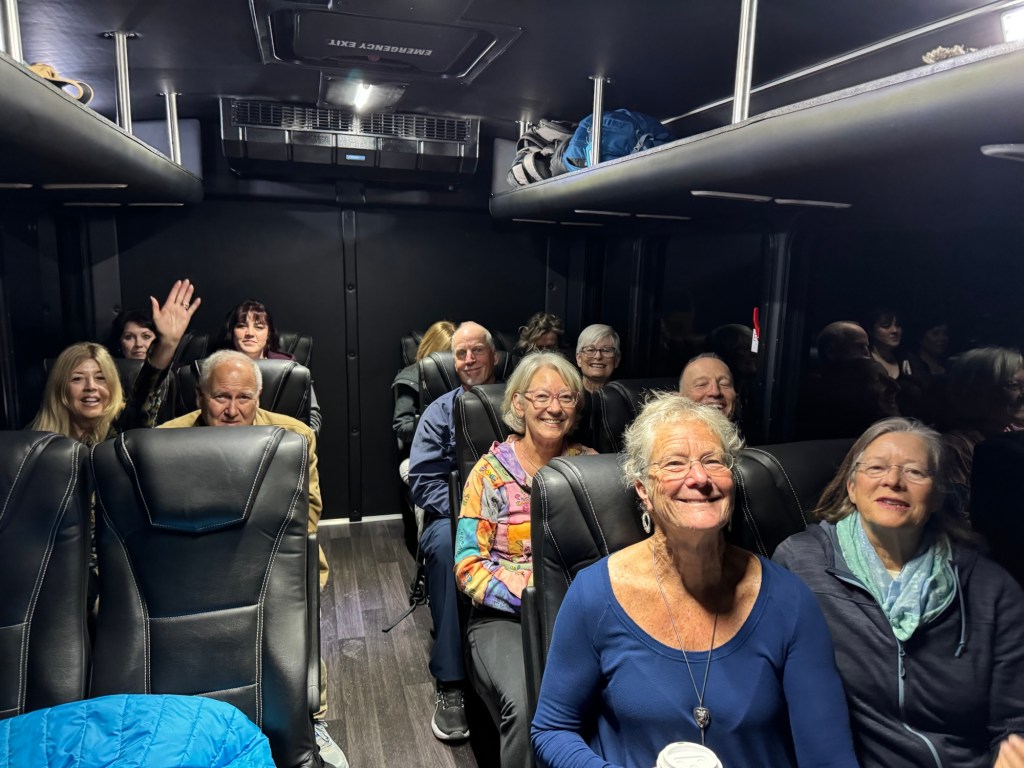
The shuttle to LAXOn the flight
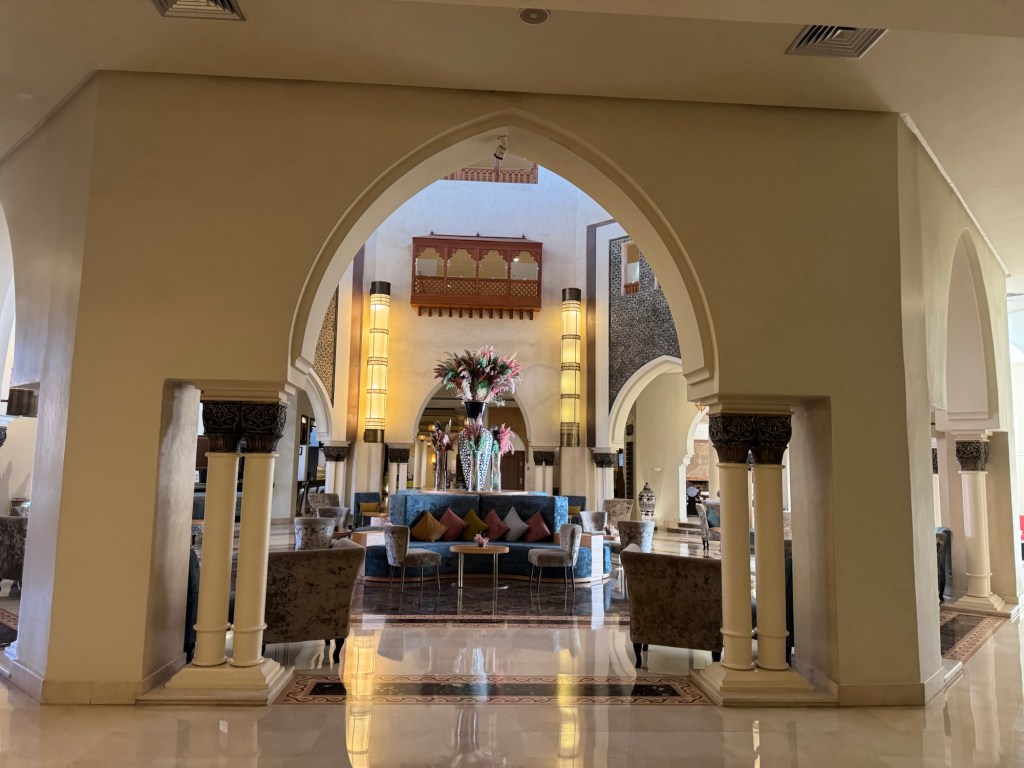
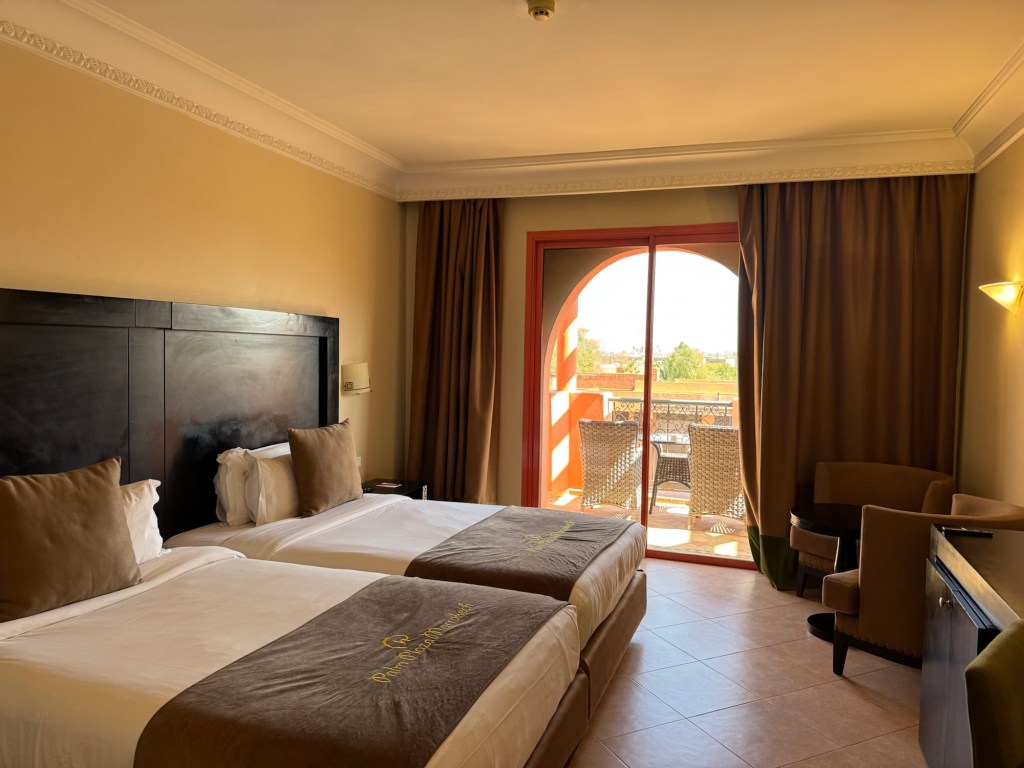
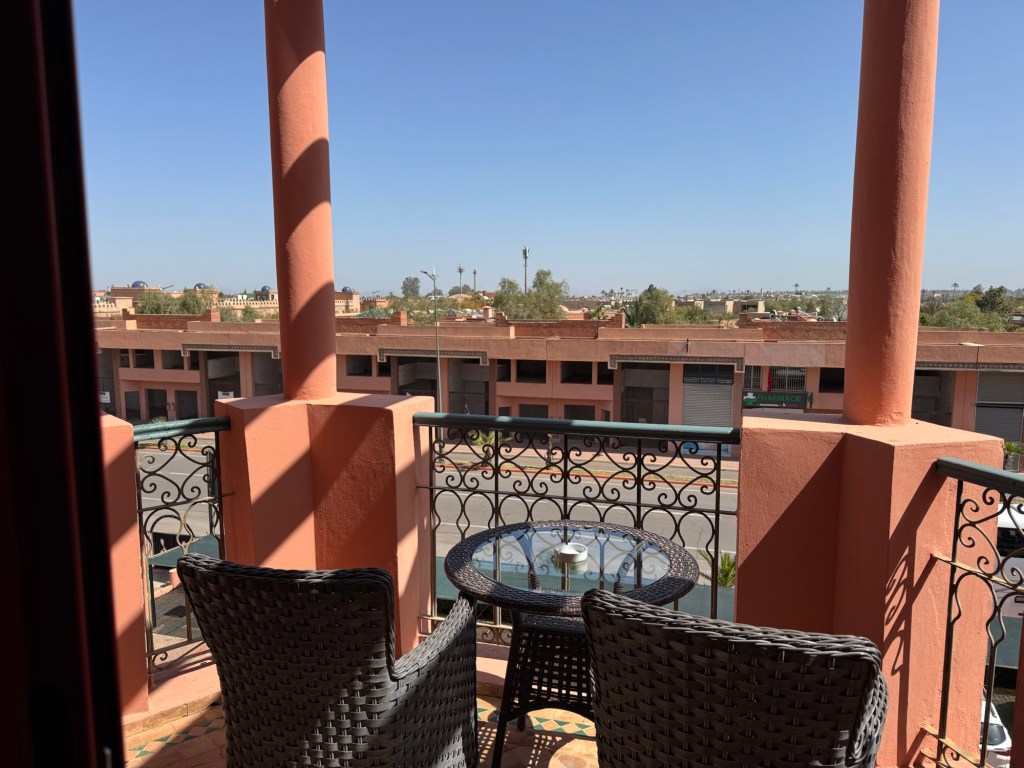
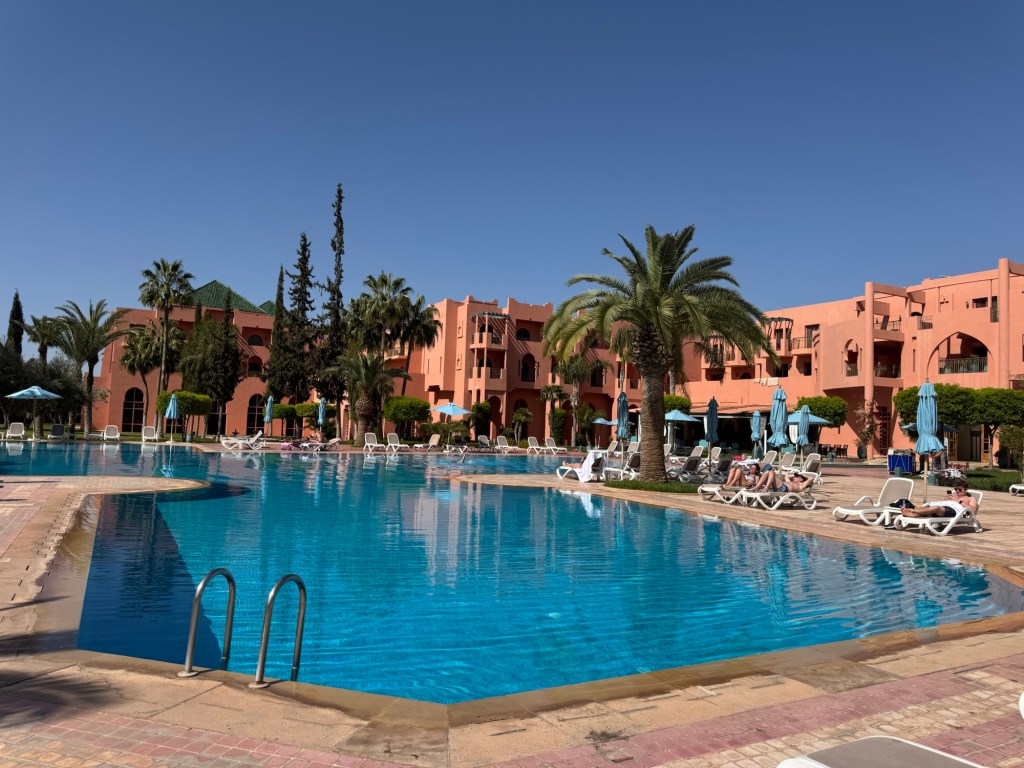
Now we’re in Marrakesh, and it already feels wonderfully exotic—interesting architecture, warm air, and palm trees everywhere. We’re staying in a beautiful hotel, and it’s a little surreal to realize that after all the planning, we’re actually here.
The adventure has officially begun.
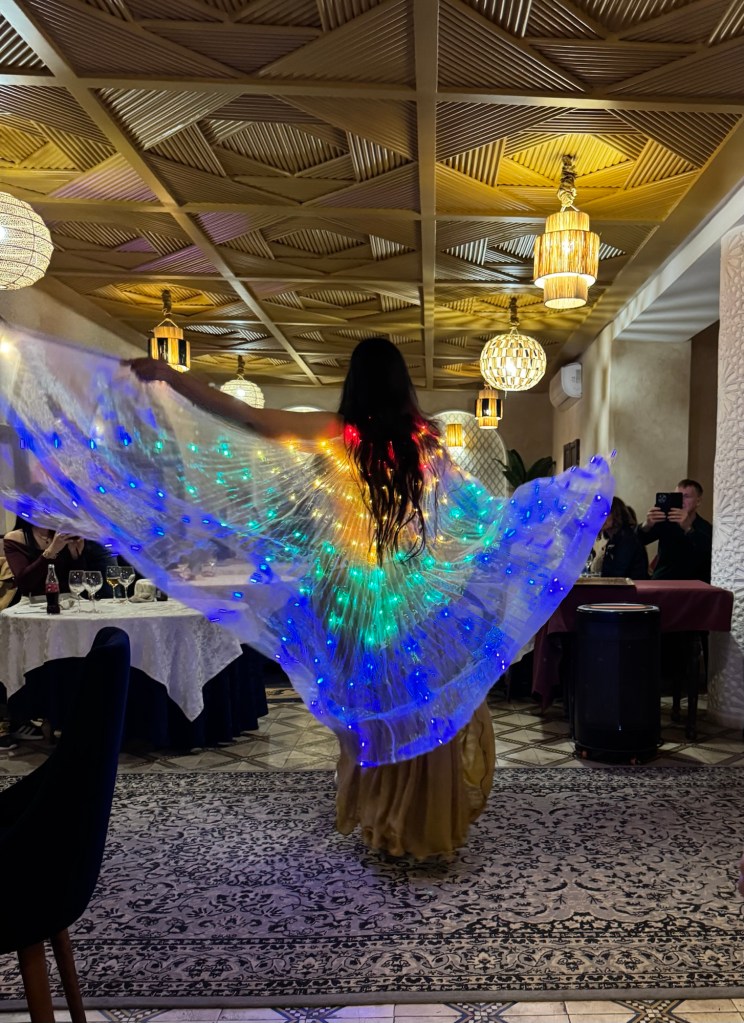
Hotel lobbyOur balconyDinner entertainment at Al Baraka restaurant near the square
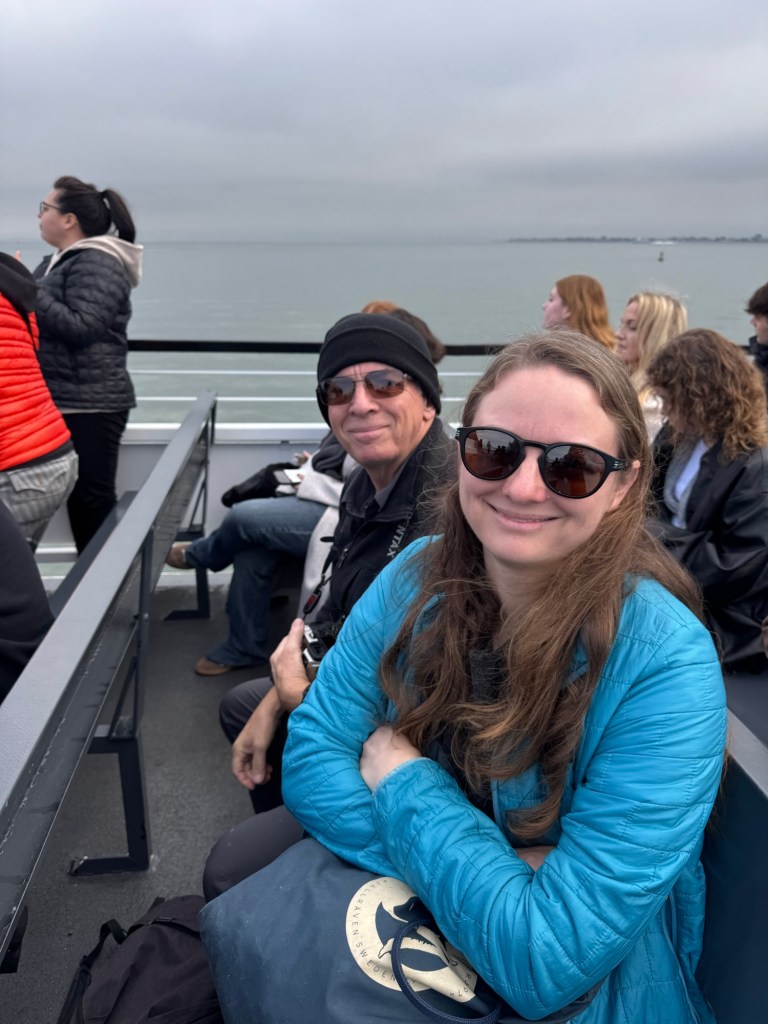
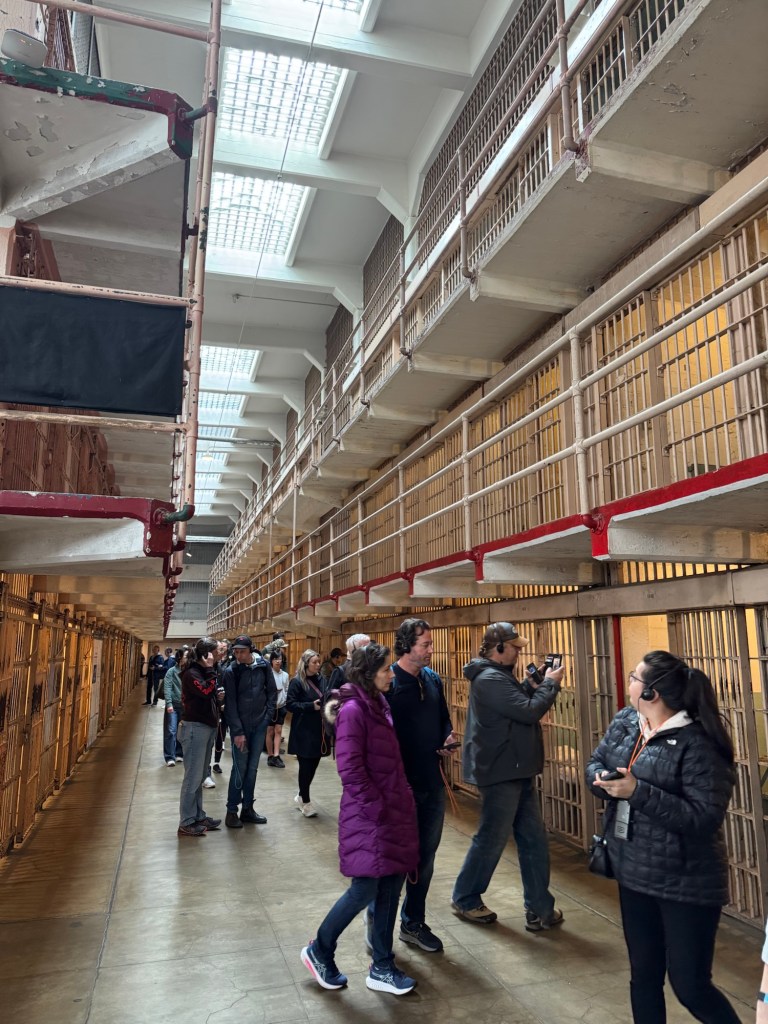
For my birthday, my daughter Brenna gifted me an excursion to Alcatraz Island. I’d never been. It’s a national park built around a former prison that was closed in 1963.
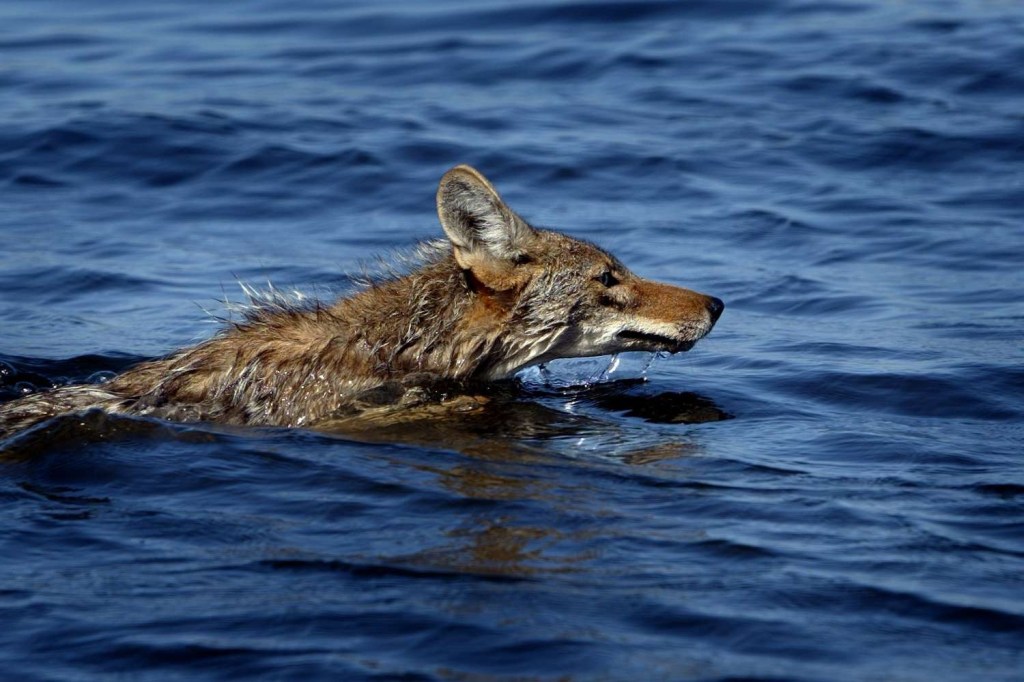
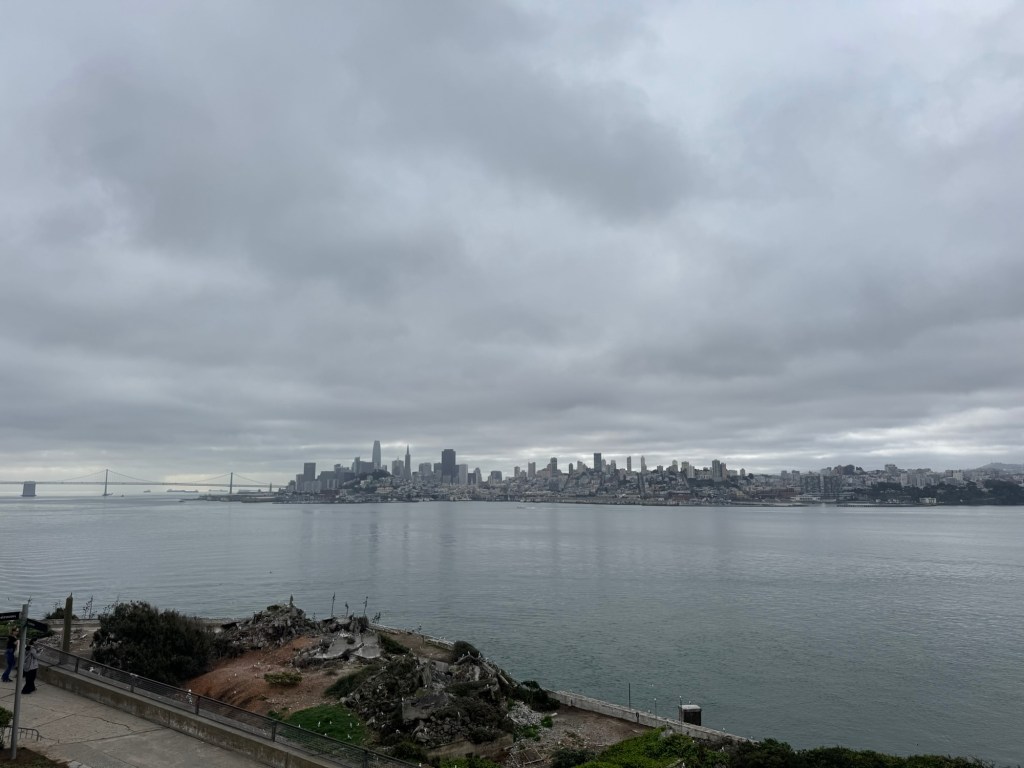
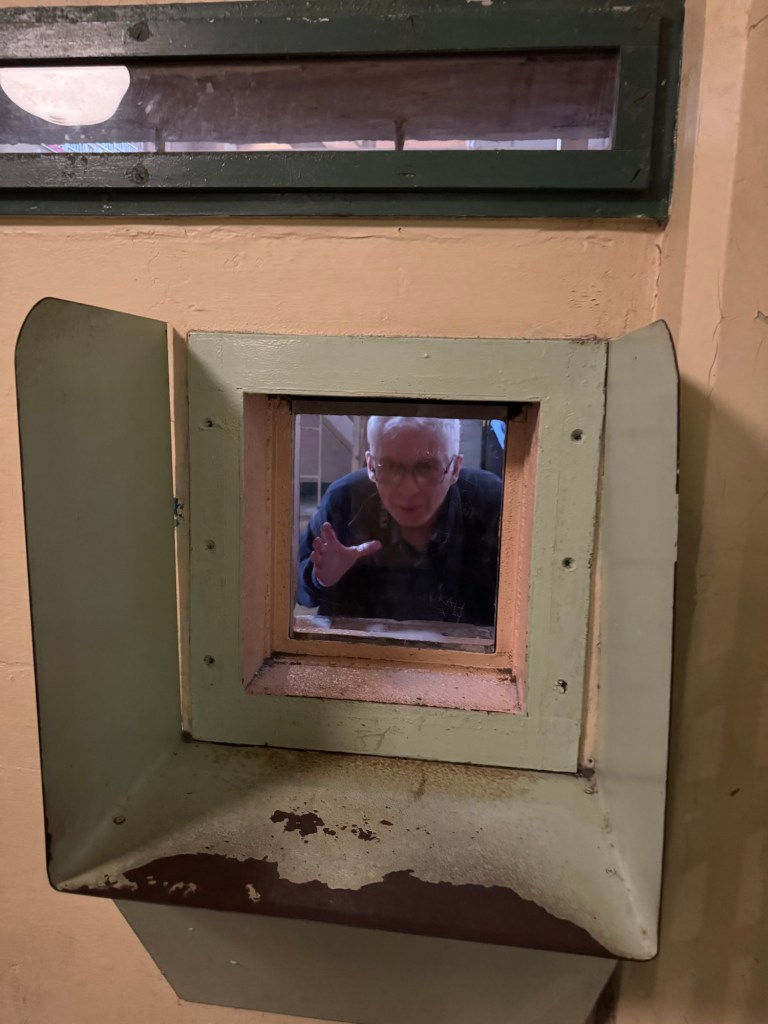
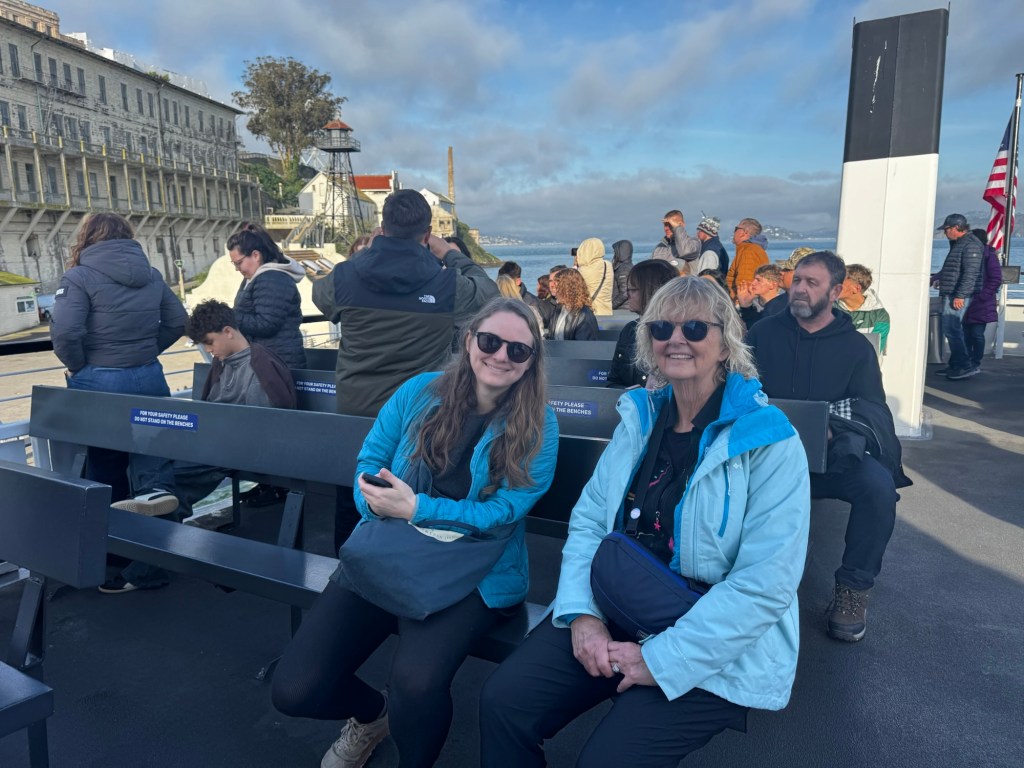
The boat ride over A couple of weeks ago, a coyote swam to Alcatraz Island. With no natural predators, the mice and birds there provided plenty to eat. Eventually, the coyote was removed to protect the island’s wildlife.The beautiful San Francisco skyline from Alcatraz IslandBut did they really have visitors?
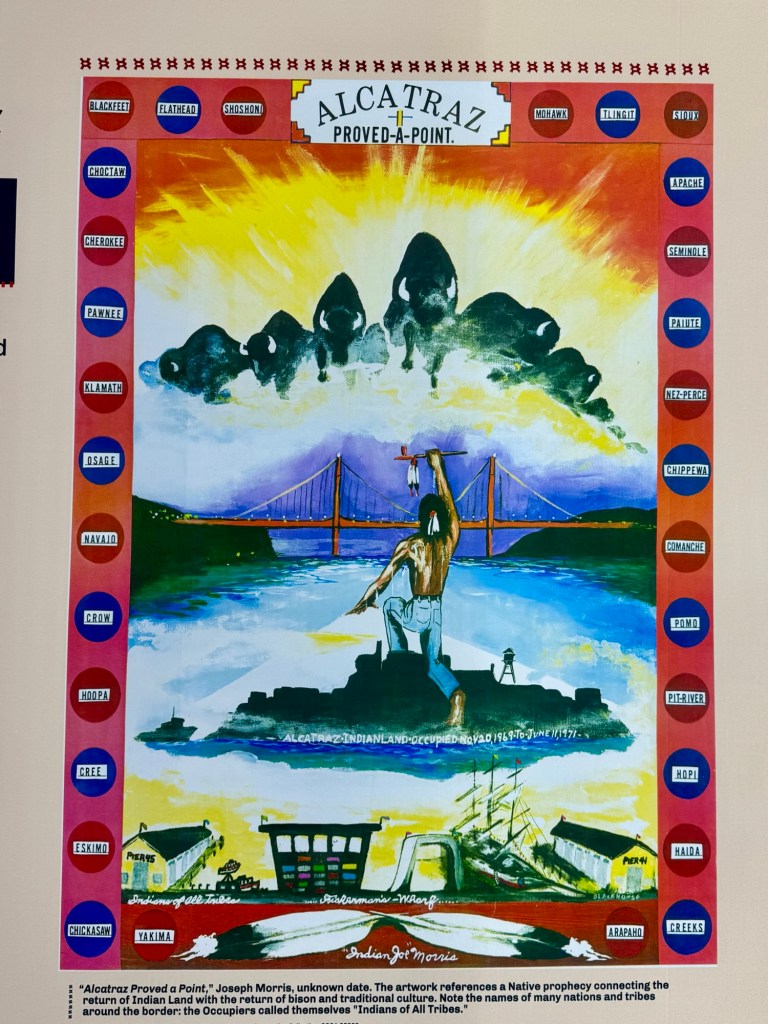
From November 1969 to June 1971, Indians from all tribes occupied Alcatraz to underscore indigenous rights. This history resonated deeply with me because I taught at a Navajo boarding school in the 1970s. At the time, I understood boarding schools as a complicated mix of education, cultural loss, and resilience—but I didn’t know that Hopi men were imprisoned at Alcatraz simply for refusing to surrender their children.
The boat ride home.
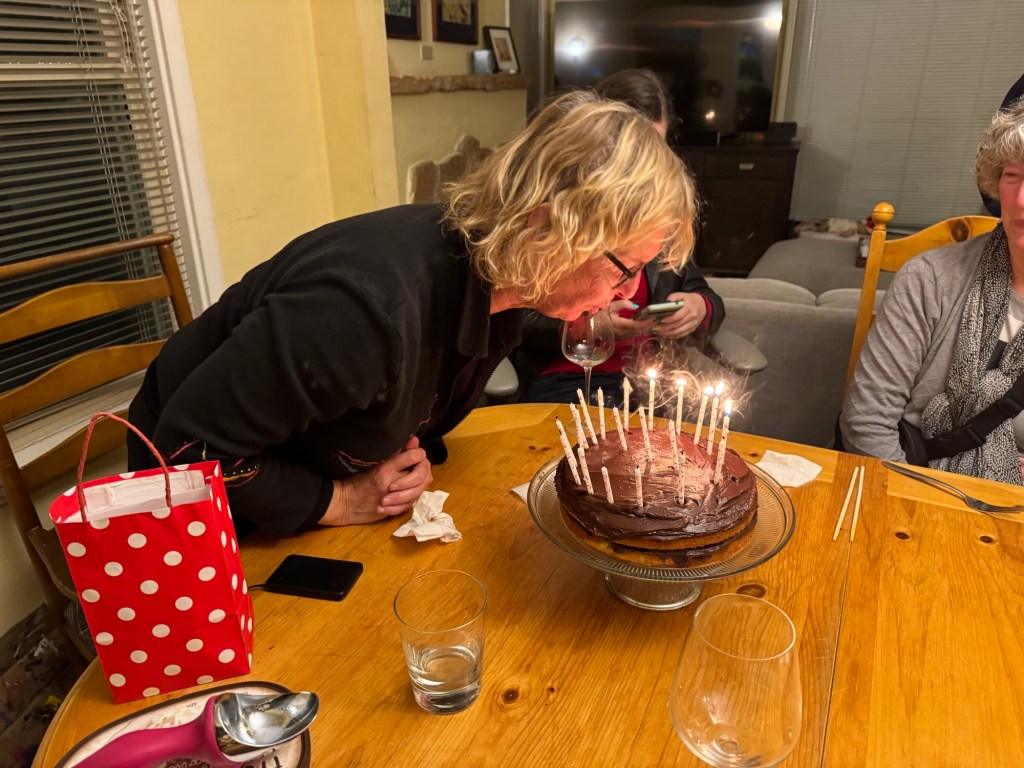
Later, we had a family birthday party. It was a really special time.
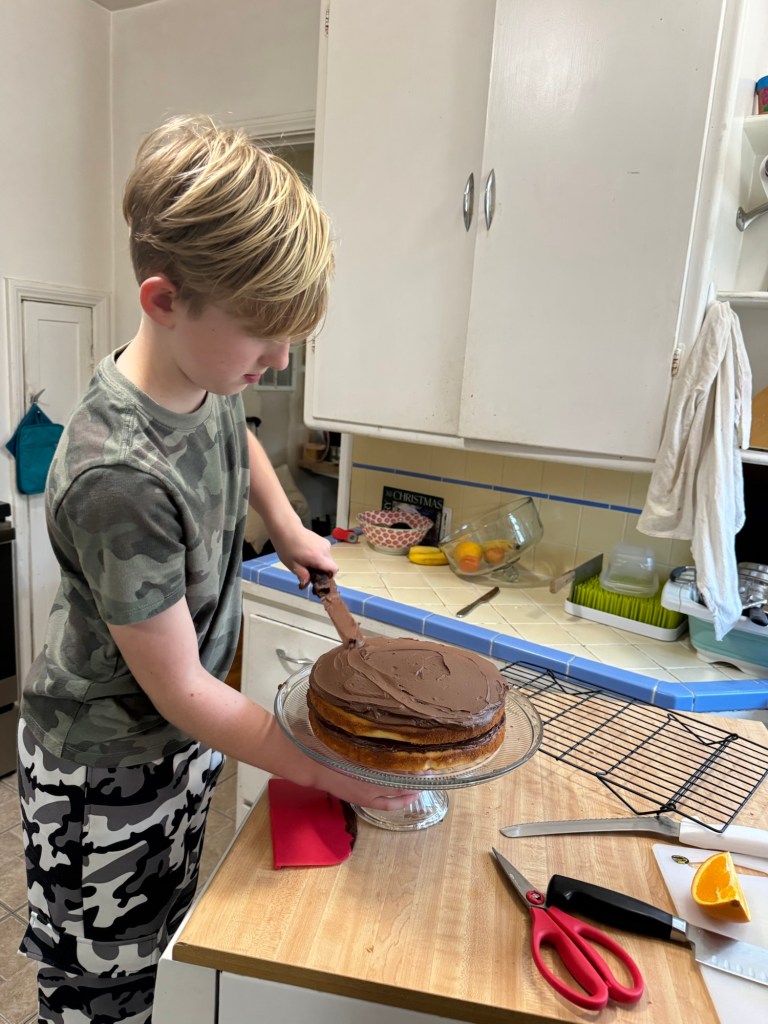
My nine-year-old grandson baked the cake all by himself.So many candles!!!
I have a terrible sense of direction, but I’m pretty great with Google Maps. Jim is more of a “go by instinct and feeling” kind of person—even in places he’s never been before. Today, we did it his way. That meant we would have arrived at the bakery too late if we hadn’t finally abandoned his plan. We spent too much time arguing, and we were both a little sad that the morning didn’t go well. My stomach was too upset to eat. Alas, no pictures of pastries. 🥐
We received the free hotel in San Francisco because Marriott wanted to sell us a timeshare. Ninety minutes of our time in exchange for five days playing in a city I love felt like a good bargain. Today’s sales pitch was far less terrible than we expected. After about ten minutes, the salesman realized that staying in a characterless resort, removed from the culture, language, and architecture of a country, was never going to work for us. So he pivoted and started selling us on visiting his native Philippines instead. The places he showed us actually made us want to go.
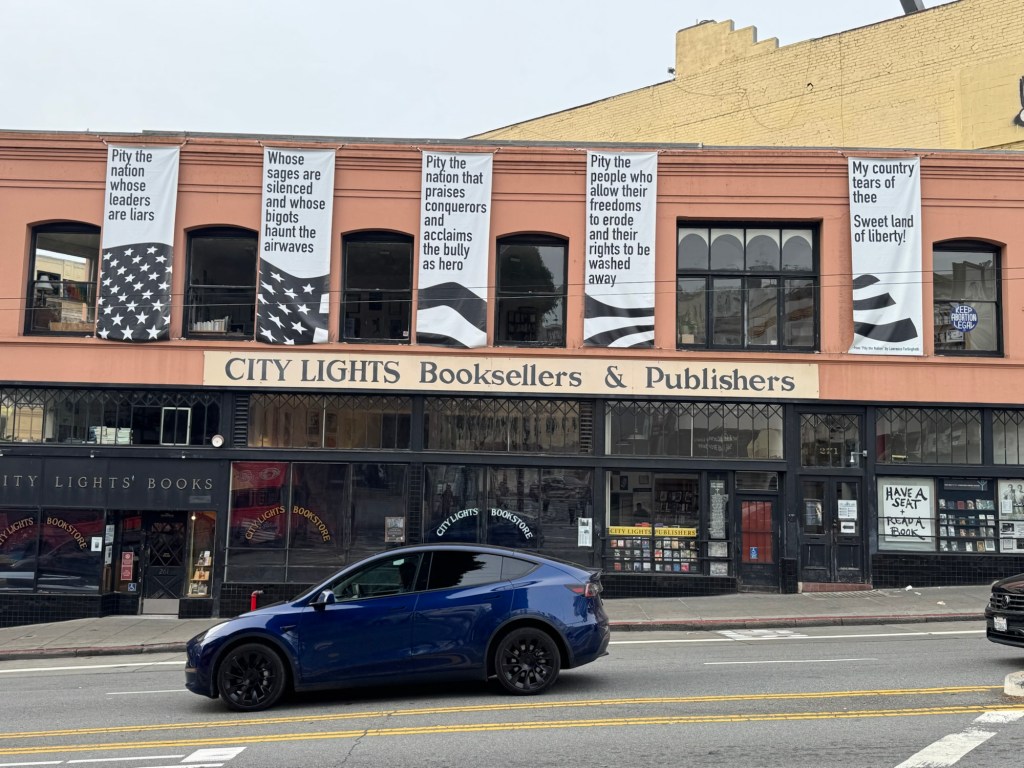
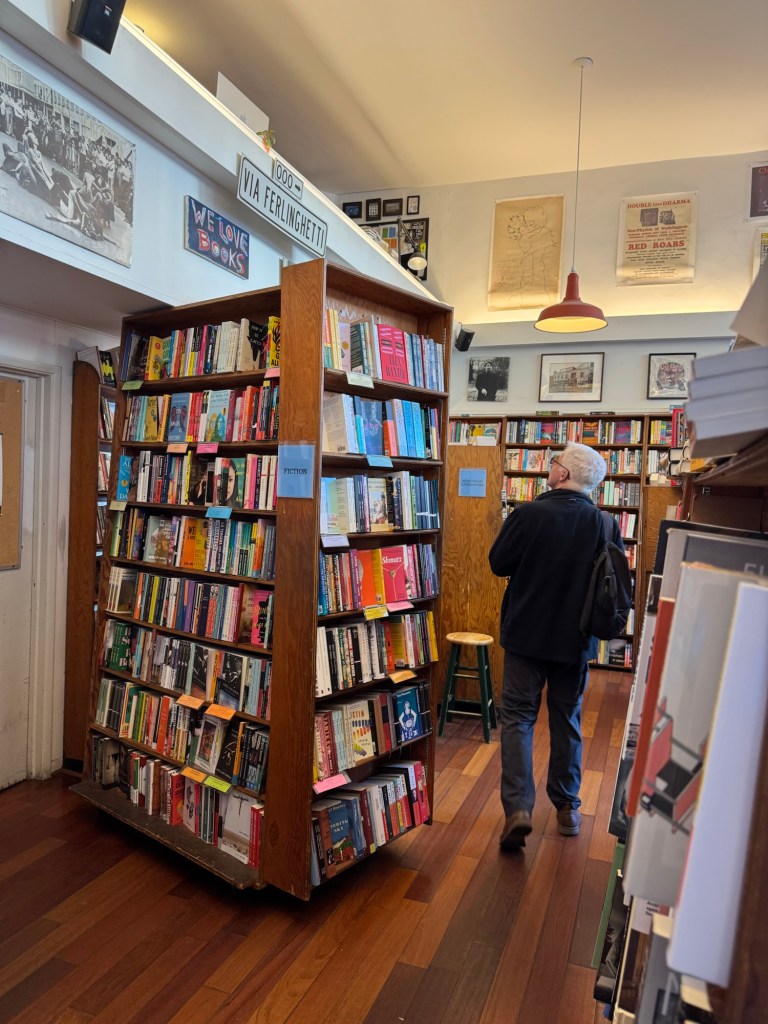
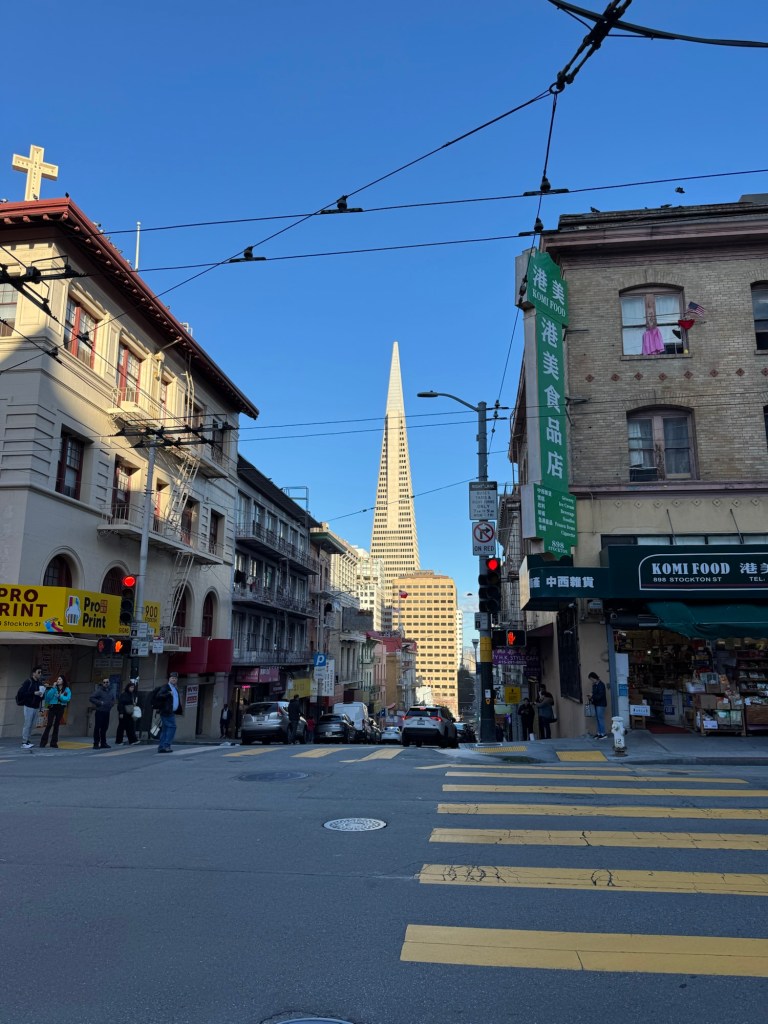
In the afternoon, we did one of my favorite things: wandering aimlessly through the city. We stopped by the famous City Lights Bookstore and then just walked and walked, admiring the street murals, the mix of architectural styles, and the quirky independent shops along the way.
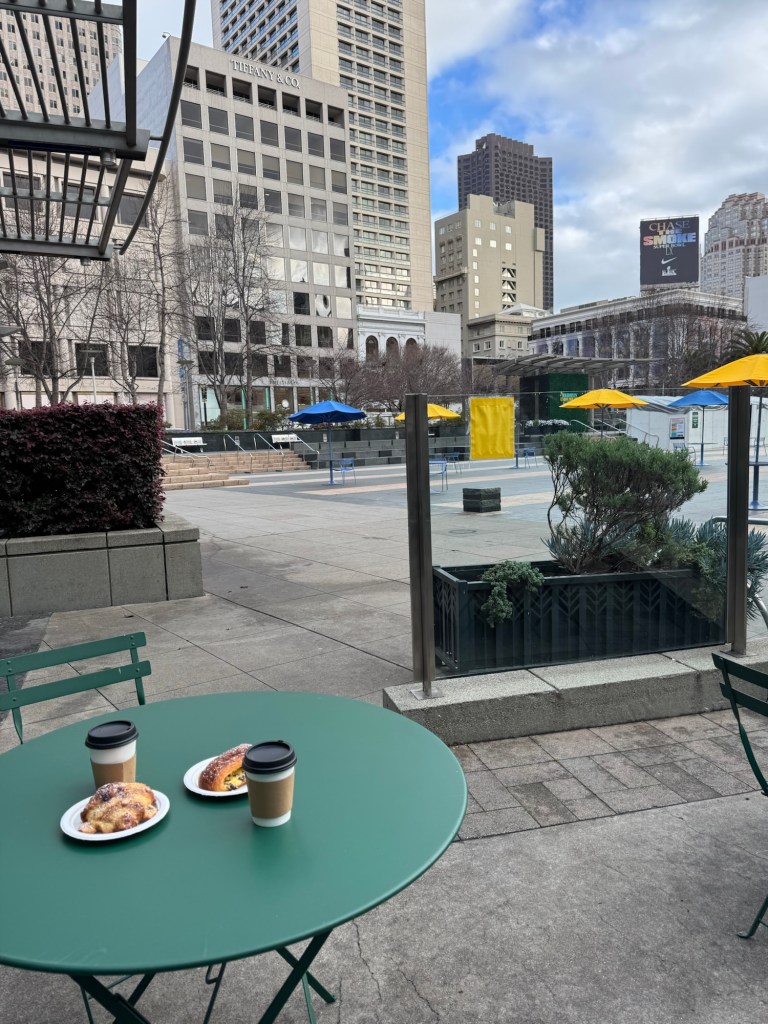
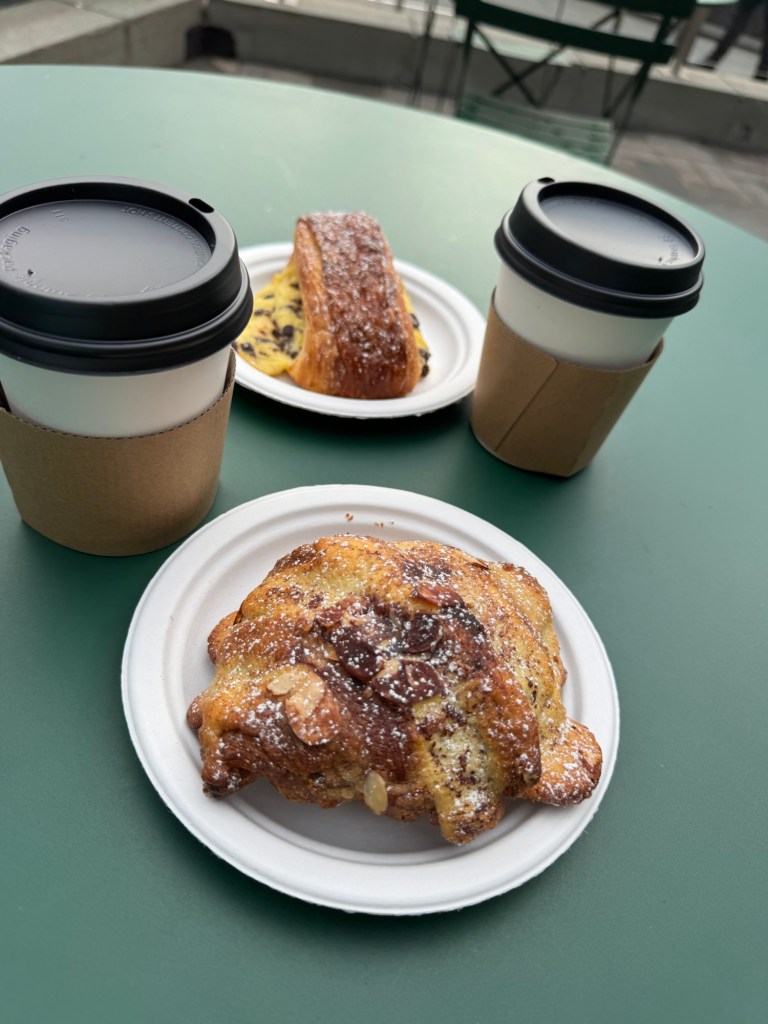
So many wonderful bakeries. So few mornings. Today we started at b. patisserie, where I once celebrated my birthday years ago. We didn’t realize there were two locations, so we missed the one that smells like angels baking and has a case filled with such beautiful works of art it’s impossible to choose just one. Still, the Union Square annex turned out to be pretty great.
Notice Tiffany’s in the background…also Saks and Louis Vuitton, among others.Jim had a pain suisse (with yummy crème pâtissière and chocolate chips) an I had an almond banana croissant because I always like to eat something I’ve never eaten before
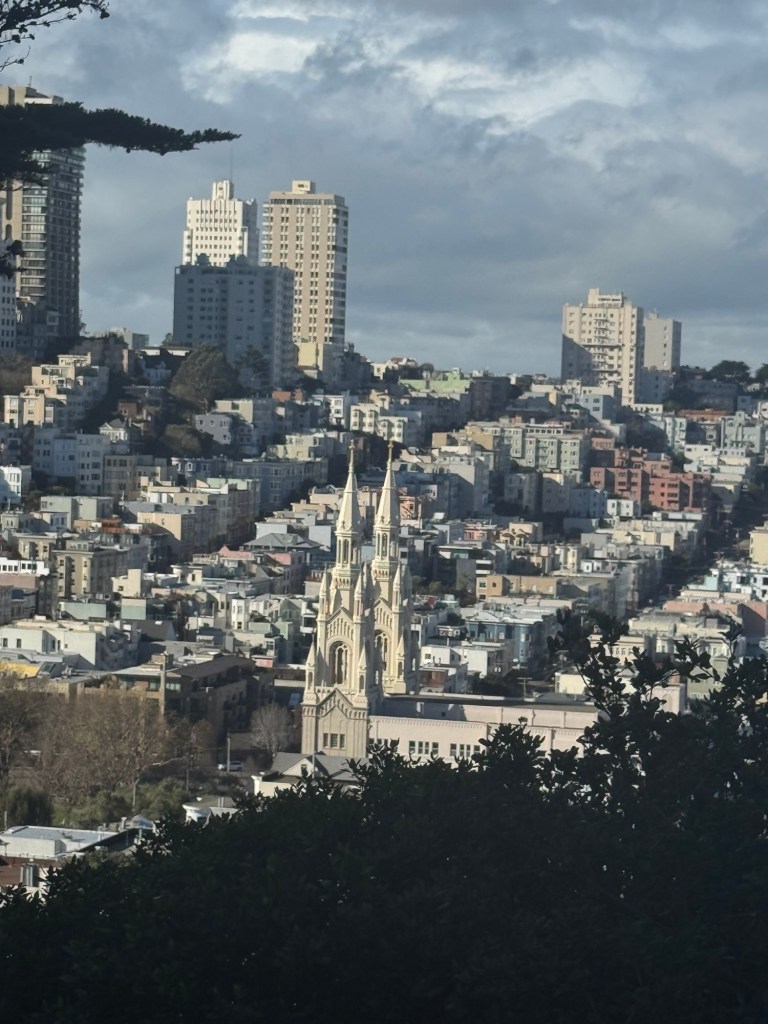
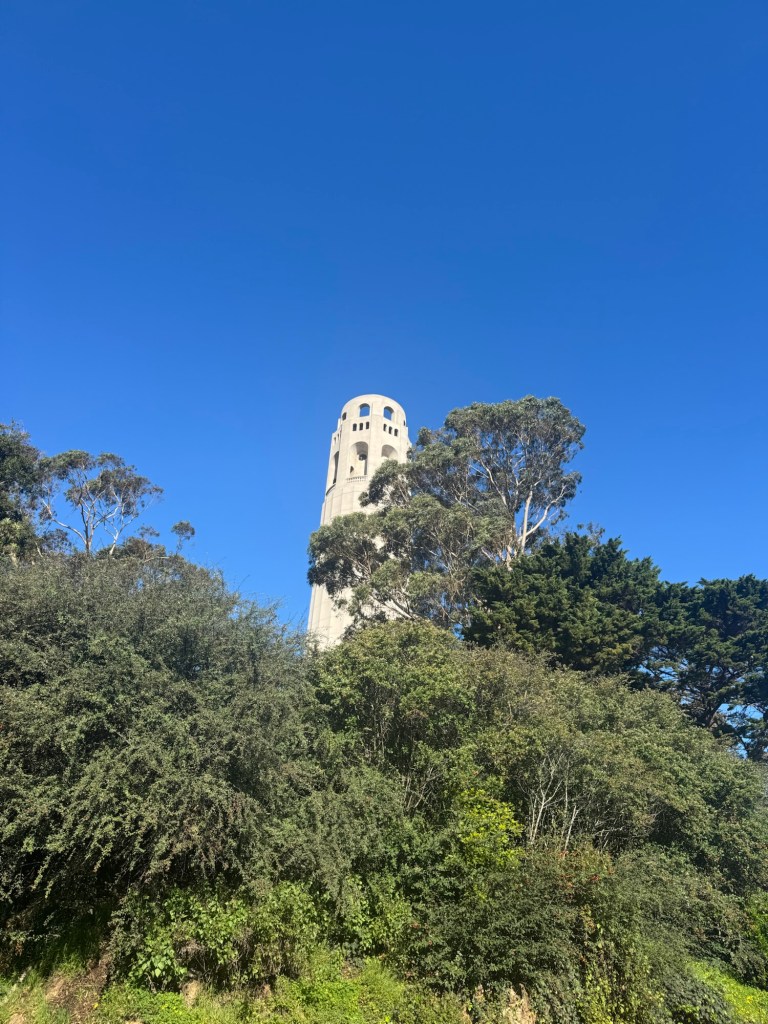
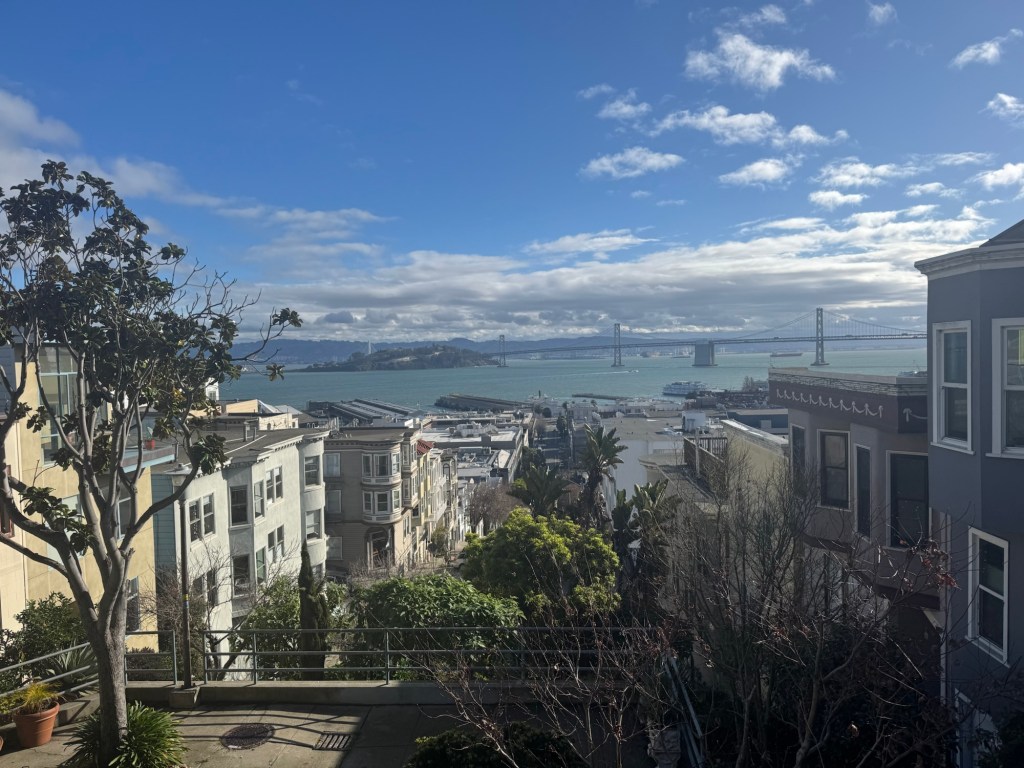
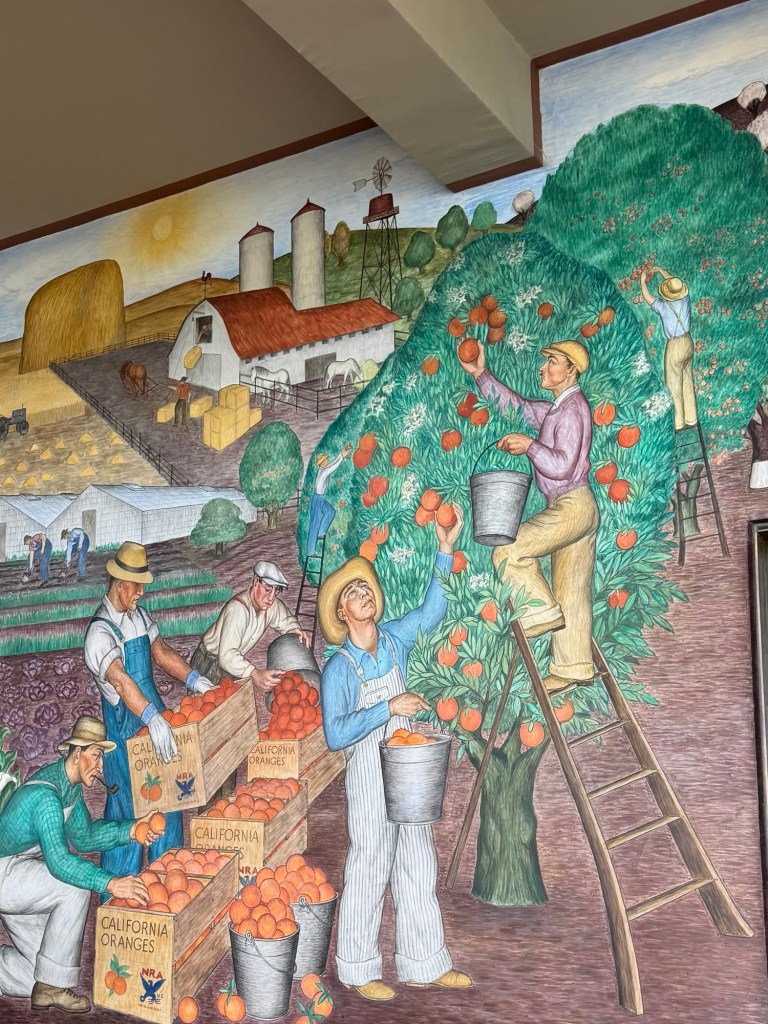
At Coit Tower, the view made the straight uphill walk worth it. I’d seen the murals before, but having them explained in depth was fascinating. They were painted around the same time as the post office mural in Ventura, using New Deal funding. It was striking to see how many different artists, working together, created such a unified whole—and how they subtly expressed their leftist, pro-labor politics.
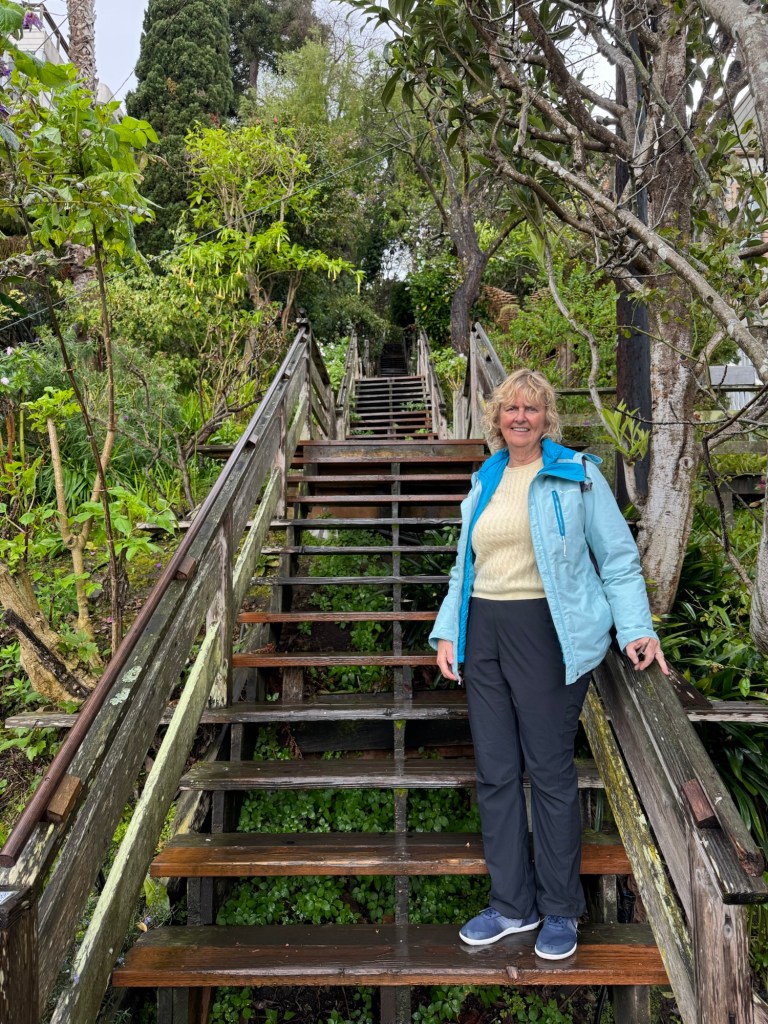
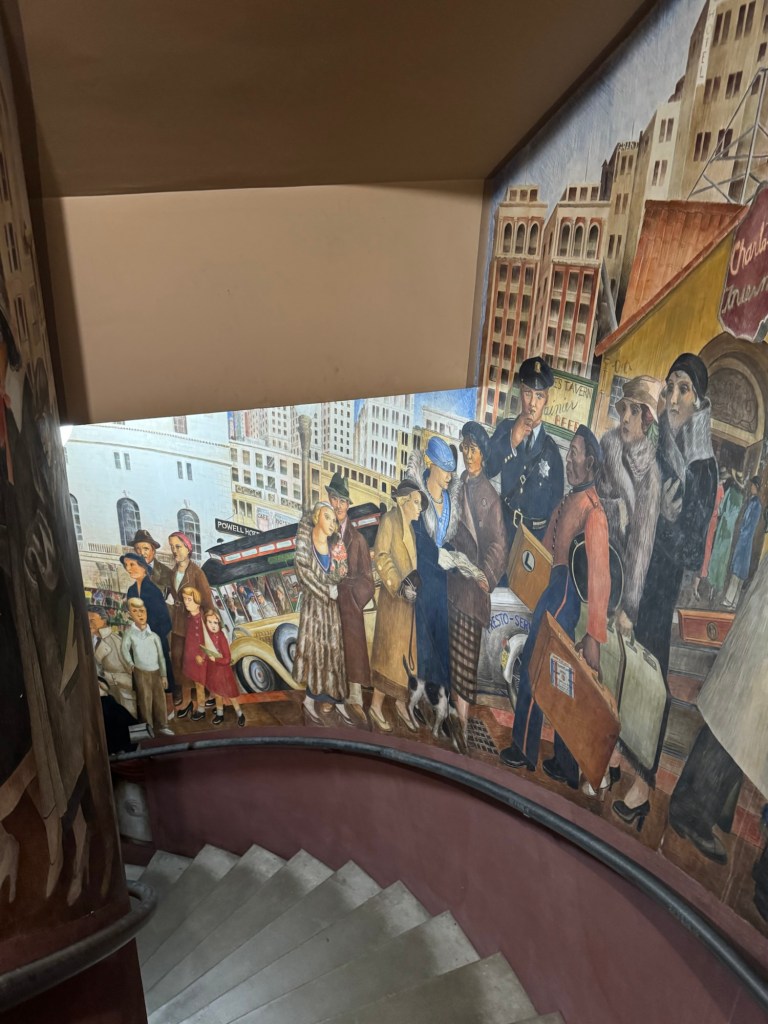
So many stairs!!The murals depict life in San Francisco—from the rural agricultural, to the manufacturing sector, to the wealthy businesses
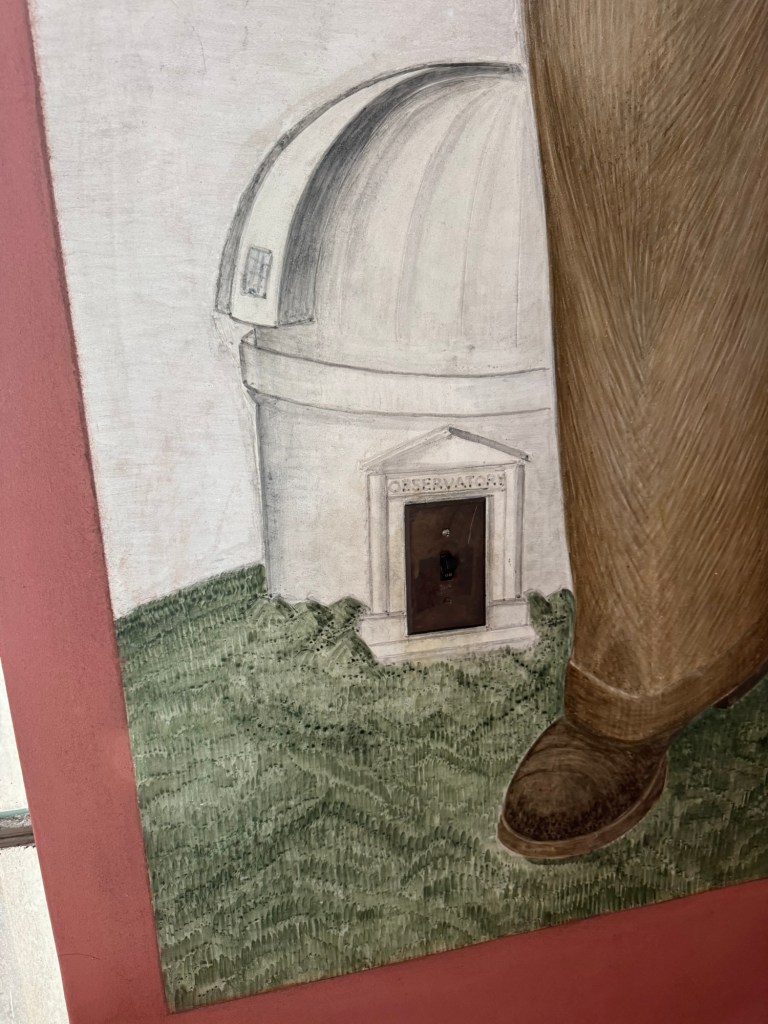
Because the tower existed first and then the fresco murals were added, they had to incorporate windows, vents, light fixtures, and more in their paintings. Look at this light switch as the door to the planetarium.
Light switch made into a door
The general public does not usually get to see these beautiful stairway murals.
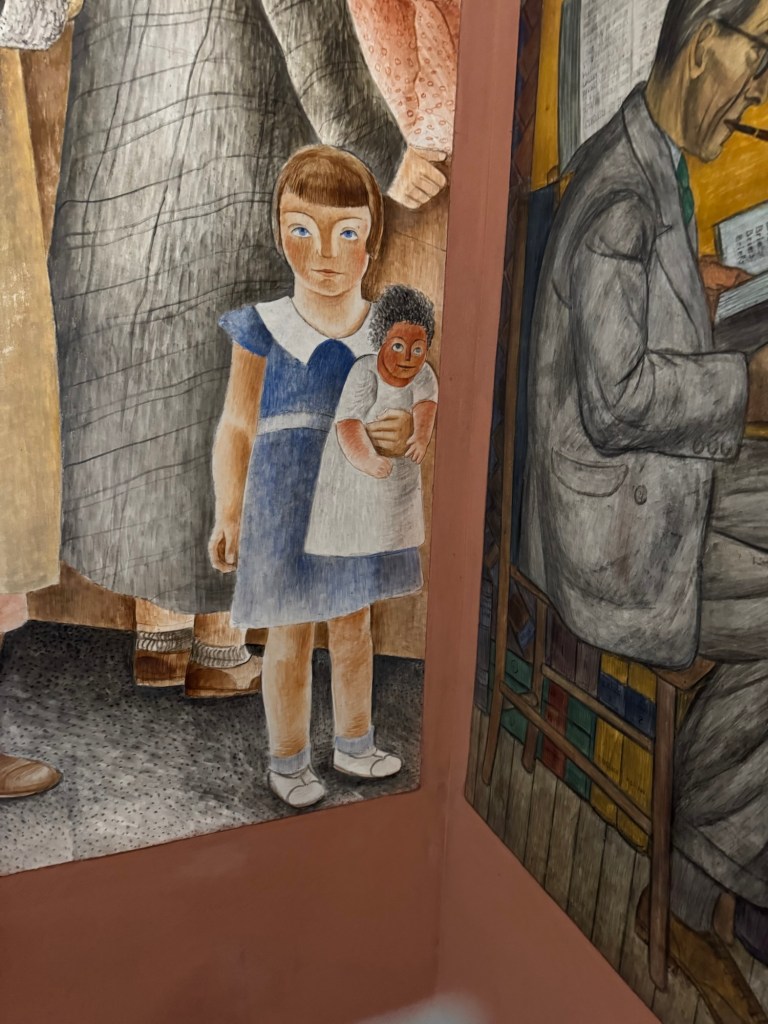
San Francisco was 90% white at this time, so this little girl with a Black doll is interesting
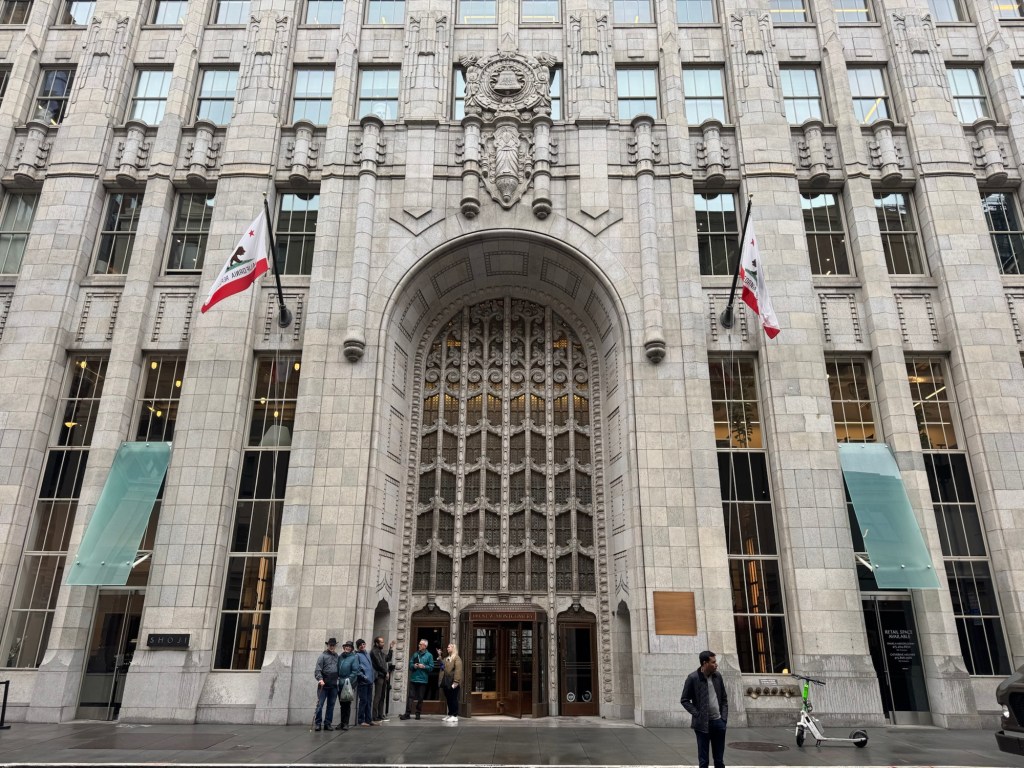
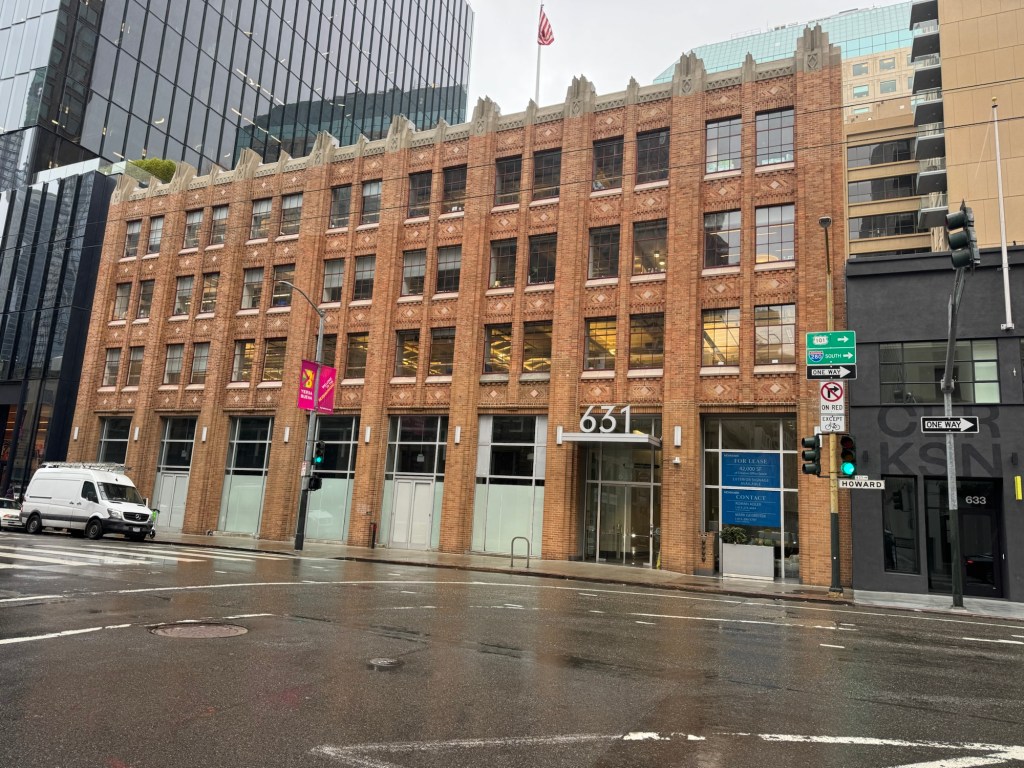
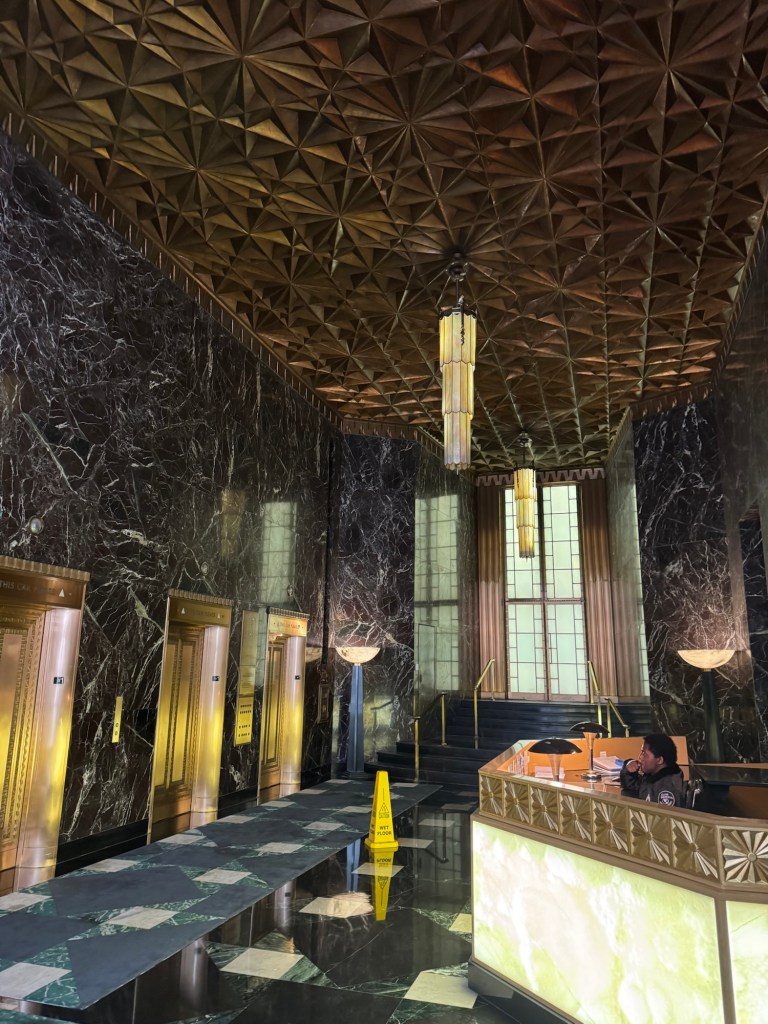
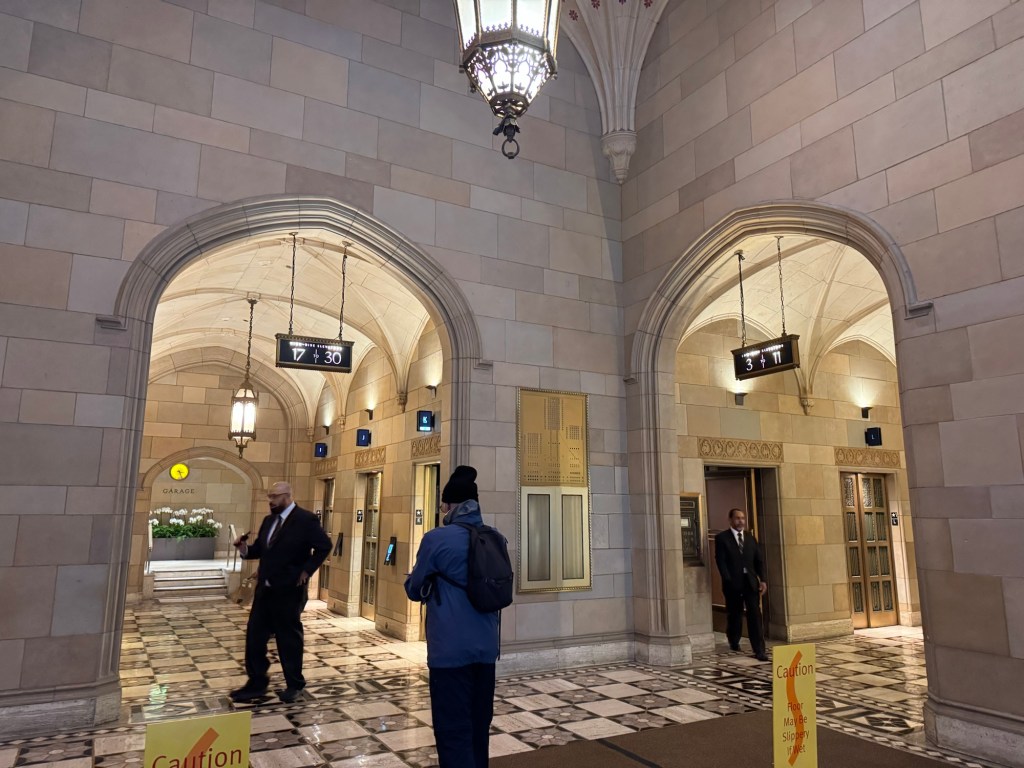
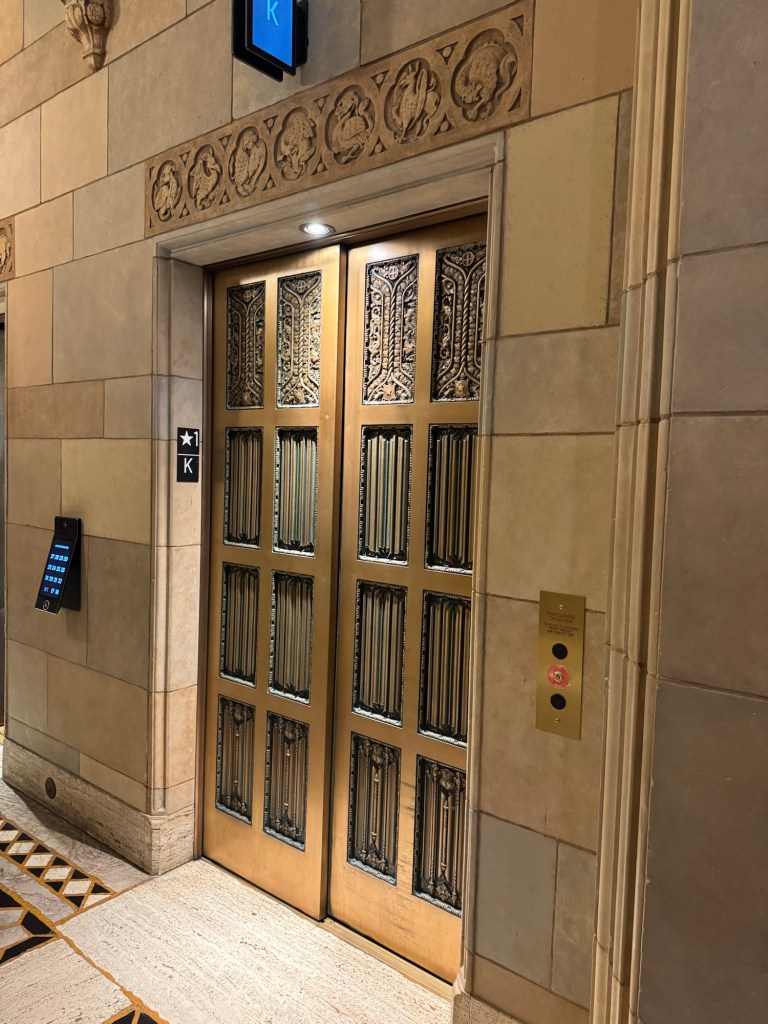
Later we joined our good friends Rick and Diane for the Downtown Deco tour. Exploring the financial district’s skyscrapers was eye-opening. Art Deco flourished after World War I, when people were drawn to opulence and luxury. The architecture emphasized symmetry and featured modern materials such as black granite and molded terra cotta.
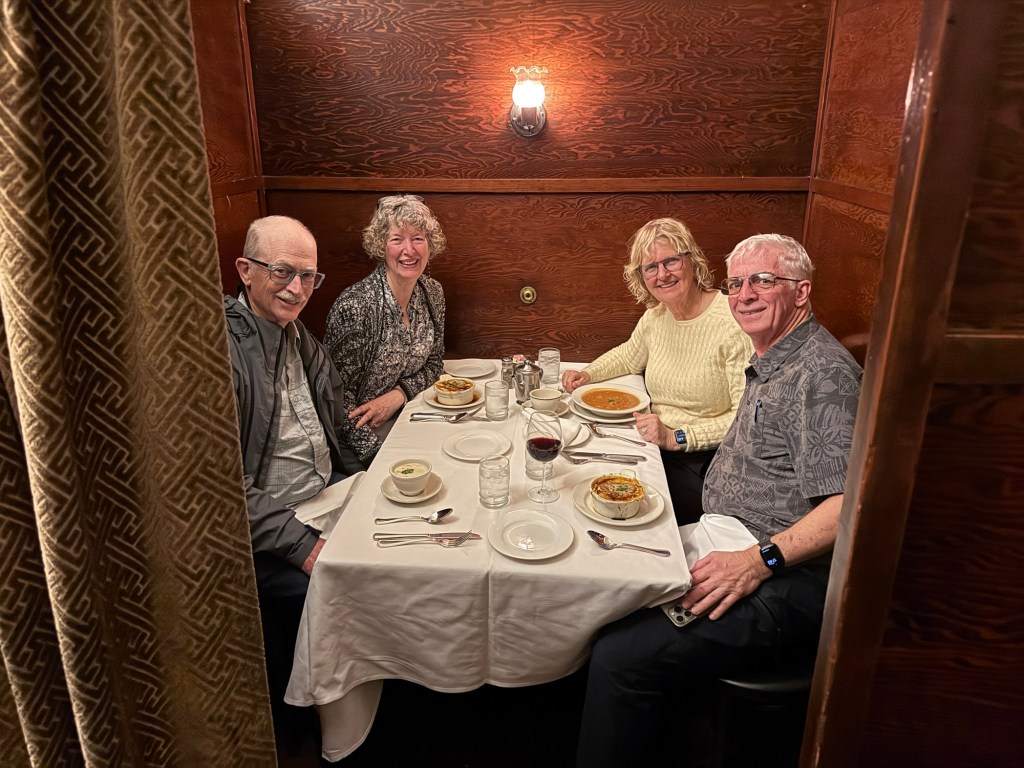
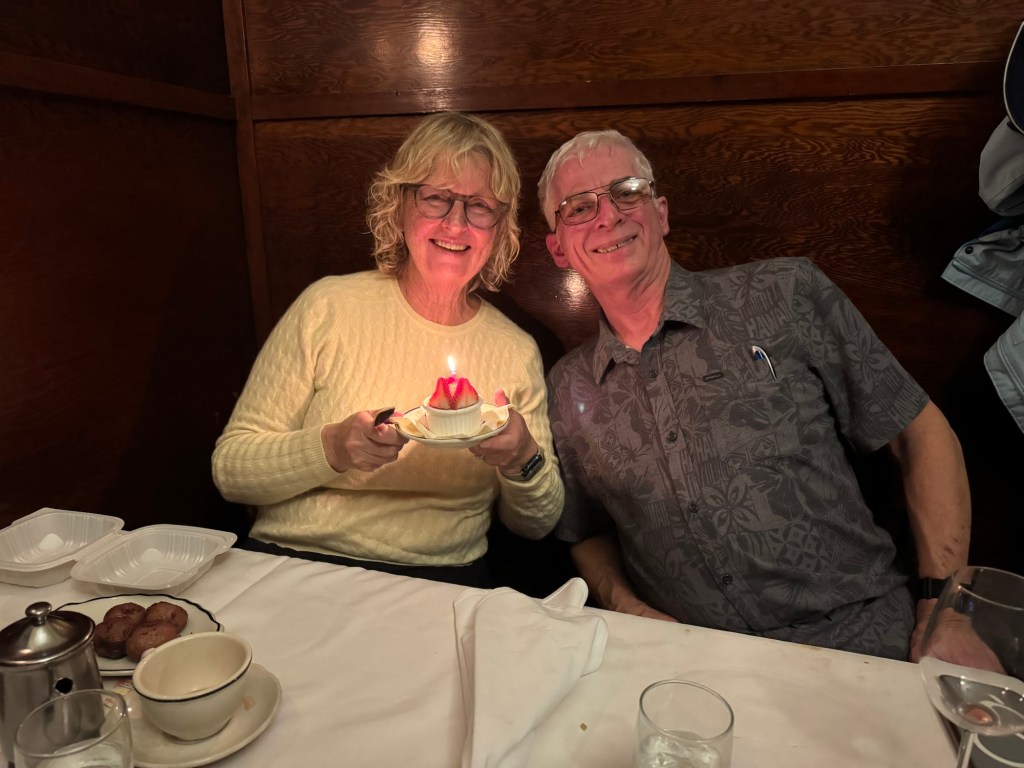
The Pacific Telegraph and Telephone building—so beautiful 🤩 The office buildings were anything but plainInside they were even more opulent—this is an office building Another office building—this one reminded me of a Gothic cathedral. I can’t imagine going to a dentist or accountant in a building like this, but that’s exactly what happens.Even the elevator doors and vents were ornateDinner later at Sam’s Grill with our good friends. The tables were very private cubicles.A little strawberry-covered crème brûlée to celebrate my birthday
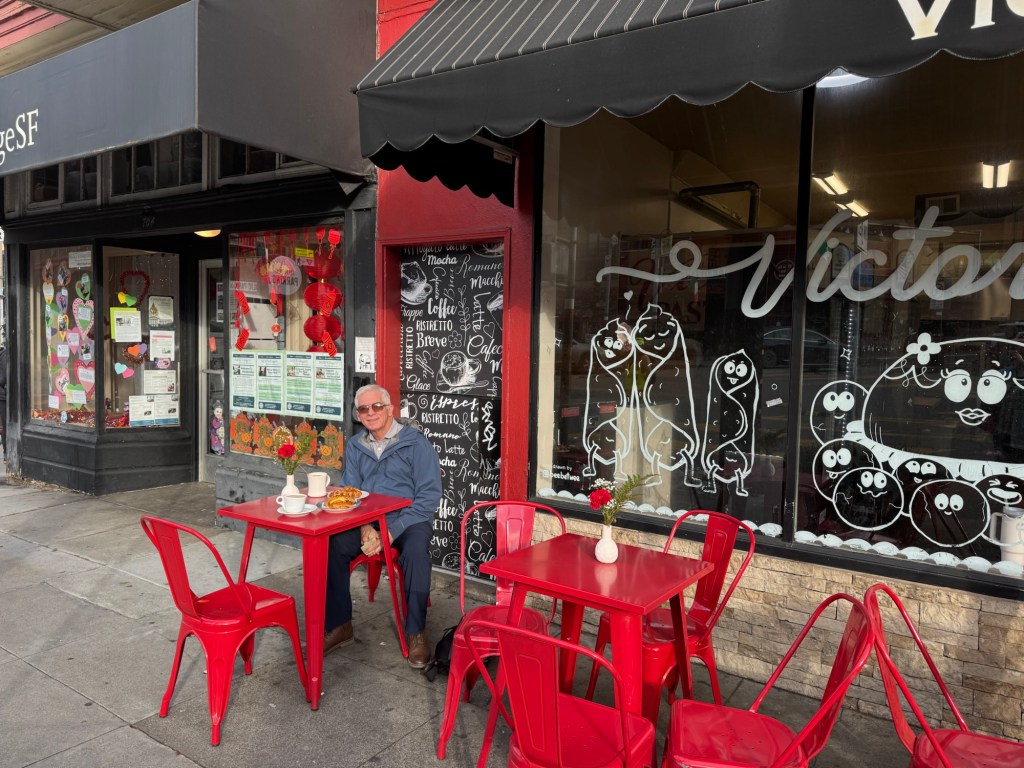
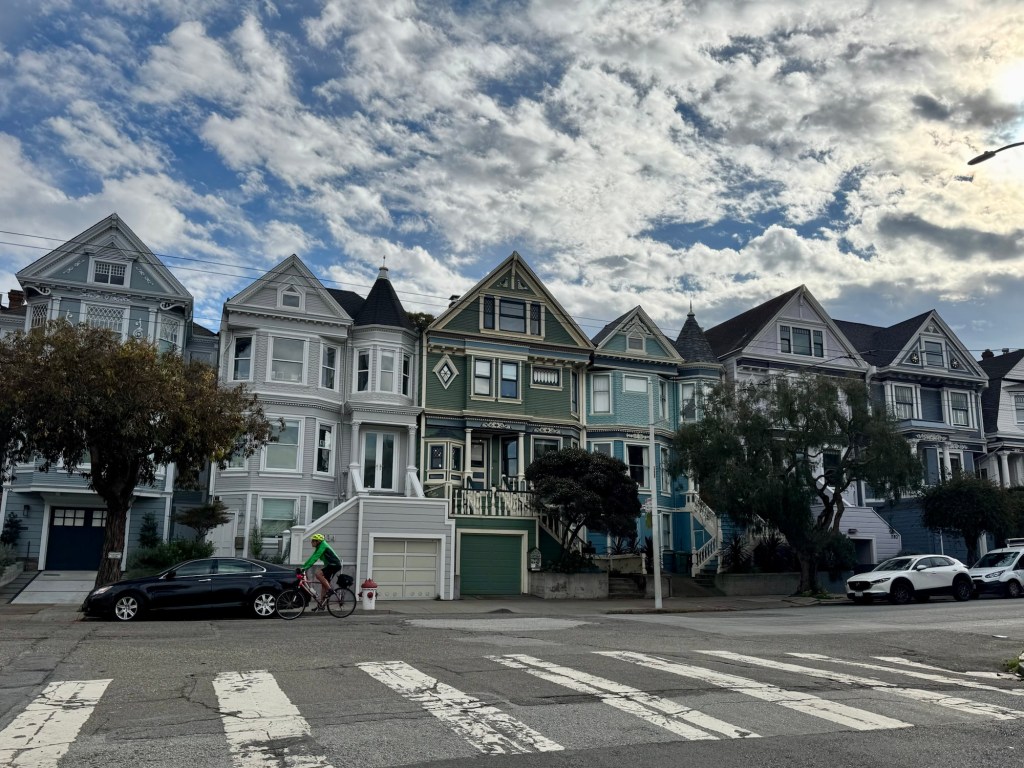
Breakfast at Victoria Pastry Company. It’s about the bakeries for me. Breakfast is so much better than lunch and dinner.At one time there were 50,000 Victorian homes in this area. Now, because of the 1906 fire and redevelopment, only 15,000 survive.
13,000 steps today, but it was up and down MANY hills! We did TWO walking tours today.
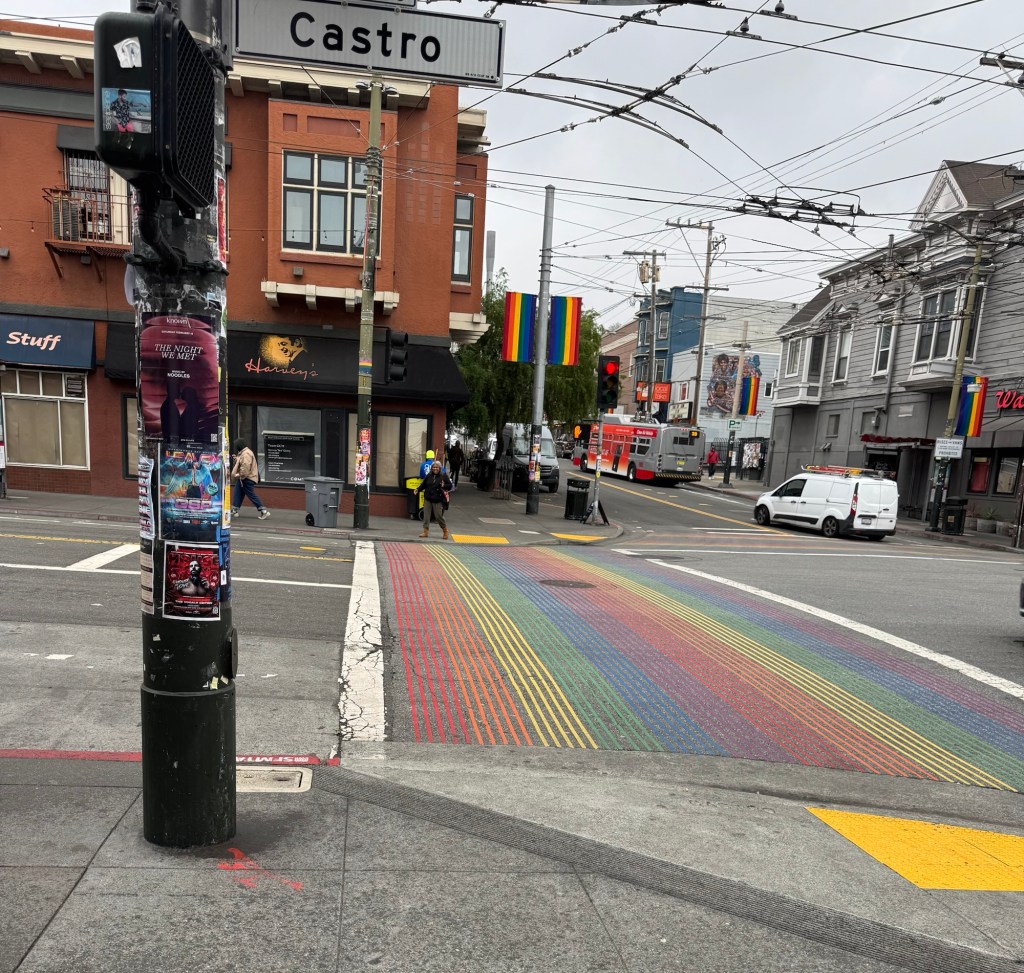
There’s a festive vibe in this neighborhood
We started out in the Castro, also known historically as Eureka Valley. I learned that San Francisco is often considered the most liberal city in the most liberal state in the nation, in part because it was settled during the Gold Rush by miners and others who came from all over the world at the same time. Because so many different people arrived at once, they had to cooperate with one another, which encouraged open-mindedness and compassion. I also learned that Harvey Milk, while widely known for being openly gay and for his assassination, accomplished a great deal for his community during his short time as a city supervisor. The Castro has a strong sense of community, and even the architecture reflects a variety of styles and cultures living side by side.
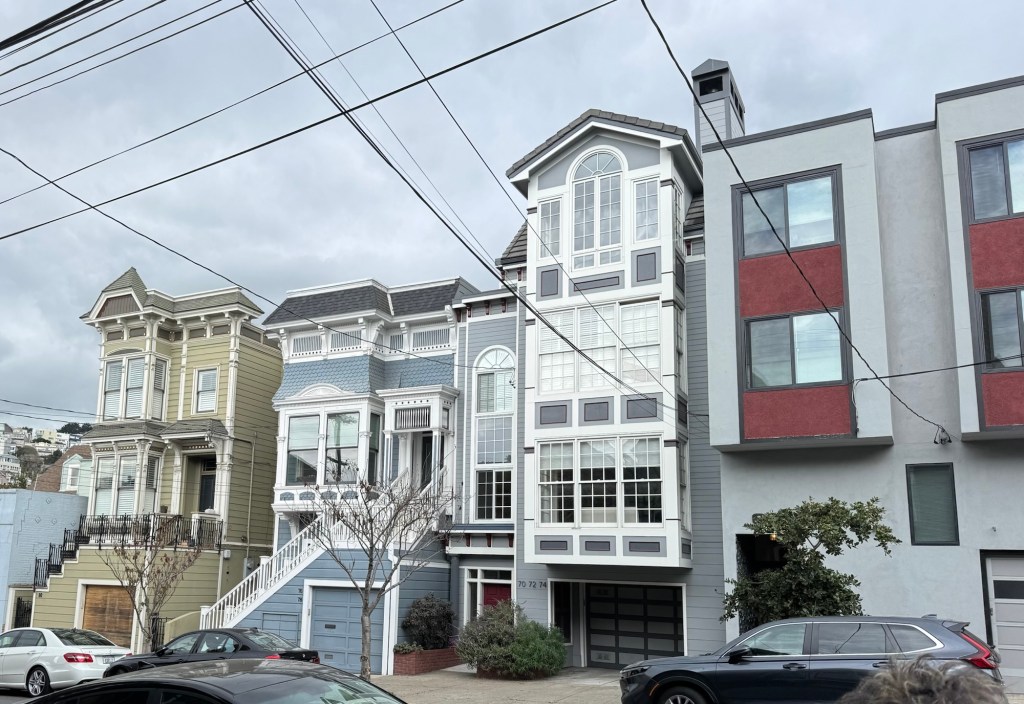
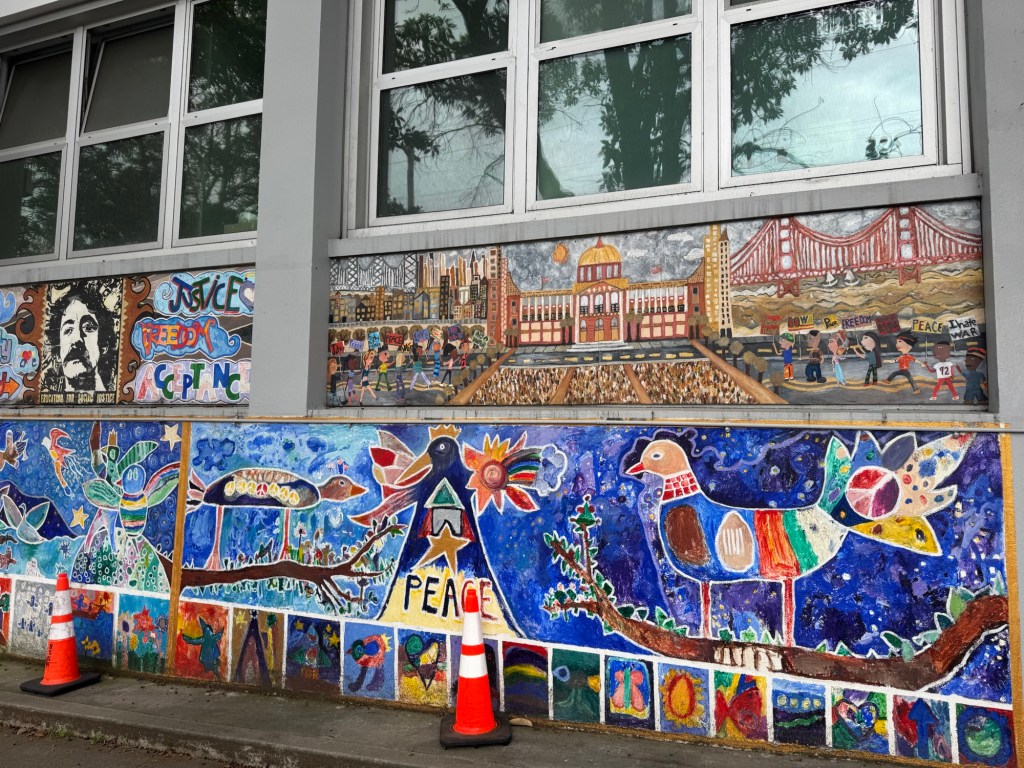
Look at the variety of architecture styles side by sideLoved this Harvey Milk Civil Rights Academy (formerly named Douglass Elementary School) mural
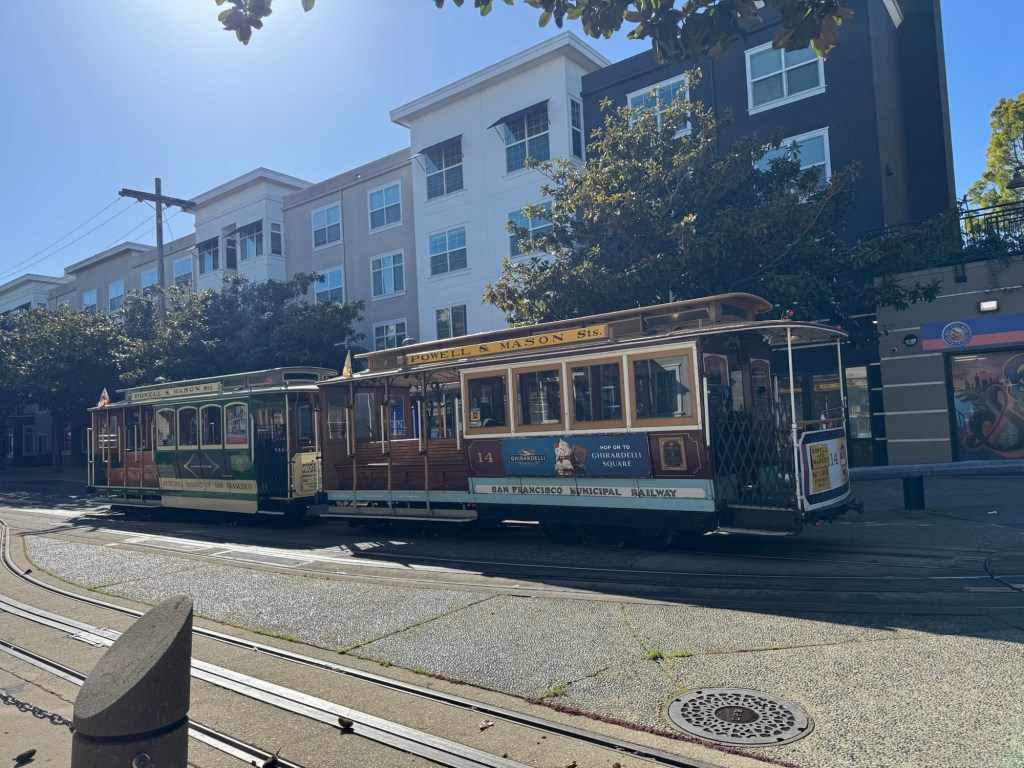
It started to rain, so we were the only ones on our next tour, Making Waves on the San Francisco Waterfront. The tour began at the Ferry Building and explored much of the area that was once a cove but has since been filled in. During the Gold Rush, hundreds of ships anchored here and were eventually abandoned; later, many of them were just left where they were to be used as landfill. The city later built a freeway in this area, which cut off the waterfront from the rest of the city and led to decades of decline. The Loma Prieta earthquake caused severe damage to the freeway, making it unsafe. Instead of repairing it, the city made a pivotal decision to demolish the freeway in the early 1990s. Its removal reopened the waterfront and led to the wide boulevard, palm trees, streetcars, and pedestrian-friendly Embarcadero we see today. It is now a thriving commercial and tourist district.
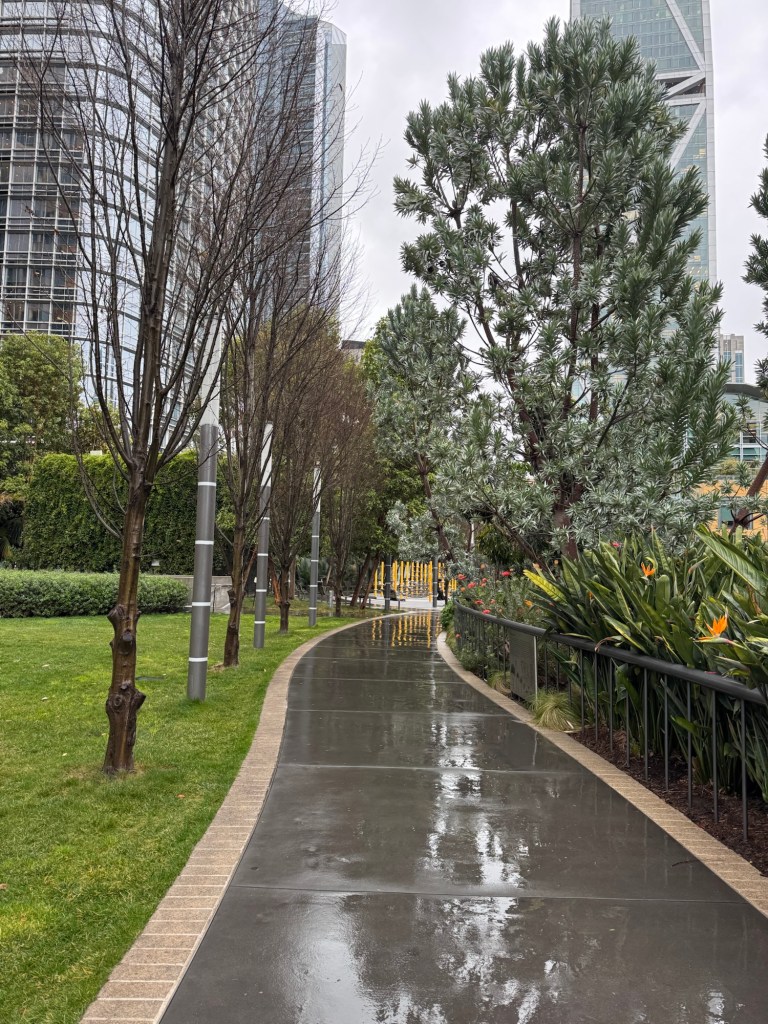
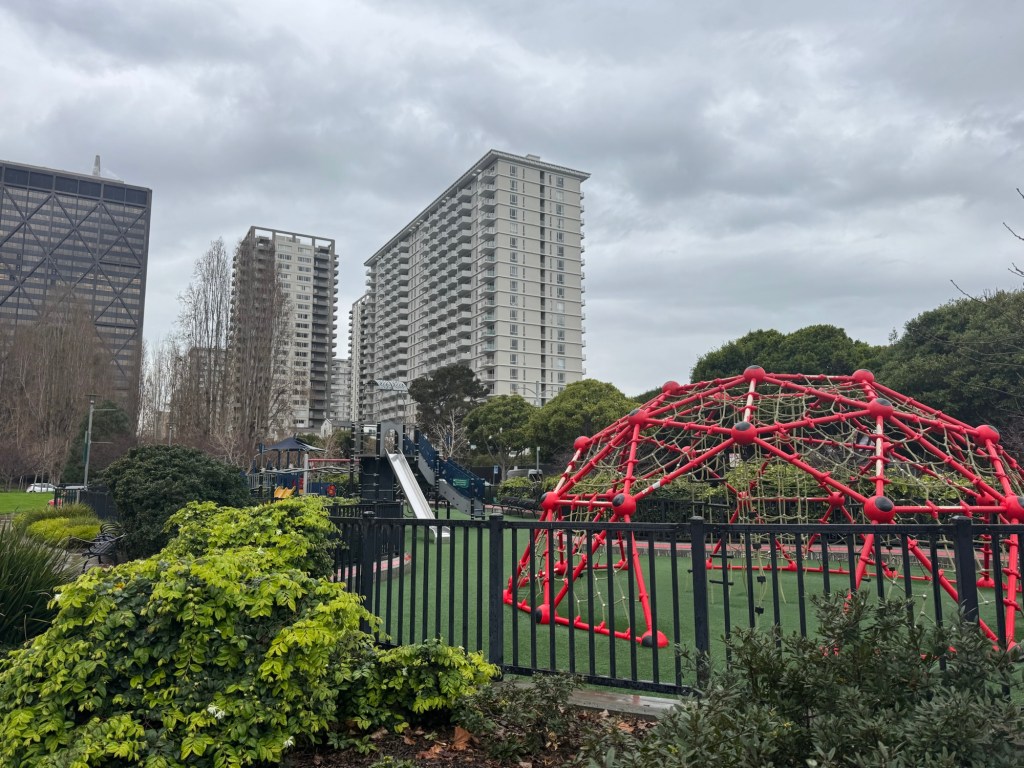
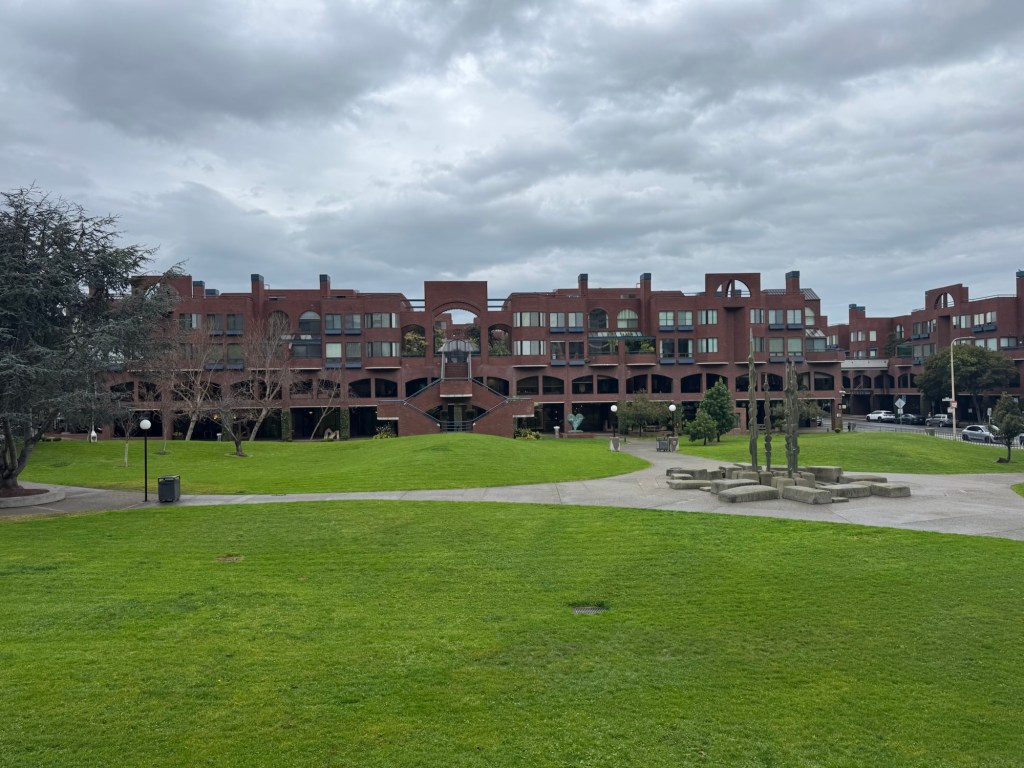
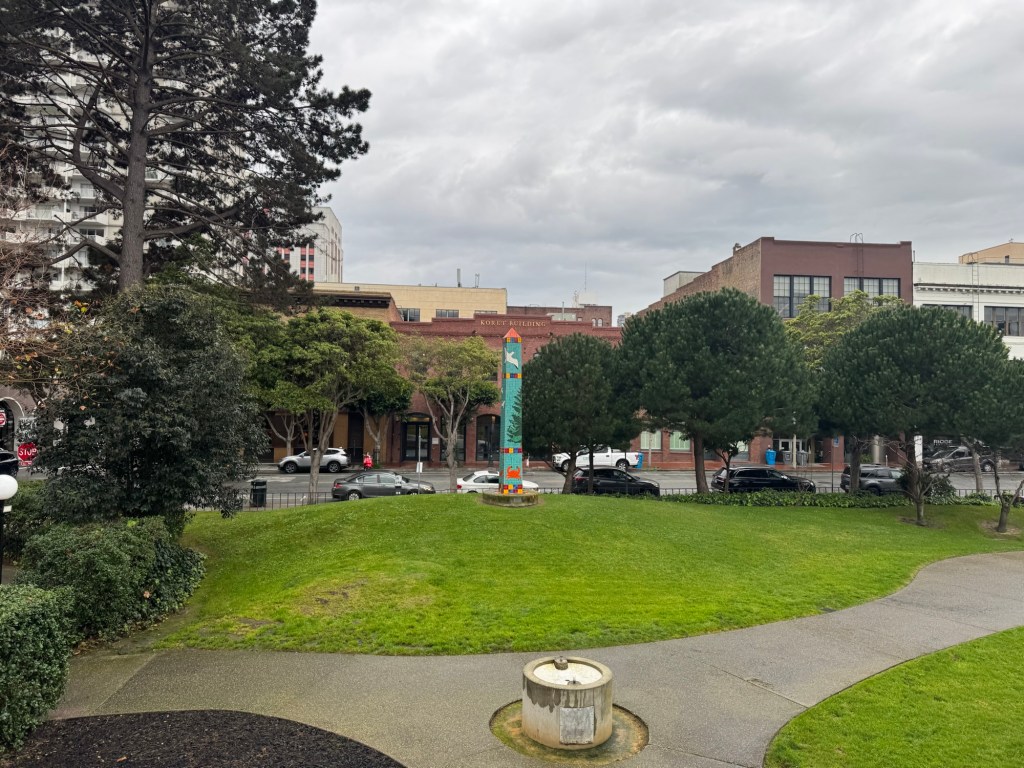
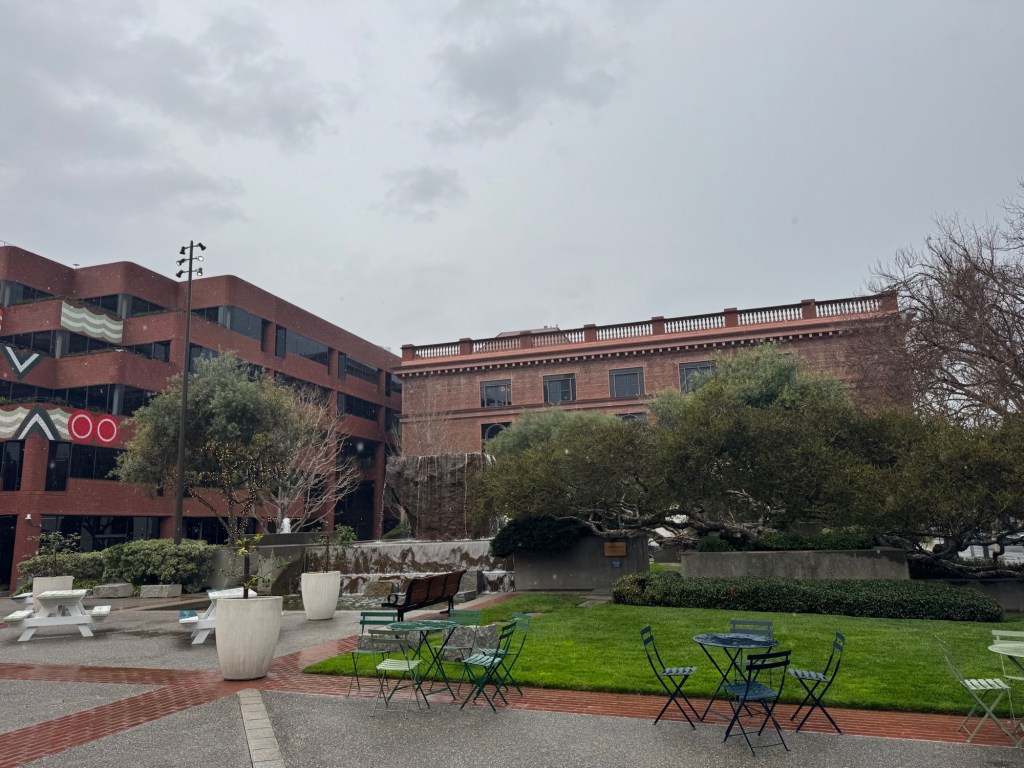
this area has beautiful parks and open spaces.some of the older buildings are preserved.
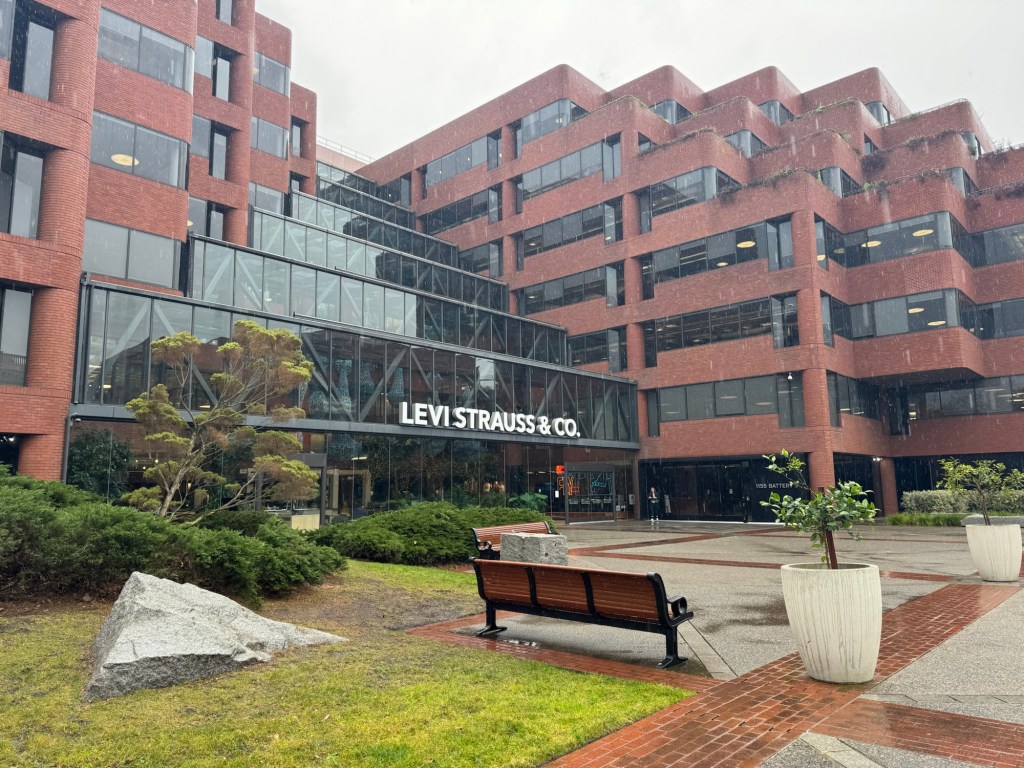
I had always heard that Levi Strauss made his fortune selling sturdy pants during the Gold Rush, but this is more myth than truth. While Strauss was in San Francisco during that time selling dry goods, his famous riveted work pants were not developed until decades later. The iconic jeans most associated with him emerged in the 1870s, well after the Gold Rush had ended.


 Marsh Travels