Day 13: Siem Reap to Bangkok

We left for the airport early. It’s a short distance to the airport La but takes a long time because of the poor roads…the streets give you a complimentary massage.

We are now in Bangkok, which has a new official name: Krung Thep Maha Nakhon (City of Angels). This is actually a shortened version—the city’s full ceremonial name is the longest in the world. It translates to:

“City of Angels, Great City of Immortals, Magnificent City of the Nine Gems, Seat of the King, City of Royal Palaces, Home of Gods Incarnate, Erected by Visvakarman at Indra’s Behest.”

We toured the temple, and it felt like Las Vegas meets Buddhism—over-the-top gold, jewels, glass mosaics, and dazzling bling everywhere.

There does seem to be a contradiction between the elaborate display of wealth and the core teachings of Buddhism. The Buddha emphasized simplicity, detachment from material possessions, and compassion for the poor and suffering. Yet, many of the grand temples and statues built in his honor are adorned with gold, jewels, and intricate decorations—symbols of immense wealth. Case in point, the largest reclining Buddha in the world (45 meters long)

We learned that the Thai language has 36 vowels and when you recite them you sound like a monkey.

Riding in tuk-tuks to the flower market—the largest in Southeast Asia—felt like being on Mr. Toad’s Wild Ride at Disneyland. It was crazy and totally fun.

Tuk tuks

Later we toured the largest flower market in SE Asia

We learned to fold lotus flowers. (Lisa Rajala and me)
Lisa Kimball in a study of purple
This place went on and on…

Day 12: Siem Reap Cambodia

Before this trip, whenever I asked people who had been to Angkor about their experience, they would get a faraway look in their eyes and speak of it fondly. They used words like “magical” and “spiritual” but offered few specifics. Now I understand. The beauty, vastness, and sheer impact of this place are almost impossible to put into words.

We started before dawn in order to see the sunrise at Angkor Wat. Our Tour Director’s father was head of the guards for Angkor Wat, so he knew exactly where to sit at sunrise and many details about the site.

Our group waiting for sunrise

Contrary to what I had read, Angkor Wat was never truly abandoned. People have always lived nearby, tending to and preserving it—one of the reasons it remains so well maintained today. Yet, when the French arrived in the late 1800s, they claimed to have “discovered” this extraordinary religious site.

Reflection Pond
The library was one of the settings for an Angelina Jolie movie, Tomb Raider.

The walls are covered with elaborately carved designs. They are so well preserved. Each carving is unique.

The line to go down the stairs of the temple
Ice cream lunch at break between temples

Angkor is really a complex of many many temples.

The Jungle temple has trees growing over the buildings
Tree swallowing a building
Stegosaurus and Maurice Sendak’s Wild Thing
Monkeys climbing a palm tree

At sunset, we took a hot air balloon ride—this time with no wind, so we were actually able to fly. Once again, the most magical part was the children, who were thrilled by the balloon and by our presence. They all wanted their pictures taken, their excitement infectious.

As the balloon inflated, the children ran around squealing joyously
We were also pretty happy—here’s Harvey on take off
Up up and away
The temple area from the air

Afterward, we enjoyed a delicious farewell dinner to celebrate our time in Cambodia.

Beef skewers wrapped in some kind of leaf
Shrimp and pomelo salad
Duck with local vegetables
Ezra, my nephew, with dessert: a teeny pastry with cooked pumpkin and custard topped with with a watermelon ball.

Day 11: Siem Reap Cambodia

The communist revolutionary Pol Pot sought to exterminate all religious and educated people. To conserve bullets, his regime brutally beat victims to death in the Killing Fields. The peaceful Buddhist population did not resist violently, as they believed in karma rather than revenge. Even today, the country continues to suffer from the lasting effects of this loss of educated individuals.

Many tourists visit Angkor Wat, but just beyond Siem Reap, it feels like stepping back in time. The children appear so innocent, waving and smiling as if we are their entertainment. In the tourist areas, they sell things, but in the countryside, they seem genuinely excited to see us, expecting nothing in return.

Eight year old girl helping mom skewer fish

We visited a village where the Mekong river floods so the houses have to be on stilts. The people are experts at drying and smoking fish.

The boat ride itself was super relaxing.

We also went to a village that is completely floating. It’s great if you have noisy neighbors, you can just choose another location.

We had lunch at a cooking school that is helping people from disadvantaged backgrounds. after a year at the school, they’re able to get jobs in five star hotels. The food was incredible.

Spring rolls
Dumplings
Fish cooked in bamboo
Fancy Chicken
Dessert

Then we went to a museum, where a young man who served in the Khmer Rouge army as a child is working to take out land mines. About 100 people a year die from land mines in Cambodia. Many million remain. Landmines are designed to maim and not kill so that the enemy has to care for the wounded. The soldiers leave but the mines stay. it’s very painstaking work. Sometimes they can use these giant rats to sniff out the land mines.

In the evening, Jim and I treated ourselves to massages—an incredibly relaxing experience and surprisingly affordable.

Day 10: Ho Chi Minh City to Siem Reap Cambodia

We had to leave the hotel at 4:45 AM for our flight to Siem Reap Cambodia today. it still feels surreal that I am actually on this trip that I looked forward to for so long. The group gets along so well and I have so enjoyed spending time with these friends. It is 1000 times easier than traveling with students. And the hotels and meals are better too!

In this hotel, we have a beautiful large suite with two bathrooms. Such luxury!
The pretty hotel pool
Our sweet tour director packed us a little snack of sweet potato chips a banana, a duck egg, and sticky rice wrapped in a banana leaf

We took a little tour of the area and learned some history.

Cambodian architecture is distinct. This is the King’s Palace.
Some Cambodians have a tradition of buying birds and then releasing them from their cage.
Although Cassie and Tom set this Byrd free, our tour director told us that the woman would just catch it again in just a few minutes minutes.
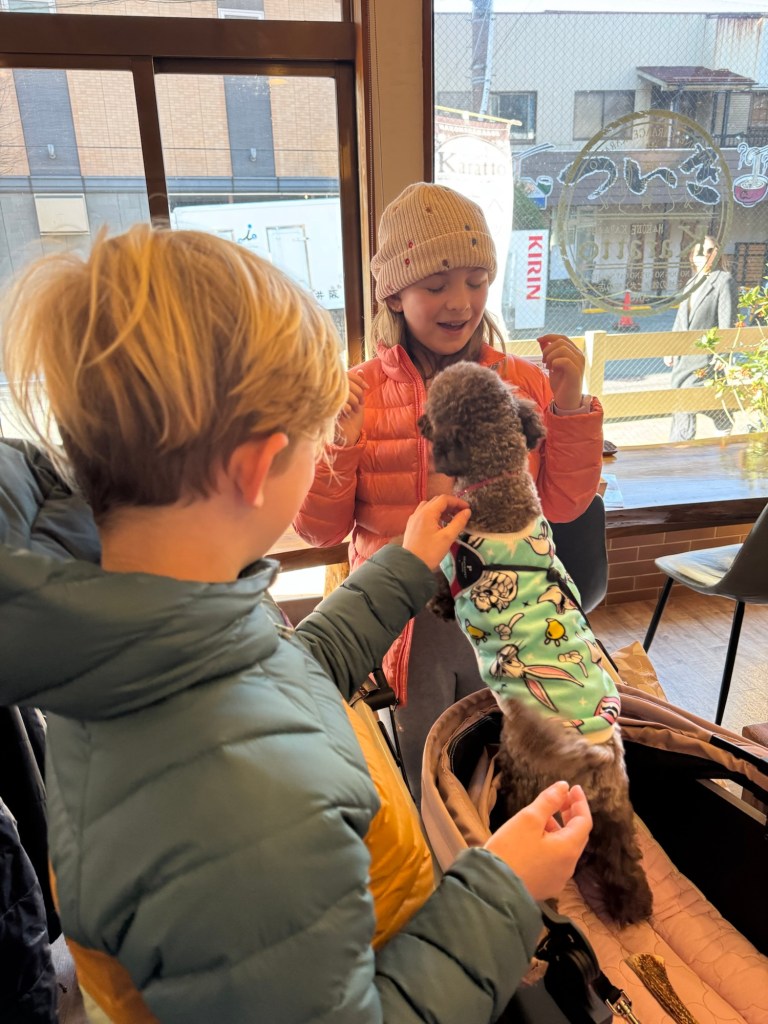
Ezra, Tina, Harvey, Warren, Jim and I had arranged to take a hot air balloon ride over the temple. We drove far out into the countryside where the neighborhood children were running around excitedly watching the big balloon fill up with air. When we arrived, they ran over to us and started practicing their English. They were adorable.

Watching the balloon inflate

In the end it was too windy to fly, but we weren’t disappointed by the whole experience. It was magical.

Warren and I in our new hats.
The neighborhood kids LOVED seeing the balloon fill with hot air
These kids practicing their English were SO CUTE! How are you? I’m fine, thank you.

Day 9: Ho Chi Minh City

We left very early for our boat trip down the Mekong Delta. This is an important agricultural area, producing 95% of the country’s rice, and also many other fruits and vegetables. It was beautiful and relaxing.


It’s interesting to think that fruits we consider exotic, like dragon fruit, rambutans, and jackfruit, are as ordinary to them as apples are to us.
We took a medium sized boat…
And then we took little boats

Later, we stopped for more shopping opportunities. This area is known for its specialty coconut candy and a unique wine made in part from a snake. I decided to pass on trying it.
Steve, Jim and Tom trying the snake wine
Jim with a passionfruit Mojito. The others at the table said it looked like a jar of weeds, which it sort of did.

Day 8: Ho Chi Minh City

Even though I was feeling better, I stayed at the hotel to rest this morning. Everyone else visited the tunnels where the Viet Cong hid during the day. Imagine spending hours in those cramped, dark tunnels, day after day, living in constant fear for your life. When my friends returned, they were somber, sharing stories of the brutal booby traps designed for our soldiers. War truly exposes the depths of human depravity.

I joined the group for lunch (at the Pho place where Bill Clinton ate!), and we spent the afternoon touring the city. Ho Chi Minh City is one of the wealthier parts of Vietnam, due to the influx of American money during the war and also before that from the French. Many buildings reflect French influence, dating back to the colonial period. I was especially intrigued by the post office designed by Gustave Eiffel—it surprised me because it looks more like a French train station than a post office.

Post Office designed by Gustave Eiffel
Inside the Post Office— doesn’t it look like Musée d’Orsay?
The beautiful city Hall is also in the French style. 
Gelato in the afternoon with Willie and Lisa—fun friends from church

Later we had dinner at a street food market. There were like a hundred stalls featuring street food from around the world. Delicious and fun! Again, it’s just fun being with my friends.

Day 7: Huê to Ho Chi Minh City (Saigon)

Today we toured two mausoleums of several kings. Both were beautiful.

The king’s tomb

We had lunch at a Buddhist pagoda

We also went to a place that sells incense and learned how to make it.

We said goodbye to Huê and flew to Ho Chi Minh City.

Aerial view of Huê

I had been feeling a bit off all day, and as soon as we got through airport security, I started throwing up. It came on suddenly and passed quickly, so I’m guessing it was norovirus. I felt miserable and worried about passing it to the rest of my group.

Day 6: Hôi An to Danang to Huê

Danang was the first place US soldiers landed. Now it’s bucolic.
Danang Bay

During my adolescence, names like Hanoi, Danang, the Gulf of Tonkin, and My Lai were synonymous with war. Seeing them now, years later, at peace is striking. The war left deep scars. Our Vietnamese tour director shared how his grandparents’ greatest dream was simply to live in safety, free from bombs. His parents longed to raise children who wouldn’t succumb to diseases like polio and smallpox. Today, the biggest dream of his generation is to have meat on the table every day. But life is rapidly improving in Vietnam. Life expectancy is much better. Vietnam’s economy is currently growing at an impressive rate of 8%. The country is in a period of rapid transition, with significant improvements in quality of life occurring within just one generation. Only 30 years ago, people were still dying from diseases like polio and smallpox. Now there is a high rate of immunization. Today, modern machinery is replacing animal labor, massive factories are creating jobs, and tourism is on the rise.

Lunch: fried rice and chicken with lemongrass cooked in a clay pot

After lunch, we drove to Huê, the former imperial capital of the Nguyen dynasty. The Citadel, or Imperial City, is a UNESCO World Heritage Site. What remains is stunning, yet it saddened me to think of how much my country bombed and destroyed.

Jim and Nancy Duncan were the first friends we made in Ventura. They live in Bakersfield now.
The ancient city had beautiful gardens.
Only the king lived in this part—the forbidden city.

Afterwards we visited a pagoda, a peaceful place of Buddhist worship.

Our fun little group

Day 5: Hoi An, Vietnam

One of the best parts of this trip has been spending time with my friends, many of whom I don’t see often. It’s interesting to realize that I’m the hub—everyone knew me before the trip, but they didn’t know each other. I’ve been so happy to see how well the whole group gets along. It’s a thousand times easier than the student trips!

What’s the connection? I traveled with.Cassie (at left) on the last student trip and she’s here with her husband, Tom. They are both a lot of fun. I traveled with Harvey on the right and his daughter to France a few years back and he’s here with his wife, Janna. I so enjoy being with them.
Lisa, on right, where is my roommate at UCSB, and Diane, in the middle was our RA. They and Diane hadn’t seen each other for 50 years.
We’ve stayed in close contact with my friend Diane, and now our children who live near them are good friends too. We both like salted caramel gelato.

We are in Hoi An which is a UNESCO world Heritage city with Chinese roots. I loved poking into the little boutique shops. Many of my friends had clothing and shoes custom made. The town is famous for this.

Hoi An rickshaw parking
Harvey and Warren had leather jackets tailor made

The thing about In EF trip is that you get to do so many different kinds of things. And the travel company tries to connect you with authentic experiences. While our clothes were being made, we visited a Rice farm. Only a decade ago many people are still using water buffaloes to plow the fields. Now they have machinery at this farmer, let us try the traditional methods of farming.
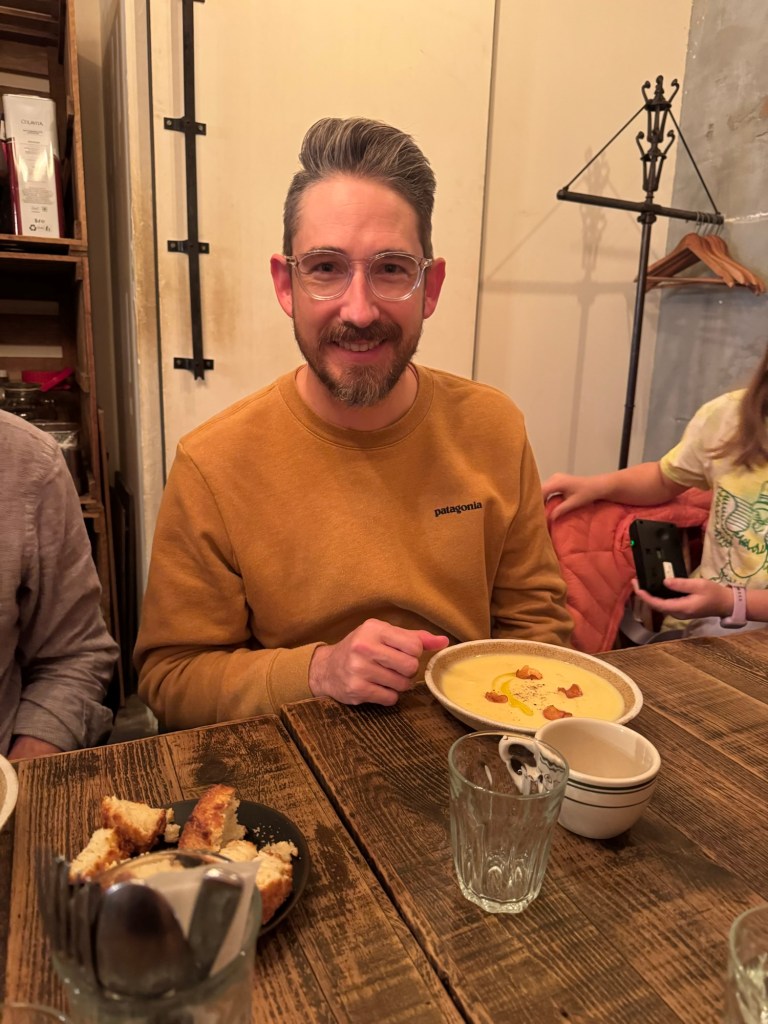
Steve actually got in and worked the plow and planted the rice. Such a great sport! I love it

Before our cooking class, we took a guided tour of the huge colorful market.

From there, we took a beautiful boat ride down the river to the restaurant where we would learn to make Vietnamese food

Success in making dish #1: spring rolls
Making spring roll wrappers
Eating the fruits of our labor

Day 3: Hanoi to Ha Long Bay

Many places claim to be the eighth natural wonder of the world, but in the case of Ha Long Bay, that title might not be an exaggeration. This UNESCO World Heritage Site boasts stunning turquoise waters dotted with incredible rock formations. Our cruise is aboard a beautiful boat with only 20 cabins, and our room is larger than some hotel rooms we’ve encountered! We enjoyed a delightful lunch while watching the ever-changing scenery from our cabin’s balcony. I must admit, I’m not accustomed to this level of luxury. I love this so much!

Nothing better than hanging with friends doing fun things and seeing beautiful nature.

We took a boat to a small village reminiscent of the Guna village in Panama or even Rapa Nui (Easter Island)—remote and sustained primarily by tourism. The village grows vegetables, which our boat staff purchases and serves onboard. They are also dedicated to protecting a species of monkey, the langur, which they are striving to save from extinction. There are only 69 left in the world!

Some people chose to bike on the island. (Jim and Nancy Duncan and my Jim.)

The food on the cruise has been excellent.

Salmon salad
Prawns with Tumeric rice
Angus beef with local sweet potato mash
Passion fruit cheesecake and other mixed fruits.