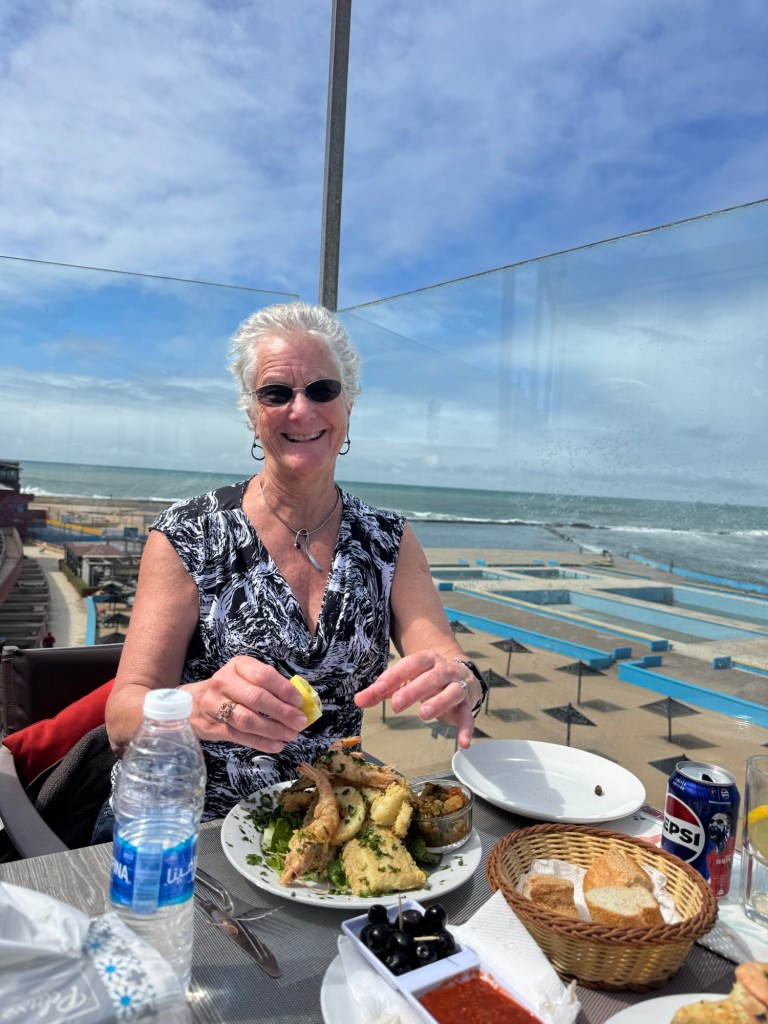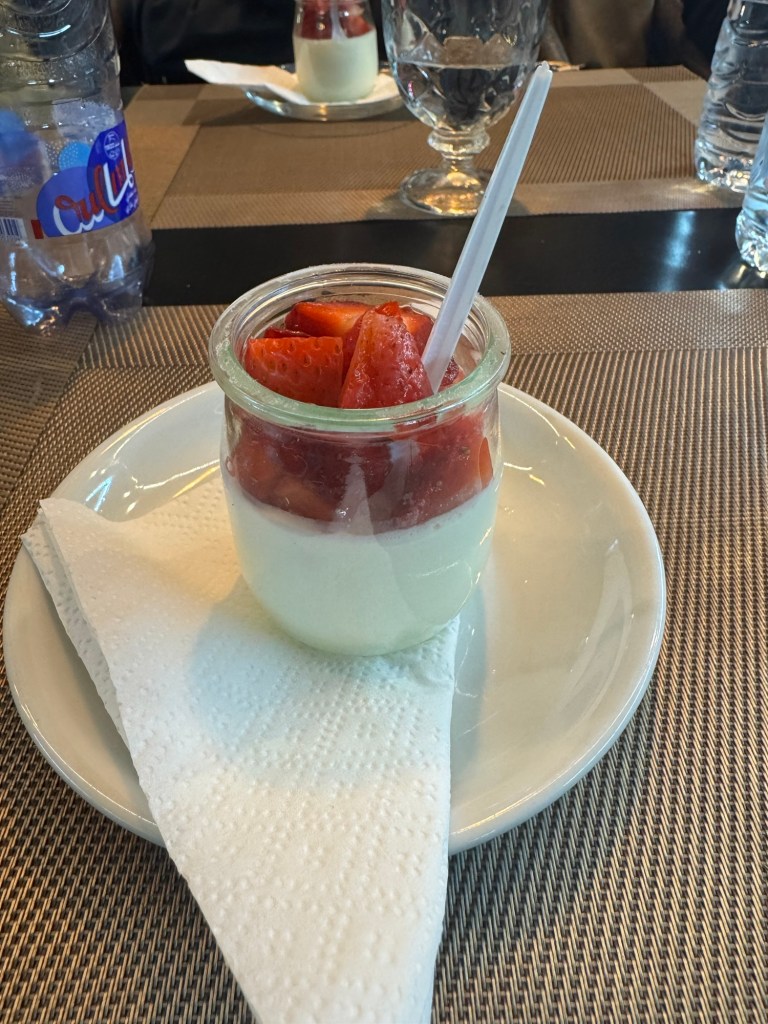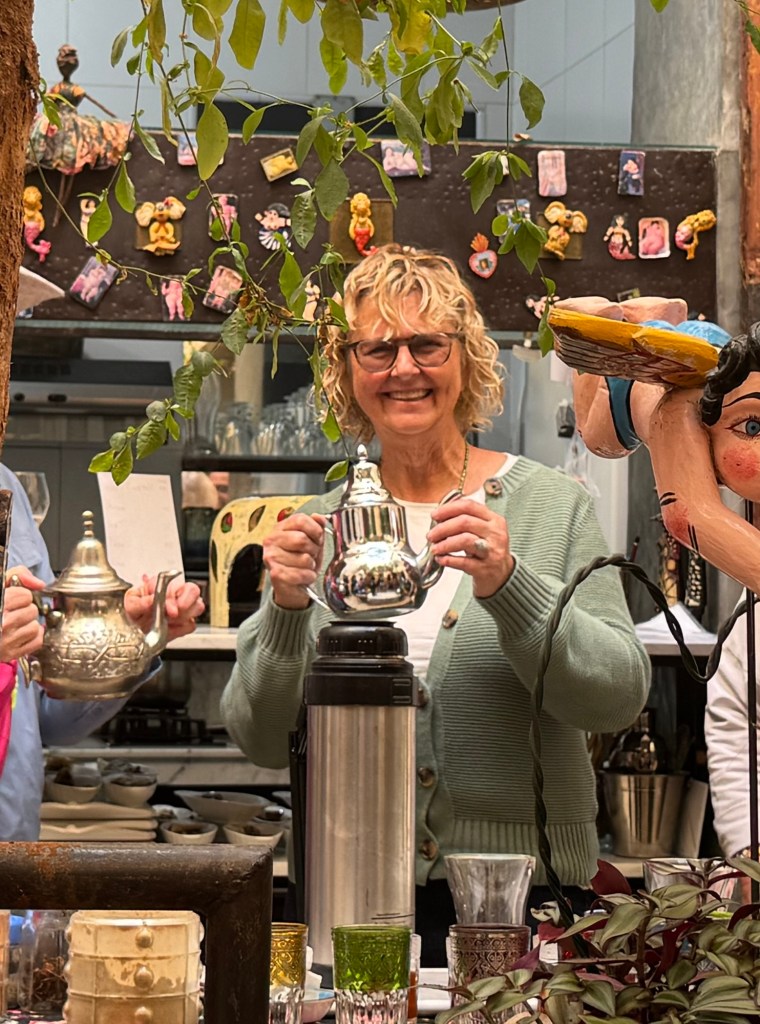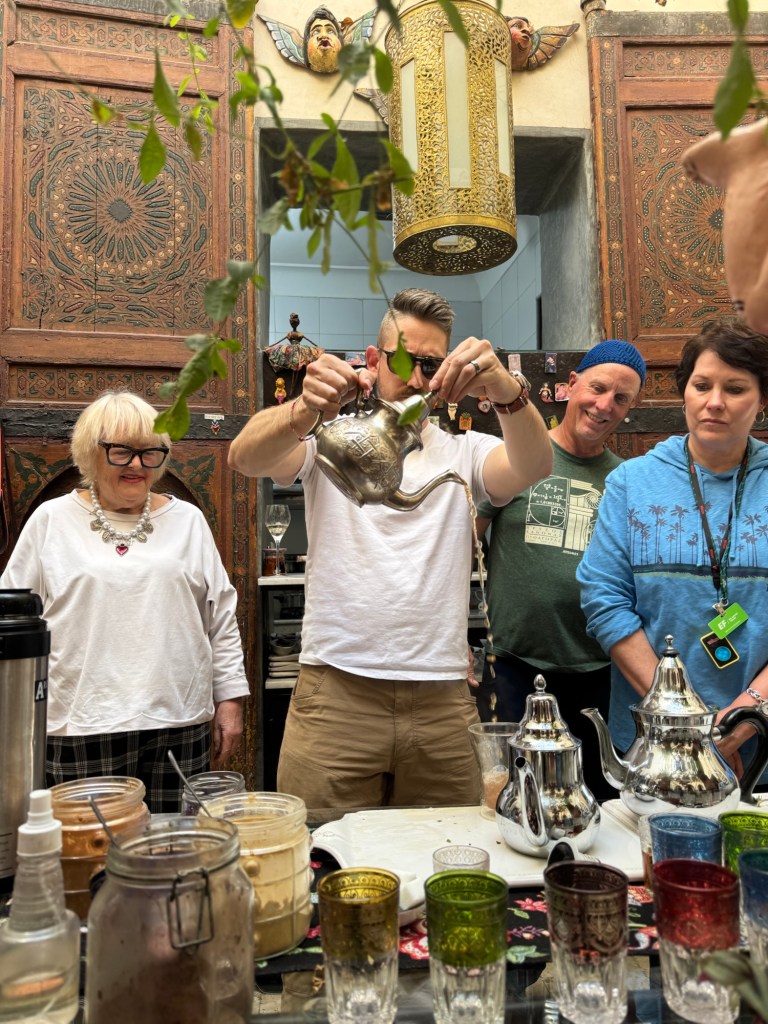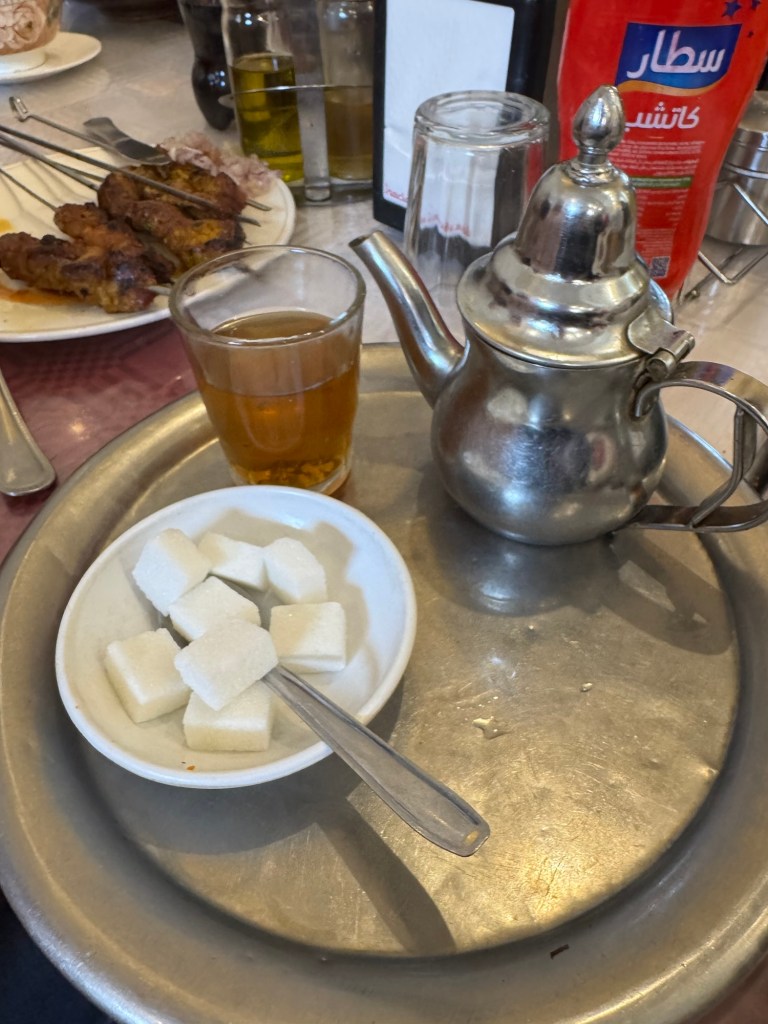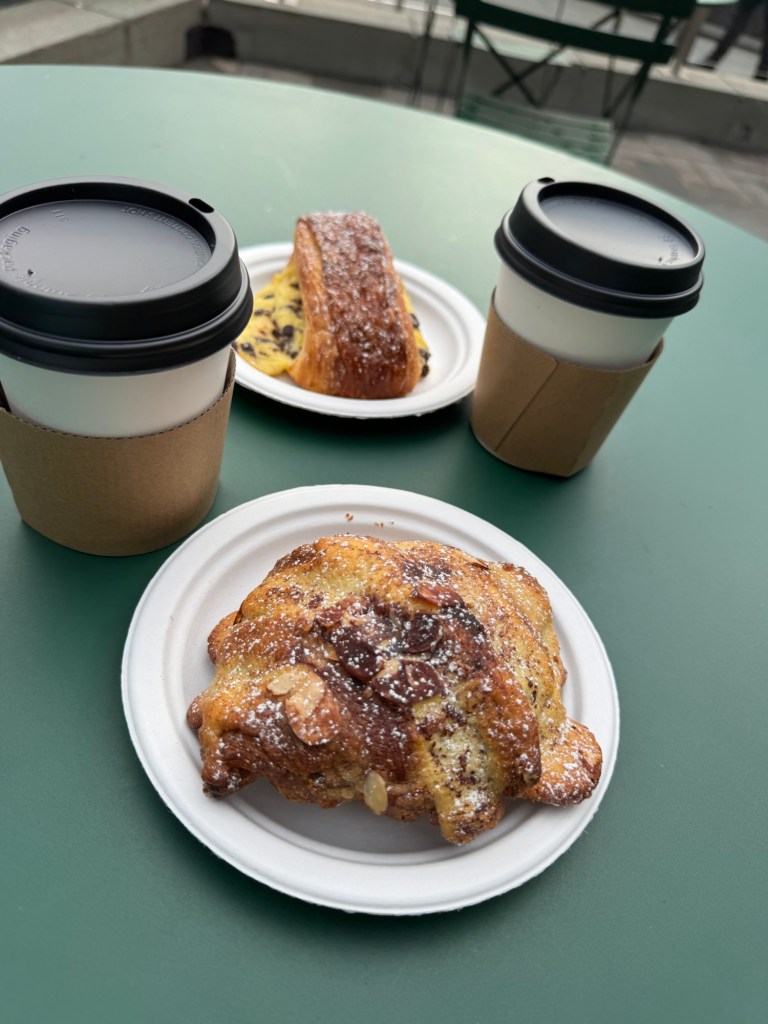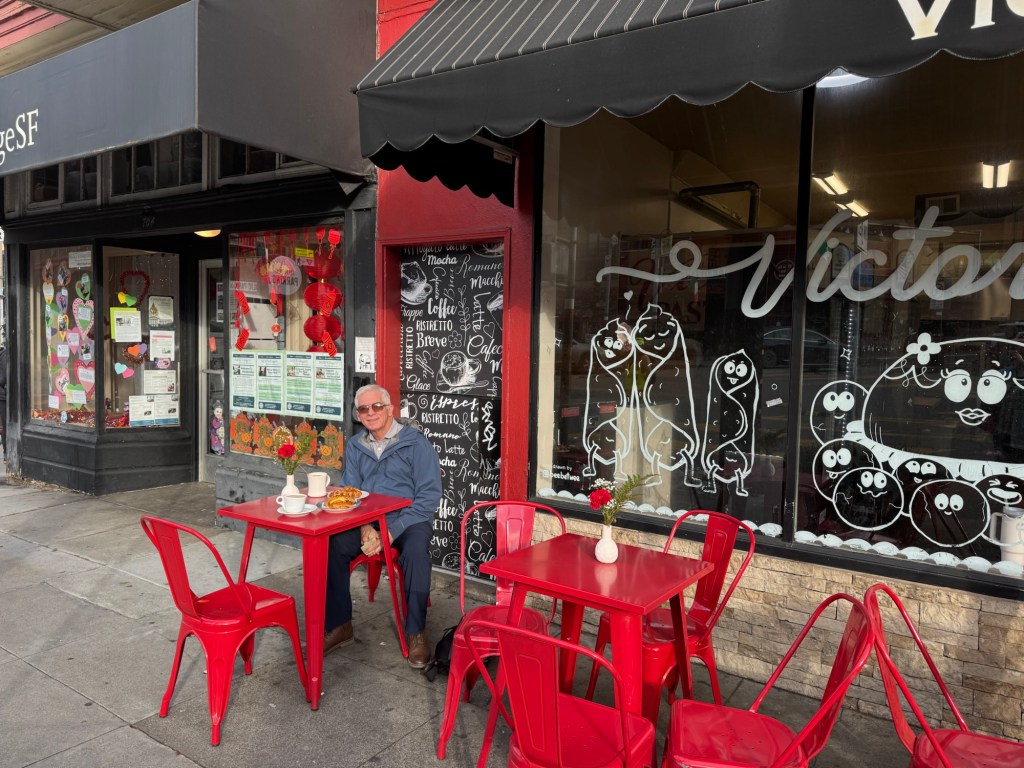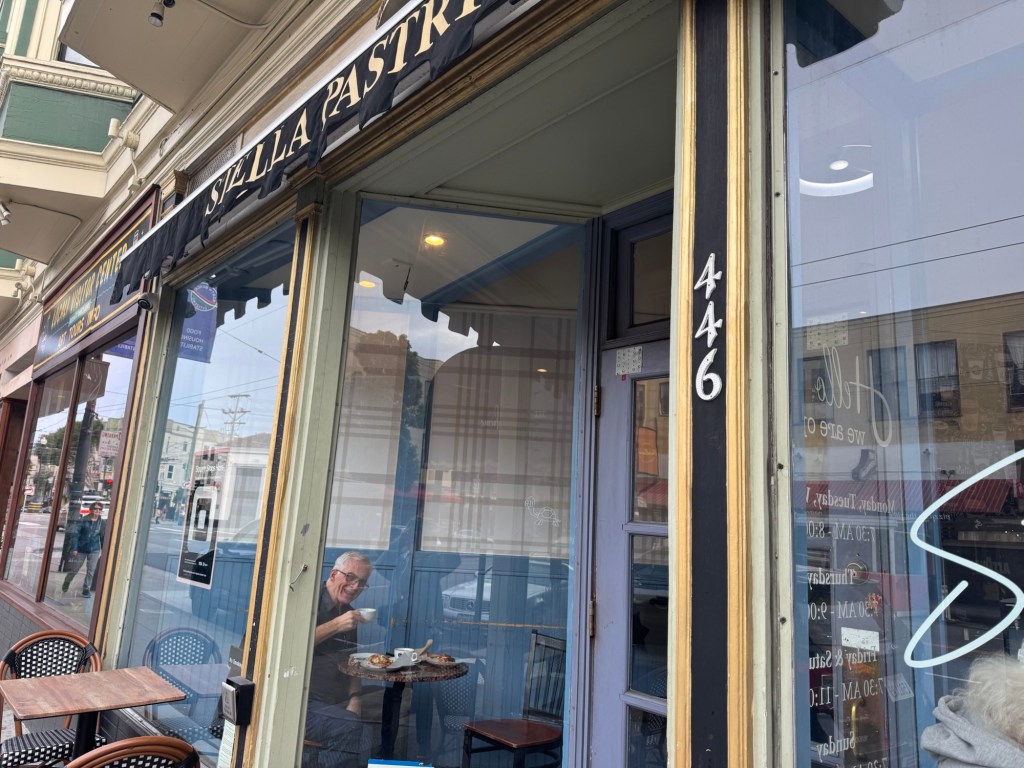
Fancy coffee/tea. No pastries. Isn’t this teeny milk pitcher adorable?
I didn’t realize until yesterday that Naoshima Island isn’t just a pretty place—it’s a carefully curated art experience. These ten museums were designed by the architect Tadao Ando, and they’re seamlessly integrated into the landscape. Some are tucked underground or built into hills, so the island’s natural beauty and history remain untouched.
Cute island shuttle bus
I’ve loved seeing people from all over the world gather here to enjoy and support art—and, by extension, to cultivate peace and harmony. On buses and in coffee shops, I’ve found myself speaking French, German, Italian, and Spanish. Everyone has been so warm and open. Art people are great. 😊
The Art House Project in the Honmura district is especially fascinating. Instead of building new structures, artists transformed old houses, a temple, and even a shrine into living works of art. Walking through them, you can feel both the creativity of the present and the echoes of the past.
The Art House Project took abandoned homes, kept the exterior and displayed art inside. This is Minamidera…very inconspicuous. So much walking. So many stairs! This is New Museum—a place where artists from all over Asia collaborate using different media.So many life-like wolves. Modern art is so surprising. At the end of the day the crowds dispersed. Sunset in Uno Port.
What happens when you gather a group of artists on a remote island to spark each other’s creativity? On Naoshima, it means someone decides to create a giant pumpkin, paint it red with black polka dots, and set it right on the beach.
You get an architect who designed an underground museum that relies entirely on natural light to illuminate works by Claude Monet and other modern artists. (No photography allowed.) Inside, it feels like a labyrinth—passageways that lead nowhere and windows carved into unexpected, intriguing shapes. Very wild and confusing, but fun.
You get a hotel built on the belief that art has the power to heal, offering guests a place where they can truly coexist with both art and architecture.
The island is hard to get to, but truly magical.
The scenery is stunning There are random art pieces scattered over the island.
The journey there involved the subway, the bullet train, and two local trains. But was totally worth it. The art is super fun, and I’m ready to escape the hordes of tourists in the major Japanese tourist destinations. Very few people speak English here—even in the restaurants and art galleries. It feels like an exotic secret place.
We totally need these vending machines in the USA—they dispense delicious HOT lattes in a can. (you can also buy hot soup.)
And, of course there were pastries. Even their pastries at the train station are incredible.
Jim’s cinnamon roll and pain aux raisins and I had a regular croissant and a sweet potato croissant that was delicious.
We had trouble with the menu at dinner. The young people next to us ordered a hot pot, but I wasn’t brave enough to do it. (And I don’t really want to do the cooking when I go out.)
With much sign language and phone translation we ended up with a safe dinner of chicken and noodles. Then to the grocery store for fruit and salad.
When we were in Sicily we met a darling young woman from Berlin on a walking food tour. We had an instant connection. I had just started learning German and she kindly offered to help me. We’ve kept in touch, and today we met up in Kyoto! (The whole world is visiting Japan these days. My Italian teacher was here last week.) It was so fun to see her again, share our Japanese travel experiences and trade stories.
Then we had a relaxing day wandering around the city. This aimless meandering is one of my favorite things to do on a trip, and Kyoto is so adorable.
Look! A waffle shaped like a fish and filled with custard!!! 😋
We didn’t visit any shrines today. I was so tired of seeing shrines. Sorry Shinto followers.
We visited the Kyocera Art Museum and had a delicious lunch at a nearby cafe.
Focaccia ham and cheese sandwich with homemade lemonade
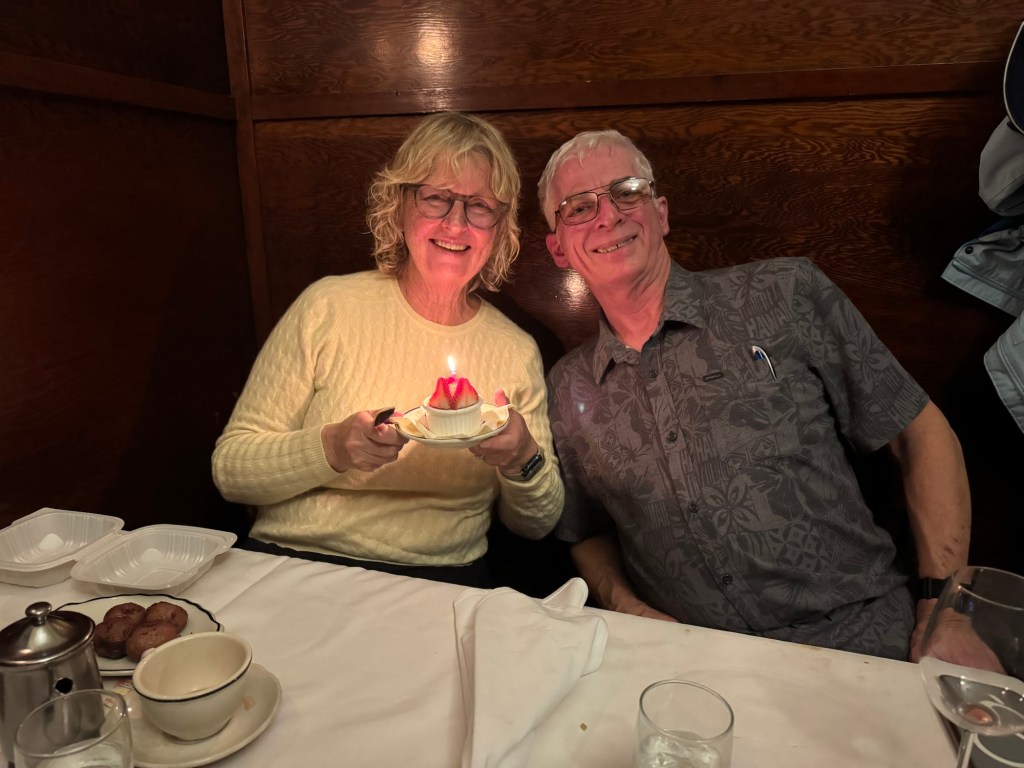
I had ice cream for dinner…vacation, right?
The bottles behind me in this soft-serve shop are filled with different kinds of honey you can choose as a topping for your ice cream.
Japan is such an intriguing blend of ancient and modern. I kept seeing so many 1960s-style buildings that I assumed Kyoto must have been heavily bombed during World War II. But no—the Allies spared the city because of its immense cultural importance. The real reason for all those mid-century buildings is the huge economic boom of the 1970s, when much of the city was rapidly developed. Today, though, we wandered through the historic heart of Kyoto, and it felt like stepping back in time.
Fushima Inari Taisha was one of the things I was looking forward to the most in Kyoto. I had seen my daughter Kelly’s pictures when she went years ago, and it looked really cool. It’s a series of wooden gates that are bright orange and form a kind of tunnel almost 2 miles long.
As I was walking, I found myself admiring the beautiful writing on the torii gates. Later I learned that the inscriptions are actually the names of the businesses that sponsored each gate. 🙄
We had been told that it was extremely crowded and difficult to get good pictures unless you got there at sunrise. So we actually made a practice run last night so that we could figure out the train stations. It was fun to see it lit up at night. And even though we got there very early today there were still crowds of people. It was still beautiful to walk through the gates.
At our next stop, Kiyomizudera, we were met by dozens of tour buses and what felt like endless school groups. The streets were packed with children in their adorable yellow hats, mixed in with crowds of tour groups.
Too crowded!!!!😮The pagoda is pretty…the strangers crowding my shots, not so much. I’m a sucker for cute little bridges.
Gion, the oldest part of Kyoto, is known for its nightlife, but after so many crowds and so much noise, I preferred something quieter. We decided to explore the area in the calm of the afternoon—and it was the perfect choice. I loved the old buildings and the narrow, intriguing little alleys.
I spent a little time learning basic Japanese phrases, but they’ve been mostly useless. Even if I know the phrase, I can’t understand the Japanese people because they often wear masks. The one phrase I truly needed but didn’t learn was, “Is this the right train?” I’ve ridden subways in big cities—Los Angeles, Paris, London, Saint Petersburg—but nothing prepared me for the sheer confusion of Japanese train stations. They’re an entirely different level of organized chaos. Their system is incredibly advanced, with trains going everywhere, but it left my head spinning. It also makes me a little sad about the sorry state of public transportation in the U.S.
We left at 6 a.m. to take the Shinkansen (bullet train) to Kyoto, giving ourselves a ridiculous amount of extra time. We had our luggage sent ahead to the next hotel—it’s a thing here!—and it was absolutely delightful to travel light.
Everything in Japan is beautifully packaged. Even the Starbucks orders came in a nice bag…very hygienic because no one is touching the cup to see the name…only the bag.The Shinkansen (bullet train) reduces the one hour drive to a 15 minute train ride. Fall colors are in full glory here now. You don’t see this in California!
Once in Kyoto we toured the Bamboo Forest and Tenryu-ji Temple, both of which were stunningly beautiful. At 9:00, the walking paths were pleasantly busy, but by the time we left at 10:30, everything was absolutely chock-a-block with people taking selfies.
Jim in the Bamboo Forest
We also walked along the Hozugawa River.
Cool bridge…one hour later it was packed with people.
And, of course, had pastries. This bakery had so many choices we couldn’t decide what to try. And we were really hungry.
Caprese bruchetta, maple croissant, raspberry cream cheese black sesame roll, roll with matcha cream, baguette, chocolate croissant, croque monsieur.
I’m really feeling my age these days. I’m like a toddler—I can’t just keep walking, doing, and seeing without a rest. So instead of the hike ChatGPT had planned for us, we opted for a fun, relaxing boat ride instead.
So many egrets!
I’m loving Japan. It’s unlike anywhere I’ve ever been. I adore the bowing and the incredible politeness and kindness of everyone—even on the subway at rush hour, people form neat lines and speak softly. Even the children and dogs are remarkably well behaved. I also didn’t expect the nature here to be so breathtakingly beautiful.
A highlight this morning was seeing a young student studying English on the train. I asked if she wanted to practice with me, and she said, “Oh, yes!” She was adorable—and just needed a little confidence. The Japanese are often so worried about not doing something perfectly that they’re reluctant to speak English, even though most know at least a little from school.
It’s a good thing Japanese train stations and trains are so beautiful, because we basically lived in them today.
We started the day at a lovely and delicious bakery.
Lattes, bacon, and egg muffin (Jim), blueberry cornbread muffin (Me), and we shared a berry scone.
We had a few minutes before Osaka Castle opened, so we figured we’d be productive and buy our bullet-train tickets for tomorrow. Easy enough… or so we thought. Japanese subway stations in big cities can be a mile wide with what feels like hundreds of exits, and we managed to visit most of them. First, we couldn’t find the ticket office. Then we couldn’t find the right train line to Osaka Castle. By the time we’d finished wandering in circles, we’d already logged 10,000 steps—and it wasn’t even 10 AM.
That’s when I remembered my Italian teacher telling me she once got so frustrated in a Japanese station that she just took a taxi from one side to the other because she couldn’t figure out how to walk there. So we did the modern version: we called an Uber… and saved our marriage.
The uniquely Japanese architecture of Osaka Castle was beautiful. Its massive wall of interlocking granite stones—built without mortar—dates back to 1620 and is truly impressive. The interior, though less remarkable, is more than made up for by the gorgeous surrounding gardens.
Stone wall from 1620 on the left, juxtaposed with modern Osaka on the right.The view from the top of the castle was stunning. The autumn leaves are beautiful here now.Ice cream for lunch!
The morning train chaos wasn’t a one-time thing. On the way to our next destination, we somehow managed to get on the wrong train… twice. The first one was going the right direction—but surprise! It was an express to a completely different city and didn’t stop at our station. After an hour of travel, we triumphantly returned to exactly where we started, feeling like we’d just won a gold medal in “how not to ride a train in Japan.”
Welcome flags at Sumiyoshi Taisha Shrine
We finally arrived at Sumiyoshi Taisha Shrine, tucked away in a quiet suburb outside the city. I wondered if we’d made a mistake—until we turned a corner and saw about ten people, phones in hand, following Google Maps straight to the shrine. For a moment, I felt like I was playing Pokémon Go. Once inside, it was incredibly peaceful and beautiful—definitely worth the journey. The Shinto shrine dates back to the year 211.
This beautiful bridge is the best part.Japanese shrines have these little dippers and running water to wash your hands in a certain way to purify yourself before worship. I have mixed feelings about performing the ritual, but I loved this dragon fountain.
Arriving in the early morning after countless hours of traveling and having to wait until 3:00 for your hotel room is like running a marathon only to find the finish line has been moved another mile down the road.
But we made the most of our time by arguing over the map and insisting on different directions on the subway. How to use a new subway system is even more confusing when you can’t even read the letters.
We walked along the river. We tea and pastries. (Surely you aren’t surprised!)
Then on to the Umeda Sky Tower. Not only is the view stunning, but the Star Trek architecture is incredible, with futuristic walkways and glass escalators and also beautiful open spaces.
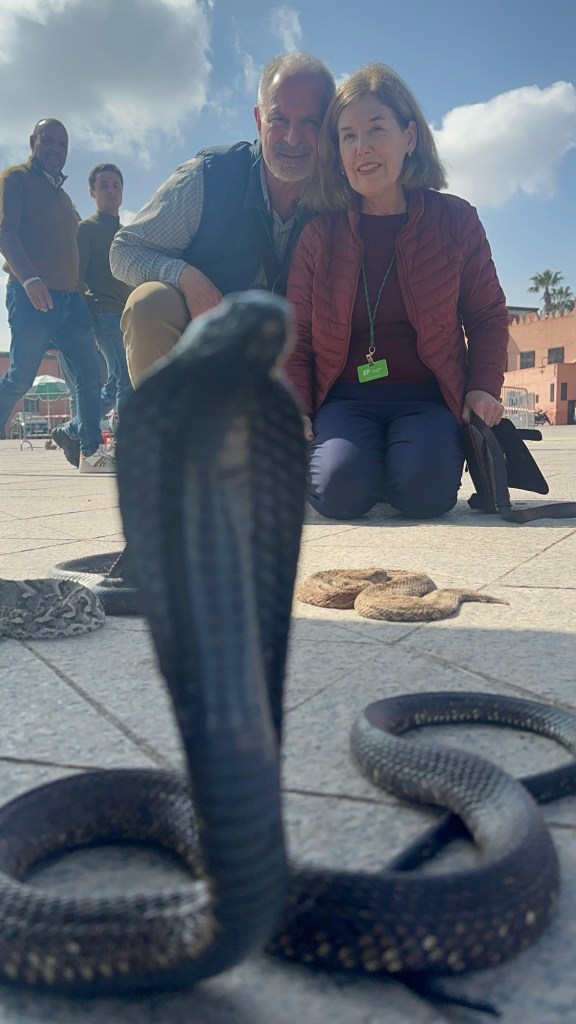
Umeda Sky TowerCool escalator This is inside the tower. This Buddhist country has completely embraced Christmas
Osaka is a large, modern, bustling city with tons of character, and nowhere is that more clear than in the Dotonbori neighborhood. Walking through it felt like stepping inside an arcade game—towering skyscrapers flashing with multicolored lights, giant 3-D cows, crabs, and dinosaurs jutting out from the buildings, happy techno music pulsing through the streets, and the irresistible smells of okonomiyaki (Japanese pancake) and Wagyu beef skewers drifting through the air. It was wild, chaotic, and wonderfully fun—people of all ages from all over the world just out enjoying themselves. What a great evening!
I was surprised when our chef photo bombed my shot
Travel days are always stressful. But we just have to remember that no matter how many lines we stand in, how many cramped seats we endure for hours, or how many unwelcome surprises pop up along the way, the joy of the journey once you get there, always makes it worth it.
Nakanoshima Park has hundreds of beautiful roses and this sweet bridge.
All was going well for us on Sunday—until after church, when I got a text from our airline: “Your 11:50 p.m. flight has been cancelled.” No explanation. Oh, sweet merciful cupcakes! Why can’t things ever just be easy?
We spent an anxious hour on the phone and eventually secured a new flight. We had just come through the longest government shutdown in American history, which created severe shortages of air traffic controllers and TSA agents who were required to work without pay. So even though the government is open again, the ripple effects are still very real.
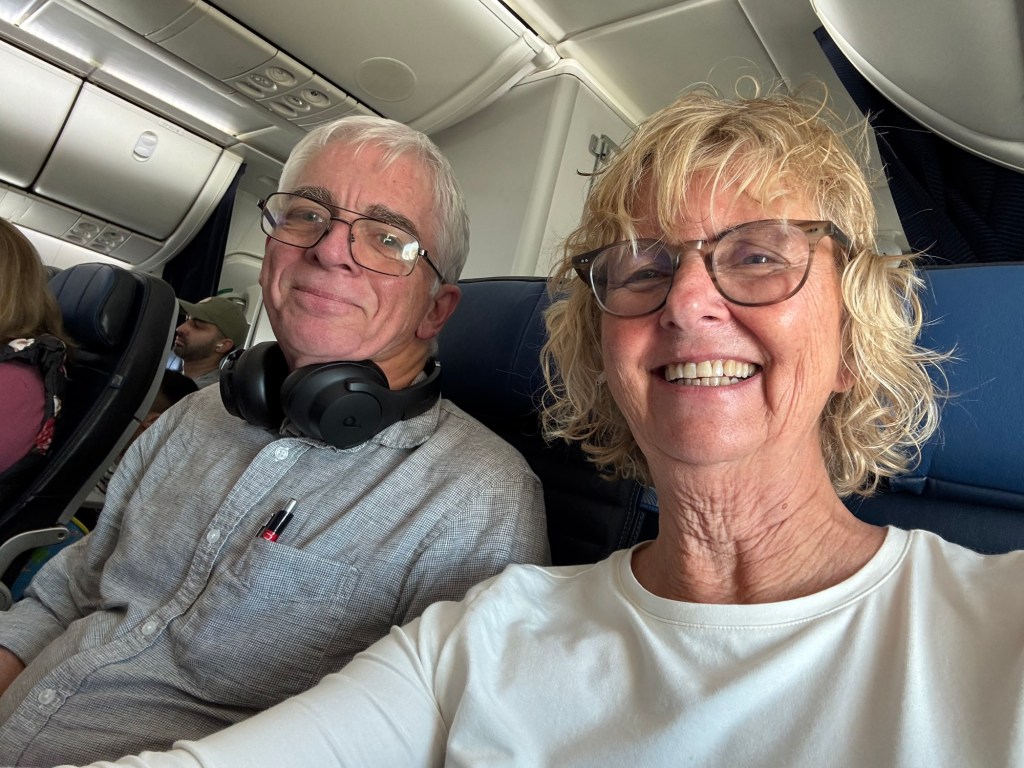
I love being able to start my trips now with a visit to our daughter Kelly’s and her two adorable boys (Derrick is three and Zyon is six months.) A short Uber ride to LAX, a 12 hour flight, then a one hour flight and we got to Osaka at 7:30 am.
When I first arrive in a new city, everything feels overwhelming—the streets seem enormous, and even finding my way to the hotel can be confusing. But as I settle in, I start to relax, my confidence grows, and I begin to notice the beauty that the people who live here enjoy every day. Figuring out the subway (why won’t my Suica card work on my phone?!), navigating in a foreign language, using different money, and simply being outside my comfort zone is so good for my brain. Overcoming those little obstacles ends up helping me long after I’m back to my everyday life at home.
Our tour director told us about how monkeys go to school here. They learn to climb trees and pick up to 500 coconuts a day. When they get tired, they stop on their own—they aren’t forced to continue working. Many Thai people love their monkeys so much that they even FaceTime with them when traveling away from home.
They also love their elephants. Killing an elephant incurs the same penalty as killing a person.
They have a tiny species of banana here, humorously nicknamed “the king’s banana”—a not-so-subtle joke about a certain body part.
Train Street was exactly the kind of travel experience I dislike—crowded and lacking cultural authenticity. Apparently, Anthony Bourdain made this little market by the train tracks famous, and now hordes of tourists pour out of buses, clogging the tracks just to snap pictures for social media. When the train passes, tourists on the tracks take photos of the passengers (also tourists), while the passengers take photos of the tourists. Meanwhile, vendors photograph us, print the images on wooden plaques, and try to sell them back to us. It felt both invasive and wasteful—as if I’d ever want to buy a wooden plaque featuring a sweaty, unsmiling version of myself!
Later we went to a family-run coconut farm.
Thai ladder—the steps are natural branches that have been broken off to make rungs. Here’s Warren climbing. They use every part of the coconut tree. Out of the fronds they make brooms.
Ten years ago the floating marking was _____ someplace where you could experience local color, but now it has more traffic than LA at rush hour. Everyone is jockeying for position and the vendors are selling mostly tourist souvenirs and liquor rather than things Thai people would buy.
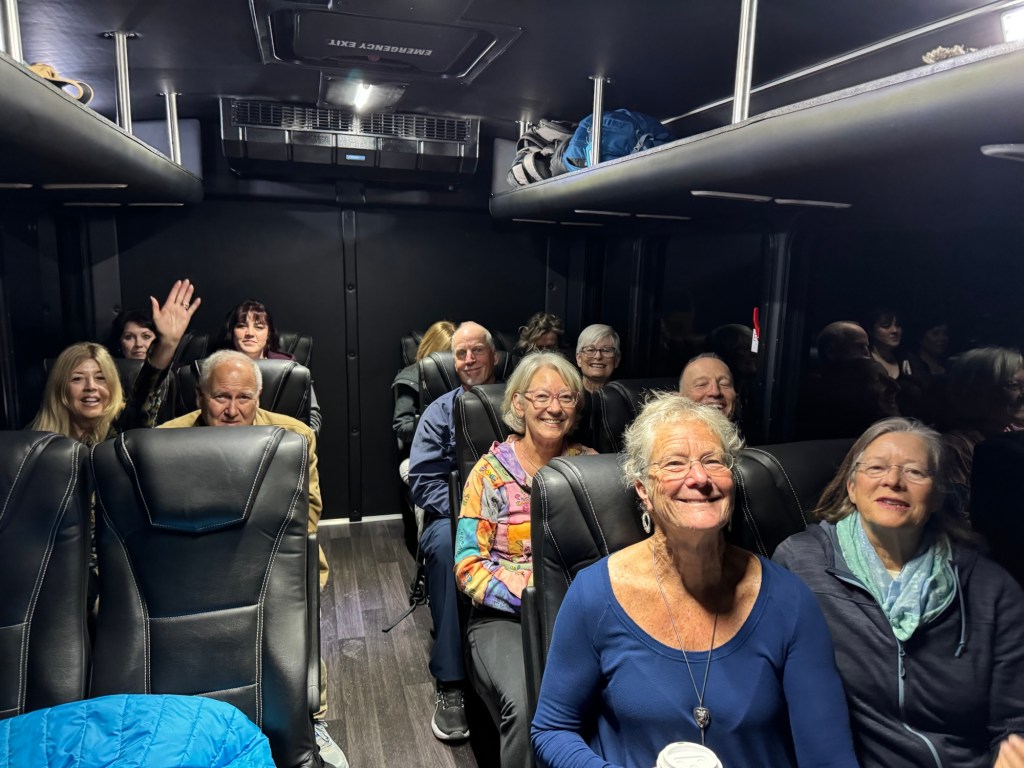
Cassie in front. Me, Tina and Jim.
Lunch at the market near the floating market was delicious and inexpensive.
Jim’s basil rice $2Pad Thai. $1.75
In the afternoon we visited an organic farm that used to be an expensive resort.
I love taking pictures on little bridges My nephew and niece, Ezra and Tina.Jim, Cassie and others tried their hand at rice planting I didn’t do it because you had to be willing to get dirty. (Muddy clothes for the flight tomorrow? No thank you!) Here Warren, Nancy and Cassie tried it. This man is separating the rice from the husk. So interesting to see how rice is processed!At the farm, we also painted cloth bags using techniques that Thai children learn in school. They first create the dye using organic materials.
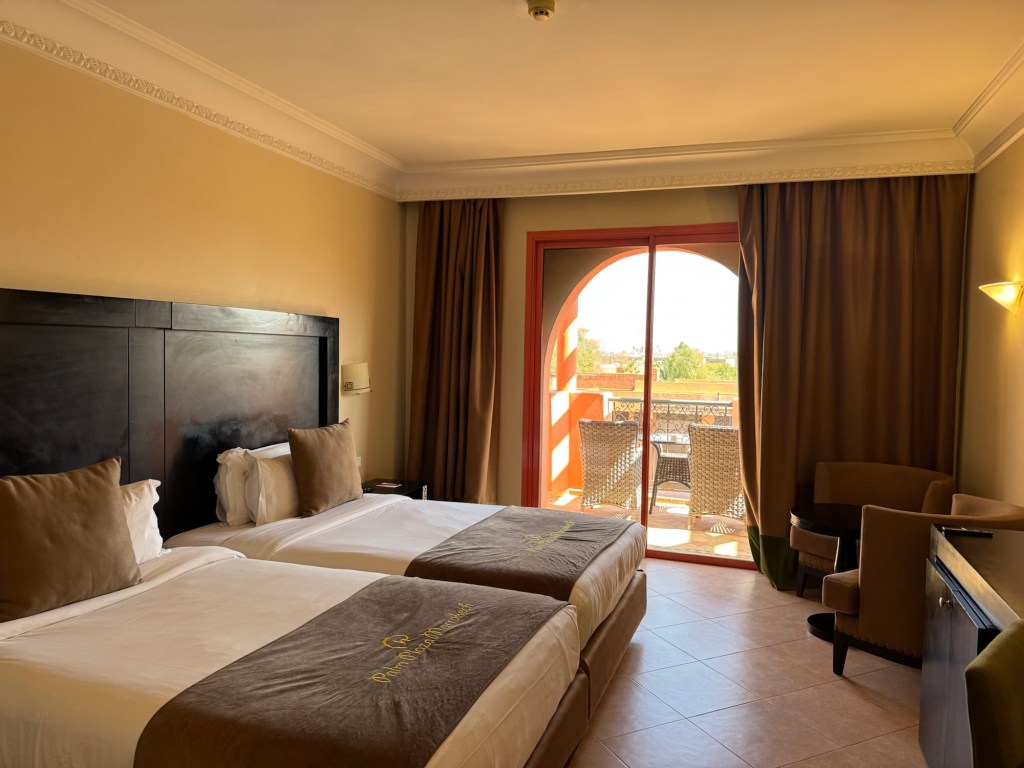
Later we enjoyed a nice dinner at the hotel—our last night together.
This may sound like heresy, but I’ve decided I hate hotel buffets. The endless spread of food, much of it wasted, feels excessive. Worse, it’s like a giant germ factory—everyone handling the same serving spoons, and let’s be honest, how many people actually use that little knife and tongs for the cheese without touching it?
Beyond that, buffets create a disconnect from the real culture of a place. I’d much rather enjoy a simple cup of coffee and a great pastry while having a conversation with the person at the next table, the waiter, or the local baker. That feels far more authentic.
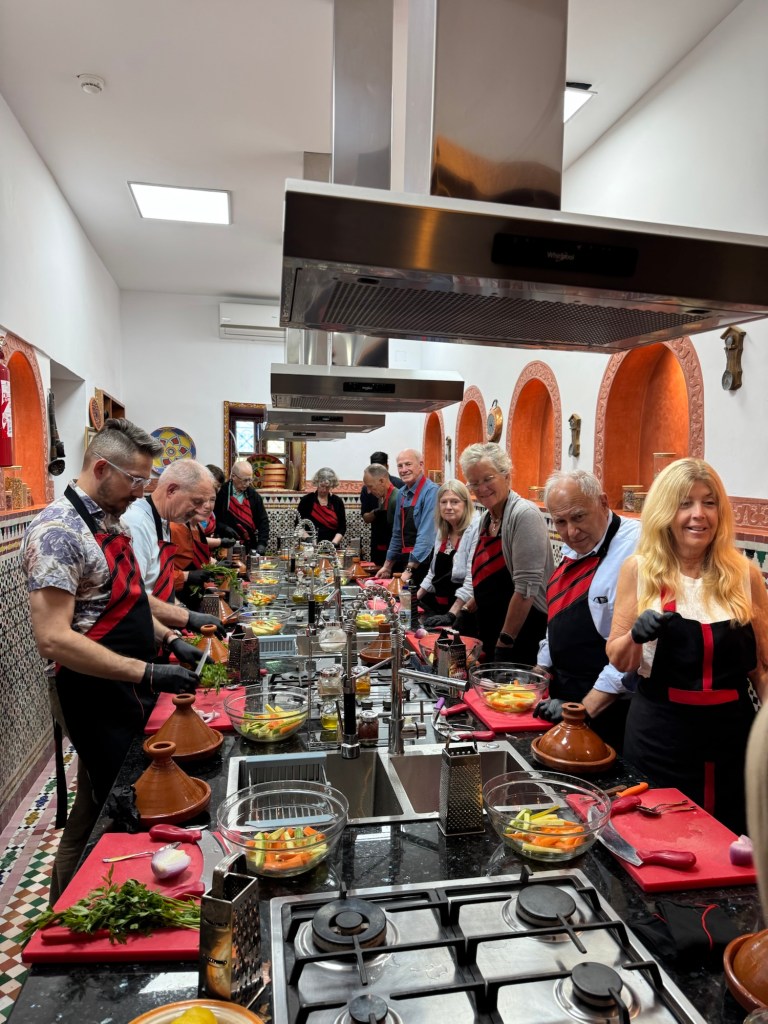
We started the day with a trip to the local market to buy ingredients for our cooking class. Nearly 20 years ago, when I was last in Thailand, our family took a cooking class in the backyard of a man who worked in a restaurant. Today, cooking schools have multiplied—ours had six different classrooms across three stories, its own line of merchandise, and a strong social media presence.
Our chef was a natural comedian, keeping us laughing while teaching us countless practical skills. Now, I just hope we can find all these ingredients at home!
We learned about lots of different kinds of peppersAnd I had never seen what turmeric looks like before it becomes the powder in a bottleAva smelling the lime used in bergamot (the distinctive element in Earl Grey tea.) My cooking team: Pam, Ava and I I wish I had someone to prepare all the ingredients for me at homeI know a lot about rice nowLots of ingredients made for delicious food
Taking a boat ride down the canal was a fun experience. We all agreed it felt a bit like Disneyland’s Jungle Cruise—slightly touristy, but still quite enjoyable!
My Italian teacher from Genoa was here just a couple weeks ago—this is her picture, but it’s the same place we were today Warren Colorful boatsIced Coffee break
The last stop on our boat ride was at a beautiful orchid farm.
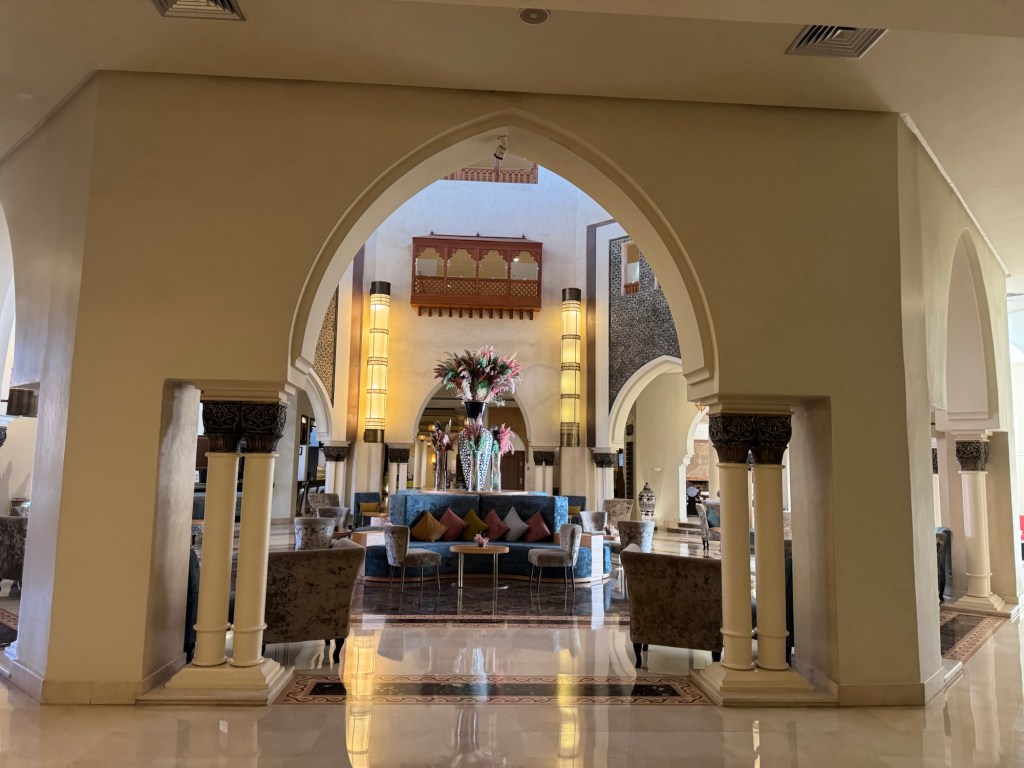
Our hotel is connected to a four-story mall, and that’s where we had dinner. Since we’re in Thailand, my friends—naturally—chose a Japanese conveyor belt hot pot restaurant. (Rolls eyes.) Plates of ingredients passed by on a belt, giving every diner a chance to breathe on them before they reached our table. At least everything was boiled before we ate it.
But the company made up for it. My nephew Ezra, along with a few others, kept us laughing the entire time—they’re natural comedians!
Melissa, Lisa, Warren, Cassie, Tom and meCassie with the finished dishesWe finished the meal at Dairy Queen (wait, we’re really in Thailand, right?)